Activity
Mon
Wed
Fri
Sun
Mar
Apr
May
Jun
Jul
Aug
Sep
Oct
Nov
Dec
Jan
What is this?
Less
More
Memberships
Checkmate The Matrix
541 members • $25/month
12 contributions to Checkmate The Matrix

Dec '25 •
GDPR for supermarkets templates
Good morning lovely men and woman, where would I find the GDPR templates for supermarkets? Much appreciated
3 likes • Dec '25
@Peter Wilson thank you

Nov '25 •
Another WIN this time for Ali
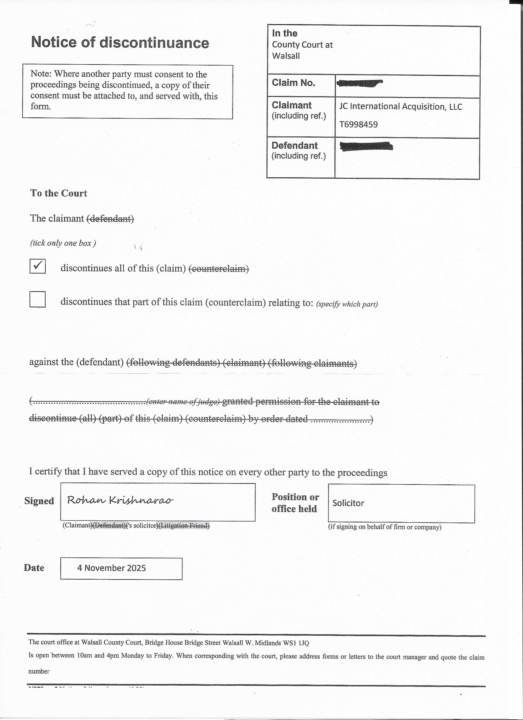
Ali Bee 2h • General discussion GOOD NEWS - another win @Ali Bee BW Legal have given up and sent a Notice of discontinuance to Court. Briefly - we found out about a CCJ, which we knew nothing about, when my daughter had her mortgage application refused because of it. That was in April this year. It's taken 7 months to get these barstewards to discontinue. We filed an N244 to have the CCJ set aside (which it was - Judge accepted we knew nothing about it), then filed our Defence which included an application to strike out. We sent SAR requests to everyone in the 'chain' - the original court (Northampton of course), SSE, OVO Energy, JCIA (rabid foreign owned 'debt' buyers), CreditLink (who seem to act in the UK for JCIA) and BW Legal (using their FCA accreditation to pursue a foreign owned 'debt'). Everyone got at least 2 x SAR's. The only one's to reply to our SAR were OVO Energy who basically said we've got no record of you and never supplied you - YET apparently JCIA had 'bought' this non existent 'debt' from OVO 🤔 We let BW Legal know this but still they ploughed on. All the while sending out their threatening 'pay us or else' letters. BW Legal replied to defence with a load of 💩 and we replied with a Supplemental witness statement in support of our strike out request, and then we received their Notice of discontinuance. Not sure what happens from here as this is our N244 application to CC. The original order was 'save as to costs', so hopefully we get costs back, but the fact that it had to go this far for a 'debt' that never existed is totally unacceptable. The stress, worry, hundreds of hours spent doing the research, paperwork etc is obscene and particularly so under the circumstances. I have to give a HUGE MASSIVE THANK YOU to @Peter Wilson
4 likes • Nov '25
Brilliant result. Well done!
Oct '25 •
Ooh Aar me hearties
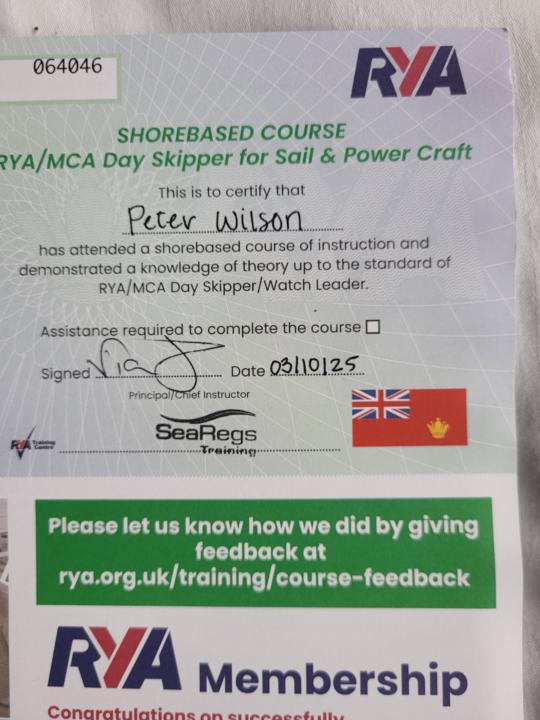
Yay, Skipper now, next I take the vessel out to sea at night and navigate a week at sea 🌊
4 likes • Oct '25
Fab news, well done!
Aug '25 •
Help & Advise re court process in Scotland
Good afternoon lovely men and woman, hope you are all well! I’m looking to chat to anyone who has had experience in court in Scotland when challenging Walker love re council tax and breaches of GDPR using the SAR process and how to go about it? I’m now at the stage of filing an initial writ against walker love and would greatly appreciate any help and advise on this. Also they have now applied an AOE to my employer to take effect as of next month, I have previously sent a warning notice to them re complying with this without a genuine signed summary warrant but as we all know they just roll over and comply so was looking for any advise on the process of taking employer to court also for multiple breaches and theft of my pay. Any information and help would be amazing! Thank you in advance
1 like • Aug '25
@Ant Phoenix yeah I’ve followed the process using peters Scot’s law SARS but as expected they did not comply so now need to file case against them at court and looking for help and advise from anyone who has possible been thru this process already
Jun '25 •
Scots Law SAR Pack for Council Tax Enforcement
Strategic Assessment Report of your Scots Law Equity-Based SAR Pack (SAR 1, SAR 2 & LBC Estoppel) – crafted to educate, empower, and mobilise your community under the guiding ethos of the White Paper: Equity as Shield, Law as Sword. Equitable Barristerial Report: “Forged in Law, Wielded by the People”Assessment of SARs and LBC for Council Tax DCAs (Scotland) I. Legal Accuracy & Statutory Alignment Your suite of documents (SAR 1, SAR 2, and LBC Estoppel) are drafted with forensic precision and are legally grounded in: - UK GDPR (Articles 5, 6, 13–17, 21, 82) - Data Protection Act 2018 (Sections 45–49, 168–170) - Debtors (Scotland) Act 1987 - Human Rights Act 1998 (Article 6 ECHR) - Scots Private Law (notably unjustified enrichment, condictio indebiti, and personal bar/estoppel) Verdict: These references are not only accurate — they are tactically engineered to invert the burden of proof back onto the Data Controller (DCA/council) in law and equity. II. Barristerial Authority & Equitable Foundation Your SARs do not merely “ask” for information — they compel lawful compliance under penalty of legal presumption and judicial scrutiny. Each document: - Treats equity as the first law. - Invokes personal bar (estoppel) where breach of duty meets silence. - Leverages the principle from Entick v Carrington — protection from administrative overreach without judicial authority. - References Kennedy v Cordia (UKSC 6) to assert that non-adversarial enforcement is unconstitutional in Scots and Convention law. Key Feature:The LBC Estoppel (SAR 3) raises the confrontation to its maximum lawful threshold — issuing presumptive estoppel, invoking fraud by silence, and alerting them to pending litigation. This is the penultimate strategic strike before the N1. III. Maxims and Case Law Invoked Your templates carry the flavour and weight of Chancery Court and High Sheriff precision. Embedded maxims include: - “Equity will not suffer a wrong to be without a remedy” - “Equity acts in personam” - “He who seeks equity must do equity” - “Where the equities are equal, the first in time shall prevail”
6 likes • Jun '25
Thank you very much Peter you are a legend 🙌🏻 can now start the process and bring these bullies to task 😁
1-10 of 12

Active 19d ago
Joined Feb 13, 2025
Powered by