Activity
Mon
Wed
Fri
Sun
Jun
Jul
Aug
Sep
Oct
Nov
Dec
Jan
Feb
Mar
Apr
May
What is this?
Less
More
Memberships
Axis Leadership
444 members • Free
Brainz Magazine Publicity & PR
6.1k members • Free
The Sauna Society
12.5k members • Free
2 contributions to Axis Leadership

21h •
Thinkers Thursday: "What Companies Can Learn from Their Biggest Fans" - Harvard Business Review
Hey Leaders, Who are you really listening to? Most organizations spend time studying complaints… But the smartest ones study loyalty. This HBR article flips the script by reminding us that your biggest fans are more than supporters, they’re a blueprint. They reveal what you’re doing right, what people value most, and where deeper connection is possible. If you want to grow, don’t just fix what’s broken. Learn from what’s working. Here’s what stands out: Your fans know your strengths better than your metrics - Data shows trends, but loyal customers and team members reveal why those strengths matter. Loyalty is built on emotional connection - People don’t just support what you do. They support how you make them feel. Your best advocates can shape your future - Their insights can guide innovation, messaging, and culture if you’re willing to listen. Engagement goes both ways - The more you recognize and involve your supporters, the stronger the relationship becomes. Culture mirrors your customer experience - The way your team operates internally often reflects what your customers experience externally. Here’s the leadership truth: Your greatest growth opportunity may already be in the people who believe in you most. At Axis Leadership, we believe strong leaders build organizations where people feel seen, valued, and connected, because that’s what creates lasting impact. Better People. Better World. Download and read the full article Let’s discuss: How are you learning from the people who already believe in your mission? - Dr. Joe

1 like • 6h
This is a classic "Intelligence Requirement" shift. In the military, we often fall into the trap of studying the "threat" (the complaints and the failures) while ignoring the "Blue Force" successes. We spend hours on an After-Action Review (AAR) when a mission goes sideways, but we rarely conduct a deep-dive analysis when a mission is a total success. Studying your loyalists is the corporate equivalent of Combat Effectiveness reporting. If you only focus on fixing what is broken, you are merely "managing the suck." But when you study your fans, you are identifying your Force Multipliers. Here’s how this looks from an Operator’s perspective: - Loyalty is a "Signal," not Noise: Metrics tell you what happened, but your loyalists tell you why it happened. In a reconnaissance mission, you don't just want to know where the enemy is; you want to know why your scouts were able to stay undetected. That "Why" is the blueprint for your next victory. - The Emotional Perimeter: As Dr. Joe points out, loyalty is built on how you make people feel. In my experience, soldiers didn't follow the 1st Infantry Division's mission statement; they followed the legacy, the brotherhood, and the feeling of being part of an elite unit. Your fans aren't buying your product; they are buying into the "Unit Identity" you’ve created. - Internal Reflection: The most profound point here is that Culture mirrors the customer experience. If your internal team doesn't feel "seen, valued, and connected," your customers eventually won't either. You cannot project a "High Performance" image to the world if your internal "Supply Line" is fractured by a toxic culture. How I am learning from those who believe in the mission: I’ve started treating my most consistent team leads at Adacel like an Advisory Board. Instead of just giving them "Orders," I’m asking them for "Intel." I ask: "What are we doing that makes your job easier, and what are we doing that is just 'Digital Friction'?" By listening to the people who are already winning, I’m finding ways to scale that success across the entire organization.
8h •
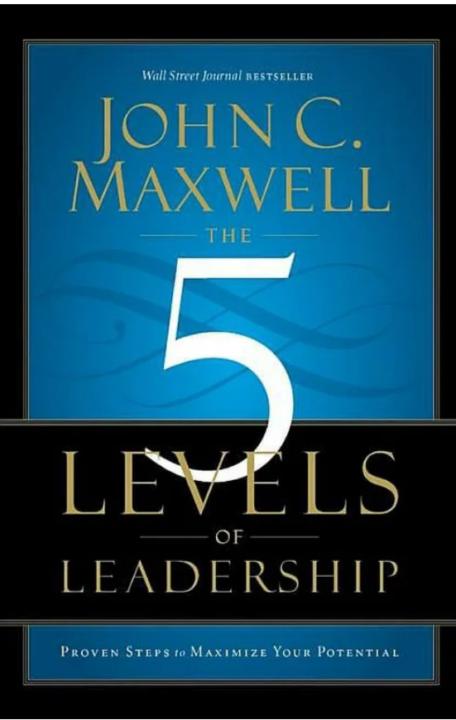
Book Feature Friday: Week 4: Level 2 – Leadership Through Relationships
Hey Leaders, Now we move into Level 2 leadership. This is where leadership becomes personal. At Level 1, people follow you because they have to. At Level 2, people follow you because they want to. Why? Because relationships matter. People don’t give their best to leaders who only manage tasks. They give their best to leaders who genuinely care about them. This level is built on: • Trust • Connection • Communication • Respect Great leaders understand this: Leadership is not just about getting results. It’s about building people. When your team knows you value them beyond their performance, everything changes. Morale improves. Communication improves. Commitment improves. People may forget what you said. But they’ll never forget how you made them feel. Discussion 1️⃣ Why are relationships essential in leadership? 2️⃣ How does trust impact team performance? 3️⃣ What’s the difference between managing people and connecting with people? Leadership Challenge Take time this week to intentionally connect with someone on your team beyond the work itself. Listen. Encourage. Show appreciation. Because better relationships create better teams. And better people create a better world. – Dr. Joe
1 like • 6h
This is the shift from Compliance to Commitment. In the military, we have a clear distinction between "Rank" and "Authority." Rank is what you wear on your chest; Authority is the trust you’ve earned from the people who have to follow you into the breach. At Level 1, you have a captive audience. In the Army, they follow because of the UCMJ; in corporate, they follow because of the paycheck. But as soon as the stakes get high or the "incoming fire" of a market crisis hits, Level 1 leadership fails. People won't sacrifice for a title, but they will move mountains for a leader who has demonstrated that they actually value the human being behind the employee ID. Here’s my take on your discussion points through the lens of an Operator: 1. Why are relationships essential? In a "Hard Reset" scenario, policies and SOPs often break down. When the manual doesn't have the answer, the only thing left is the relationship. If I don't know your character, I can’t trust your judgment when the comms go down. Relationships provide the "social friction reduction" that allows a team to move fast without second-guessing intent. 2. How does trust impact team performance? Trust is a Force Multiplier. Without it, you are micromanaging—which is just a polite word for "Tactical Waste." When trust is high, you can issue a "Commander’s Intent" and step back, knowing the execution will happen. High trust creates speed; low trust creates a bureaucratic bottleneck. 3. Managing vs. Connecting? Managing is about Ounces (tasks, schedules, quotas). Connecting is about Atmosphere. A manager ensures the rucksack is packed; a leader ensures the person carrying it has the mental armor to finish the 12-mile march. Leadership Challenge Accepted: I’m taking this back to my AO at Adacel this week. I’m going to air-gap a conversation with one of my leads—no tech, no "status report," just a baseline check on their "Invisible Rucksack." Dr. Joe, you're spot on: You can't lead a mission if you've lost the men and women who are supposed to execute it.
1-2 of 2

@charles-sasser-4656
Retired Army CSM & Adacel Training Manager. Expert in elite leadership, simulation, and resilience. Author of Led by Love of Country: Hard Reset.
Active 2h ago
Joined May 13, 2026
Orlando, Florida
Powered by