Activity
Mon
Wed
Fri
Sun
Aug
Sep
Oct
Nov
Dec
Jan
Feb
Mar
Apr
May
Jun
Jul
What is this?
Less
More
Memberships
Kinship Cafe
64 members • Free
9 contributions to Kinship Cafe

Jan 15 •
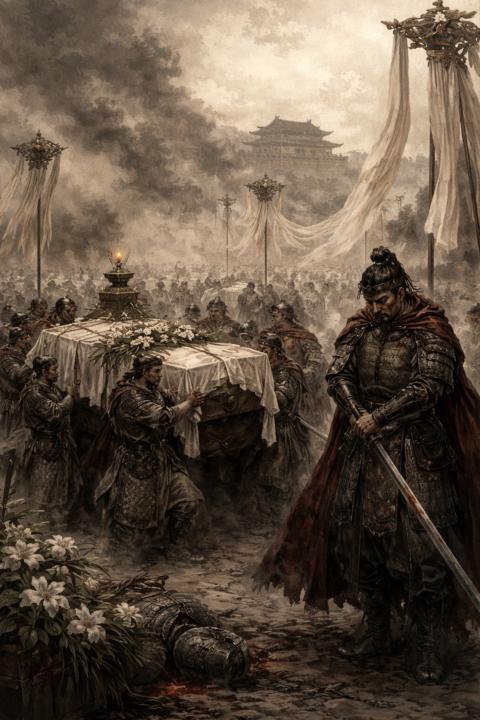
Victory in war should be treated as a funeral.
On the one hand, this admonition from the Daodejing (Tao Te Ching) seems obvious, but on the other hand, victory, despite massive loss of life, is often celebrated in our culture. Join the Kinship Cafe discussion this Friday as we explore a perspective on war from chapter 31 of the Daodejing (Tao Te Ching). Online this Friday at 7am PDT: Link in the Calendar section

1 like • Jan 16
It is only a funeral if you lose, and as Donald Trump will tell you, he does not lose. Second, politicians don't like focusing on the negative. For example, during the USA's "heroic" Invasion of Grenada in 1983, there were 19 deaths, yet I do not recall the mainstream media mentioning any deaths of US soldiers. Most American's thought the war was easy and bloodless, but that wasn't necessarily true. There is a "Memorial Plaque" at the Maurice Bishop airport in Grenada that was dedicated by President Ronald Reagan to those who "sacrificed" in the War for Granada. Reagan personally dedicated the plaque during his visit to Granada three years later to commemorate this important victory on behalf of freedom-loving people everywhere. It was one of those great Reagan moments, but expecting Reagan (or Trump) or anyone to treat victory as a funeral is wildly optimistic in my opinion.
Jan 11 •
What is Consciousness?
Althought this is not a main topic of this group, it has come up from time to time. I found this to be an excellent video discussing what we know so far and the main competing theories about it. Let me know what you think!
1 like • Jan 13
Sometimes I wish you would ask easier questions, Jim. Perhaps it is easier to ask what is unconsciousness? I want to say that consciousness is the state of being self aware, but that's also a very slippery term. For example, if an organism, such as an amoeba can feel or be aware of pleasure or pain inflicted upon it, is it conscious and self aware? Are consumers who are manipulated and unaware of the hypnotic effects of advertising and propaganda on thier behavior only partially conscious? Clams can probably feel, and I know for a fact that they try and avoid paiin. If they are aware of pain does that make them self-aware and conscious?
Dec '25 •
Return to simplicity.
The Daodejing (Tao Te Ching) uses a colorful phrase for simplicity: uncaved wood (often wrongly translated as uncarved block). Uncarved wood is an interesting metaphor, as wood in its untouched state is unique. No two pieces are exactly the same. We might be tempted to think that a carved block is simpler, as just a basic shape. But carving wood into basic shapes to make them simple is to confuse simplicity with uniformity and conformity. The Daodejing invites us to recognize the uniqueness of wood that has grown in harmonious balance with its environment as simple. The effort to impose a uniformity, to enforce a conformity, to generalize and abstract — this is in fact the complexity. Join the Kinship Cafe discussion this week as we explore uncut wood and simplicity in chapter 28 of the Daodejing (Tao Te Ching). Find the link in the calendar.

0 likes • Dec '25
Almost every act of creation involves destruction.

Sep '25 •
Awakening Spiritually Through The Tao
Have you ever experienced a spiritual awakening? My first spiritual awakening happened in 2004. I grew up as a rational, materialistic atheist in the Bible Belt, and for the first 22 years of my life I had no conception whatsoever of spiritual consciousness. Something I was deeply passionate about (you might say obsessed with) from very early on was martial arts (I basically wanted to be a Ninja Turtle). So when I was 10 my parents signed me up for lessons at the local taekwondo chain school. It was the kind of place where I started at age 10, had a black belt at age 12, and a second degree black belt at age 14. After that I branched out into other martial arts, including Chinese, Japanese, Brazilian, and Filipino styles. What they all had in common was that they were all external styles, meaning that the emphasis was on athleticism and external results: lots of jumping around, kicking high, and doing various kinds of stunts. Something else that interested me from a very young age was ancient stories and mythology. I enjoyed reading the Greek myths, and I found and read copies of the Panchatantra and the Tao Te Ching. I thought the Panchatantra was really cool, but at the time the Tao Te Ching didn't make any sense to me and came across as a bunch of gobbledygook. In college I studied math and physics, but I went to a small, private liberal arts school where you had to learn a little bit of everything. The class I took for my religion elective was Buddhism. I learned about the story of Prince Siddhartha Gautama sitting under the Bodhi Tree and experiencing satori, the “instantaneous awakening”, and arising as the Buddha, the “awakened one”. They were cool old stories, but at the time meant nothing to me beyond that. I also kept learning new martial arts, including Japanese, Chinese, and Brazilian styles, all still externally focused. I tried out a tai chi class, but found I didn't have the patience for it at the time. For graduate school I moved to the west coast, still studying math and physics, and still on the lookout for new martial arts to learn. One day I saw a flier for a place called the Kung Fu Academy and decided to check it out. It turned out this was a school that taught internal kung fu, largely rooted in the tai chi classics. If it had been called "the Tai Chi Academy" I probably wouldn't have gone, due to my earlier boredom when I tried a tai chi class, but I found the training to be very effective for where I was in my development.

1 like • Dec '25
@Dane Dormio this reminds me of Alan Watts, who said "It is my job to 'eff' the ineffable."
Sep '25 •
The Morality Trap
At last week’s Kinship Cafe, we discussed a passage from Liezi, one of the key early writers who shaped Daoism. Here is another quote from chapter one that I find interesting: “The man who, when his actions go wrong, begins to play about with moral distinctions in order to put them right, cannot find the way back.” (Chapter 1, A.C. Graham) This is the story of justification. A man screwed up, and rather than admit his mistake, he seeks to justify it through clever moral distinctions. But in doing so, he gets himself so tangled up that he can’t find a way back out. Has this ever happened to you? I know I have found myself bound in my own trap many times. Why is it so hard to admit when we are wrong? I hate to admit it, but I often desire not to look like I made a mistake. Which is silly because we all do. In trying to hide it, we complicate relationships, and most people can see through the masquerade anyway. I find it interesting that the passage does not say he tries to come up with excuses, but instead he “begins to play about with moral distinctions”. Moral language is the most incendiary language we can use. It strives to create a division that goes beyond a disagreement, to “if you disagree with me, you are immoral.” Morality assumes itself to be objectively true, that it can’t be questioned. Stepping into moral justifications for one’s actions is an attempt to silence disagreement or discussion. Moral justifications cancel the possibility of compromise and create the strongest possible “us vs. them” mentality. Resorting to moral justifications is a clear indication that a person lacks valid reasons for their actions. Playing about with moral distinctions risks inciting hate or even violence. We can see how going down this road, we might find ourselves so lost we “cannot find our way back.” What do you think?

1 like • Dec '25
Thank you for writing this, Jim. In the Middle Ages it was illegal to sell "sophisticated beer." In those days, "sophisticated" was an ancient insult that meant that something was impure or tainted. It is the clever moral distinctions of sophists that have gotten us so terribly tangled that we now live in a world where the word sophisticated is no longer pejorative, and being sophisticated is a good thing. (By the way, did you notice my sophisticated language there? Huh... Huh?) Many of us spend our entire lives trying to be "right," and fighting valiently in defense of our "rightness." Of course this usually requires proving the "wrongness" of others. I delight in that sort of moral smugness. One could argue that I have made a career out of it. I am not alone in being right. I remember, many years ago, seeing a book by the Democrat James Carville titled "We're Right they're Wrong!" Then another, by Anne Coulter, I think, titled "How to Win an Argument with a Liberal." Why are these sophisticated instruction manuals popular? As the great American Hero Vince Lombardi said, "Winning isn't everything it is the only thing." This philosophy spawns an belief that winning an argument (or perhaps anything else in life) must be done by "any means necessary", which leads the us to excuses, then distorted facts, then lies, and from there, a type of vicious moral turpitude, where "we cannot find our way back." Turpitude. (How's that for snazzy, language, eh?) But I digress. What I meant to say is that Rumi, a 12th Century muslim, described a possible "way back" with this invitation: "Out beyond ideas of rightdoing and wrongdoing, There is a field. I'll meet you there. When the soul lies down in that grass, The world is too full to talk about. Ideas, language, even the phrase each other Doesn't make any sense."
1-9 of 9

@charles-langley-8587
More than 60-years of experience as a resident of Planet Earth
Active 29d ago
Joined Oct 2, 2025