Activity
Mon
Wed
Fri
Sun
Sep
Oct
Nov
Dec
Jan
Feb
Mar
Apr
May
Jun
Jul
What is this?
Less
More
Owned by Cat
This is your place to evolve from ground zero into a fulfilled creative version of you. Content is photography based, but all mediums are welcome!
Memberships
The school of life
178 members • $10/month
Skoolers
162.1k members • Free
The Mind Method Collective
95 members • Free
15 contributions to The Mind Method Collective

18d •
Summer Check In
How's everyone doing? I've missed listening in on the last two weeks' calls. What is one thing you've felt measurable growth in since the start of summer? For me, I've been creating art. I'm also working on some big things behind the scenes... taking steps to create the funnel for my creative based offers from which I plan to earn a ton of money while helping creatives pursue their passions and source their creativity like never before!
0
0
Jun 17 •
GET READY!
Here's a Skool post with the poll built in: We're building something big inside Mind Method 🧠✨ Exciting news, community — course content is officially in the works. Here's what's coming: 🔹 Unshakable — our program for women CEOs ready to lead from a place of clarity, confidence, and calm 🔹 Thrive — our couples program for building deeper connection and partnership 🔹 The Mind Method — the core teaching that ties it all together Before we go deeper into building, we want to hear from YOU. This is your space, and we're creating this for you. 👇 Vote below: Which topics do you most want us to dive into? (Pick your top choice — or drop a comment if there's something we missed!) Poll options: - 🧩 Meta-cognition (thinking about your thinking) - 🕊️ Spirituality - 💗 Healing - ⚛️ Quantum - 🌊 Energy & Vibration - Your input shapes what we build next. Let's create something powerful together. 💫
0 likes • 22d
I'm a little late to the vote, but I'd vote for healing. Healing can incorporate all the other topics as part of its end result... so in a way it's like an all inclusive package under the brand name of healing! 😁
May 23 •
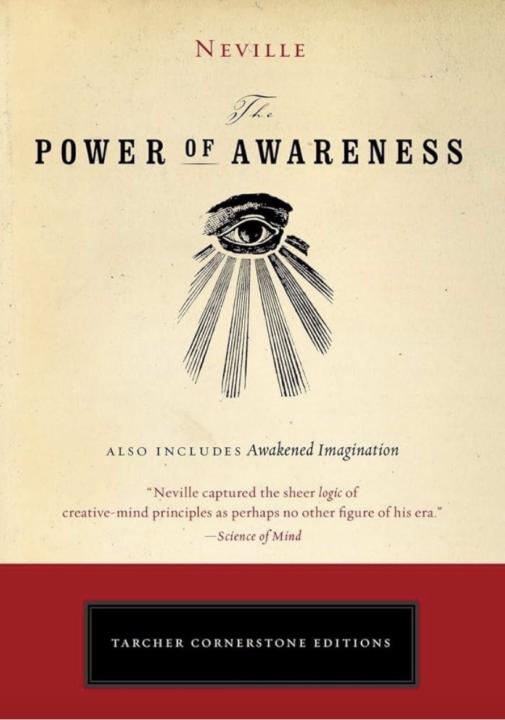
The Power of Assumption — Power of Awareness, Chapter 3
Neville opens chapter 3 with one of his most confronting lines: man’s chief delusion is his conviction that there are causes other than his own state of consciousness. Everything that happens to you, he argues, flows out of the state you’re occupying. Nothing outside of you is the cause. That’s a heavy claim, so let’s break down what he actually means by assumption and why it matters more than positive thinking, affirmations, or visualization done casually. An assumption is simply the act of accepting something as true before the senses confirm it. You assume the feeling of the wish already fulfilled — not “I hope this happens” but “this is who I am now.” The shift is from wanting to having. Most people stay stuck in desire because desire quietly affirms the absence of the thing. Assumption closes that gap. Three things from this chapter worth sitting with: First, the assumption has to be lived in, not visited. Neville says it must be a maintained attitude, not a single isolated act. It’s frequency, not duration — returning to the feeling often enough that it becomes natural, your default state rather than a performance. Second, you impress the subconscious through feeling, not effort. You’re not trying to force reality to bend. You’re occupying the end — imagining the conversations, the small ordinary scenes that would only be true if your desire were already a fact. Then you let the subconscious do the work of bridging you there. Third, persistence in the face of contradiction is the whole game. The outer world will keep showing you the old evidence for a while. Neville’s instruction is to ignore it and remain faithful to the assumption anyway. Reality reorganizes to match the state you persist in, not the state you abandon the moment things look unchanged. A practical takeaway for this week: pick one assumption and define what it would feel like if it were already done. Not the goal — the aftermath. The relief, the ordinariness of it being true. Then return to that feeling several times a day, briefly, until it stops feeling like a stretch.
3 likes • May 24
Something I recently realized as I listened to a video about visualization... it is helpful to imagine the scene from the standpoint of the future self. I've always visualized as an onlooker, a spectator of a scene I'd like to experience... but to see that same scene from a first person standpoint feels exponentially more exciting and able to produce the emotion of the lived experience.
May 2 •
There is a place
There exists a place beyond your visible sight where anything is possible. ANYTHING. We are so limited to our senses, but we don’t have to be. Once you know the view from above the clouds, you appreciate creation in a whole new way. There exist infinite realms of reality, not yet visible to you. They exist beyond your senses and are accessed through your creative imagination. How fantastic that we can bring that realm into conscious existence through thinking and acting. This is what it means to me to be infinitely creative. Not just in art or profession, but in conscious life experience.


Apr 21 •
Master The Vision
This video is too good that I have to share it. Who wants to listen to it with me for 7 days and watch your life change? https://youtu.be/x-ZmcLfmfaM?si=k_-85f9l5fC6QrzH
0 likes • Apr 22
I’m in! It IS so good!!!!!!!!!!
1-10 of 15

Active 5h ago
Joined Mar 14, 2026
Gaithersburg, Maryland
Powered by