Activity
Mon
Wed
Fri
Sun
Aug
Sep
Oct
Nov
Dec
Jan
Feb
Mar
Apr
May
Jun
Jul
What is this?
Less
More
Memberships
Paganism & Folk Magic
39 members • Free
The Cozy Chaos Corner
20 members • Free
Sacred Circle
26 members • Free
SOS - School of Spirituality
199 members • Free
Crystal Appreciation Society
151 members • Free
Granny Wisdom, Hippie Vibes
326 members • Free
Foundations of Ascension
9.7k members • Free
High Vibe Tribe
80.8k members • Free
Spiritual Rebels
3.7k members • Free
5 contributions to Paganism & Folk Magic

🔥
6d •
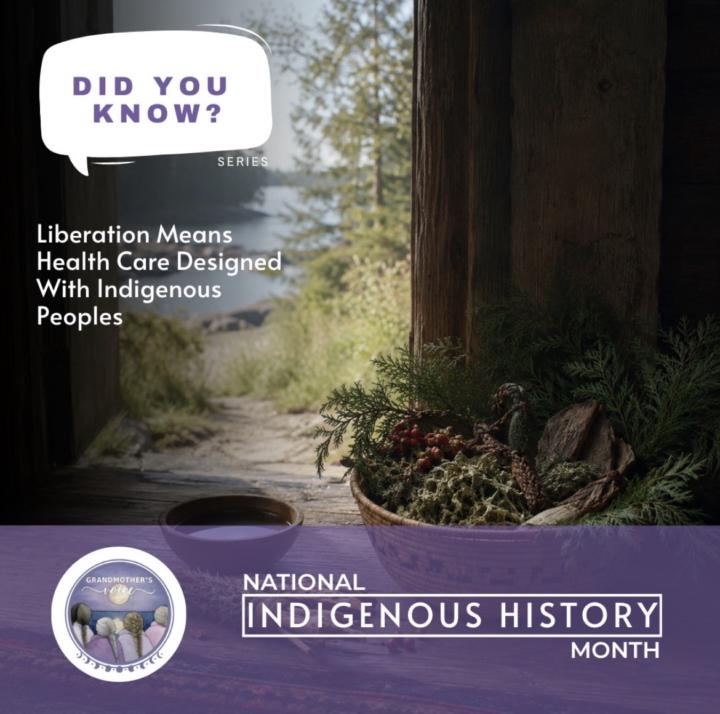
July is National Indigenous History Month
July is National Indigenous History Month This is a beautiful time to celebration Indigenous Culture no matter where we are located across the globe. In America, The Truth about The Indigenous is heavy territory, but an important one. Here's an honest look: The historical truth - Population collapse: Estimates of the pre-contact Indigenous population of what's now the U.S. range widely, but by the late 1800s, disease, warfare, and displacement had reduced Native populations by somewhere between 80-95%. Most of that wasn't intentional biological warfare (though there are documented instances) — it was largely disease compounded by starvation, war, and the destruction of ways of life that let people survive and recover. - Broken treaties as policy, not accident: The U.S. government signed hundreds of treaties with tribal nations — and violated the vast majority of them, often as soon as the land in question became valuable (gold, farmland, resources). This wasn't occasional bad faith; it was close to the norm. - Forced removal: The Indian Removal Act of 1830 and events like the Trail of Tears forcibly relocated tens of thousands of people, with thousands dying along the way. This was official U.S. government policy, not rogue action. - Cultural erasure as explicit strategy: Starting in the late 1800s, the U.S. ran boarding schools with an openly stated goal — "kill the Indian, save the man." Children were forcibly removed from families, punished for speaking their languages, and often abused. This continued into the 1960s-70s in various forms. The last of these federally-run boarding schools didn't close until relatively recently, and a U.S. Department of Interior investigation only formally documented and acknowledged this history in 2022. In relation to this, the influence of the culture can be felt across the globe. North America - Smudging (burning sage, sweetgrass, cedar, or tobacco to cleanse a space or person) — widely practiced by many Plains and other Native nations, and now extremely common in mainstream "spiritual" spaces. This is one of the most appropriated practices out there — white sage specifically is also facing ecological strain from overharvesting for commercial sale. - Vision quests and sweat lodges — ceremonial practices for guidance, purification, and rites of passage, traditionally held by trained knowledge-keepers within specific nations (Lakota sweat lodges, for example, follow protocols that outsiders running "sweat lodge experiences" often don't honor). - Medicine wheel teachings — a framework mapping directions, elements, seasons, and life stages, used across many Plains nations, now popularized in wellness spaces (sometimes accurately, sometimes not). - HooDoo is a folk spiritual practice — not a religion in itself — developed by enslaved and free Black Americans, primarily in the U.S. South. It's distinct from religions like Vodou or Santería, though it shares roots with them. Hoodoo is often described as a practice people do alongside whatever religion they hold (historically, often Christianity), rather than a belief system with its own theology, deities, or church structure.
2 likes • 4d
Thanks for sharing all this beautiful information! 💫❤️💫
🔥
5d •
Witchy Movies
I saw this on the book of faces and thought i would do it here as well for a little fun. What witchy movie or series do you love? What witchy movie or series do you really dislike? I'll go first in the comments.

2 likes • 4d
I will admit I always loved practical magic and I am looking forward in seeing the second one in September. My son said he would take me to see it in theaters. 🥰
🔥
11d •
New Member
Help me welcome @cassandra-kiehn-7548 to our circle. Welcome Cassandra, i'm happy you found us! Grab a chair and make yourself at home. We'd love to hear all about you.

1 like • 11d
@Barbara Gannon Hello! And Thanks for the welcome!
1 like • 10d
@Ashley Jasper Styles Thank You!🫶🏻
🔥
11d •
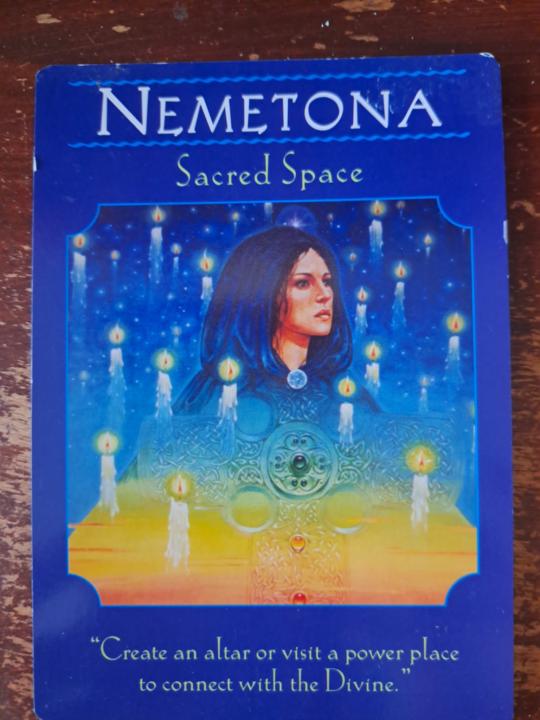
Nemetona
Sacred Space "Create an altar or visit a power place to connect with the Divine." By creating altars and/or visiting sacred spaces we connect with energy that has been curated over time and the lived experiences of many. This is powerful and can help you tap into the combined wisdom of generations. Nemetona is a Celtic Goddess of liminal spaces. Her name means "Sacred Grove". She protects sacred ceremonial sites. When you enter natural spaces that feel sacred and set apart from the mundane world, this is the realm of Nemetona.
1 like • 10d
🫶🏻
🔥
11d •
Affirmation
I honor my truths. Lately i've found it's so important to honor your truth. I'm not talking about telling the truth. I'm talking about the truths about who are that you dismiss and/or make small. Whether it's out of fear, lack of self worth, or making yourself small to fit into other people's boxes. We all have truths that we dismiss as nothing or not a big deal or not important. More often than not, these are genuine things that make us who we are , that we deserve to be proud of, and should be. Maybe you have a natural talent for something. Maybe you have a huge heart and love to help others. Maybe you are creative. Maybe you have a beautiful voice. Maybe you have deep knowledge and/or understanding of something. Maybe you've worked hard to be physically fit. Maybe you've worked hard to get really good at something. Today is your day to honor your truth. Shout it out. Loud and Proud!

1 like • 10d
I am grateful to have found my truth, and the best part is continuing to get to know oneself a little more each step of the way. The process of getting to know and discovering one's truth never stops once it starts. Don’t expect there to be a finish line, because each day there’s room to learn new truths.💫❤️💫
2 likes • 10d
@Phoenix Wilder Phoenix, this is absolutely beautiful. The way you described religions as languages rather than cages is so profound. It allows us to look at the clues without getting trapped in the structure. Your line about Jesus warning against the Pharisees and their books really hit me. It reminded me of the ancient Gnostic understandings—that the ultimate teacher wasn't trying to build a rigid institution, but was pointing us back to Sophia, the divine wisdom within. And Mary Magdalene wasn't the diminished character history tried to make her; she was the literal embodiment of that sacred wisdom here on earth. When you wrote about the fire purifying the silver and gold, it shook my soul. My own personal mantra is, "I am the Silver that listens, I am the Gold that speaks. My roots are in mud, my crown is in the cosmos." Reading your words about our roots being in the dirt while reflecting the light felt like a profound, cosmic confirmation. Thank you for sharing your heart so rawly. This is a beautiful reminder of the kingdom within. Thank you for sharing!💫❤️💫
1-5 of 5
@cassandra-kiehn-7548
I am the shadow shaping the light, illuminating the lighthouse that I am.
Active 7h ago
Joined Jun 28, 2026
INFP
Washington State