Activity
Mon
Wed
Fri
Sun
Apr
May
Jun
Jul
Aug
Sep
Oct
Nov
Dec
Jan
Feb
Mar
What is this?
Less
More
Owned by Carey Ann
The George Method Healing Community - Learn how to heal yourself from within. Nervous System Regulation & Embodiment Techniques For Healing.
Memberships
Skoolers
189.9k members • Free
JUST BANK™ AI & Brand Alliance
1.8k members • Free
Conscious Business Accelerator
11.3k members • Free
Conscious Business Accelerator
18.3k members • Free
84 contributions to The George Method™

5d •
April Weight Loss Challenge
Subscribe or upgrade your monthly Skool subscription to a yearly subscription ($99/yr) by April 1st to unlock this course. The George Method™ Weight Loss Challenge Guided Group Workshop is launching on April first. 💎 Definitely NOT your typical weight loss challenge 😉 Most people try to change their body through force. More workouts. More restriction. More exhaustion. The body responds by tightening fascia, elevating cortisol, slowing metabolism, and holding on even harder. The George Method™ routine works differently. It restores flow to the systems that determine body shape. If you’re already a yearly subscriber, comment UNLOCK to be granted access and join us ⬇️ Carey Ann George

0 likes • 6h
@Eden Bodnar I’ll unlock now
0 likes • 6h
@Rochelle Masternak under subscription
5d •
New Course Launched!!!
Learn How Tongue Strength, Posture, and Fascial Integrity Influence Migraines, Neck Tension, Energy, Sleep, and Whole Body Health https://www.skool.com/thegeorgemethod/classroom/e4cefe59 Free this month only to YEARLY Subscribers-drop a comment to unlock this course ⬇️
0 likes • 6h
@Lori Raszler unlocked
2d •
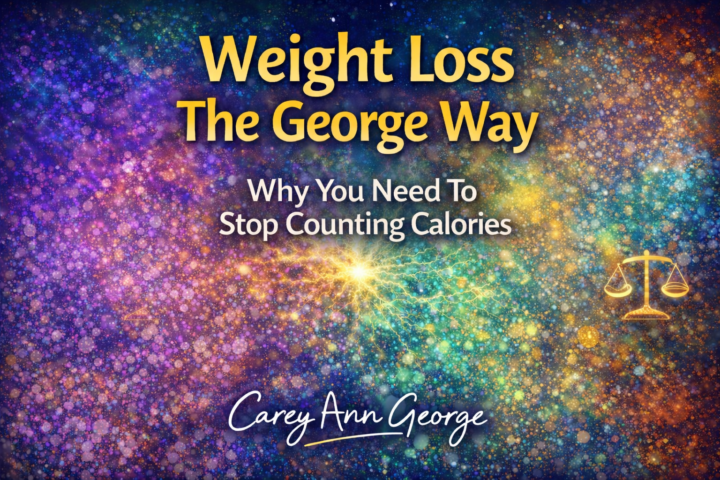
Why You Need To Stop Counting Calories
For decades the nutrition world has taught people that the key to health and weight management is counting calories. This idea sounds simple on the surface, but in practice it has become one of the most misleading frameworks ever introduced into public nutrition. The human body is not a mechanical furnace that simply burns fuel based on numbers. It is a living electrical and biochemical system where hormones, nutrients, minerals, enzymes, and nervous system signaling determine how food is used. Two foods can contain the exact same number of calories yet have completely different effects on metabolism, inflammation, satiety, and cellular repair. A processed snack and a nutrient-dense whole food may both contain 200 calories, but one delivers little more than sugar and unstable fats while the other supplies amino acids, minerals, vitamins, and phytonutrients that the body actually needs to rebuild tissue and regulate hormones. Calorie counting also fails in the real world because it assumes people can accurately measure and track every gram of food they consume. Even under controlled laboratory conditions this is difficult, and outside of that environment it becomes nearly impossible for the average person to maintain with accuracy. Portion estimation errors, differences in cooking methods, absorption variability, and the natural variation in foods themselves make the numbers unreliable. Yet many people spend years trying to chase precision with tools that cannot truly deliver it. Instead of learning to listen to their body’s signals, they become dependent on external numbers that rarely reflect what their metabolism actually requires. The psychological impact is just as important. When every meal becomes a calculation, food stops being nourishment and starts becoming a source of stress. The mind shifts into hyper-vigilance, constantly tracking, estimating, and worrying about numbers. This keeps the nervous system in a subtle but persistent state of alertness. Chronic stress elevates cortisol, disrupts blood sugar regulation, impairs digestion, and can actually slow metabolic function. In other words, the act of obsessively counting calories can create the very metabolic resistance people are trying to overcome.
1
0
3d •
REFRAMING THE STORY
How Changing Your Perspective Rewrites Your Nervous System The events of your life are not the only things shaping your reality. The meaning you attach to those events is what your nervous system organizes around. Two people can experience the exact same moment and walk away with completely different internal worlds. One sees loss. The other sees protection. One sees betrayal. The other sees a lesson that redirected their life. The brain is not just a recorder of events. It is a storyteller constantly assigning meaning to what has happened. That meaning becomes the emotional chemistry your body lives in. When the brain interprets an experience as danger, abandonment, rejection, or injustice, it stores the event with heightened emotional charge. The amygdala flags it as a threat memory, the body releases stress chemistry, and the nervous system builds protective patterns around that interpretation. Years later, those patterns still run. A comment from someone else might trigger the same feeling of rejection. A relationship dynamic may activate the same sense of abandonment. Your body reacts as if the original event is happening again, even though the situation has changed. The brain does this because it believes the story it stored the first time. Reframing exercises are powerful because they allow you to update that story. Memory is not fixed. Neuroscience shows that when a memory is recalled, it becomes temporarily flexible. During that window the brain can modify the emotional meaning attached to the event before storing it again. This process is called memory reconsolidation. When you revisit a painful memory from your adult perspective, you bring resources to the experience that were not available when it first happened. As a child you may have felt powerless, alone, or unsafe. As an adult you have awareness, language, and the ability to understand context. Reframing means entering the memory again with those new resources. You imagine your current adult self stepping into that moment with the younger version of you. You acknowledge what that child felt. You provide the reassurance that was missing. You offer protection, explanation, or comfort. Instead of leaving that younger self isolated in the original story, you bring presence and safety into the scene.
2
0

3d •
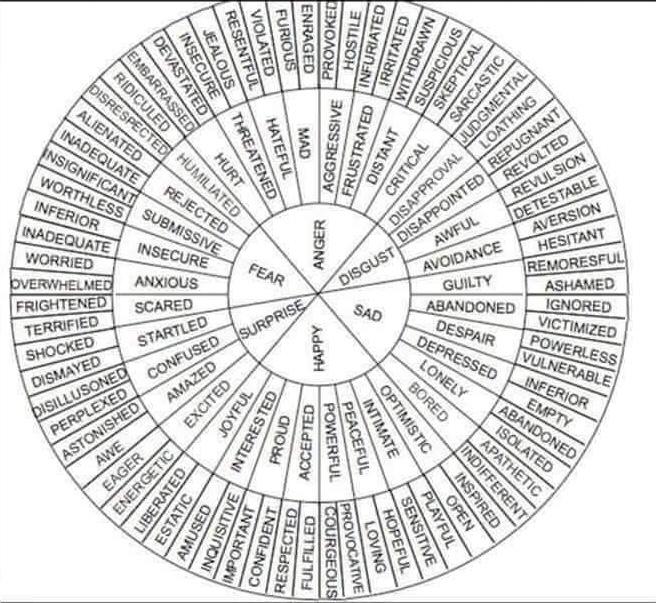
THE STRATEGIC USE OF THE EMOTION WHEEL
How to Decode a Trigger and Dissolve Its Root Most people believe that emotional triggers are the problem. They believe the anger, fear, sadness, or disgust that rises inside them is the thing they must suppress, control, or eliminate. But in reality, the visible emotion is almost never the root. It is only the surface expression of something much deeper operating beneath conscious awareness. This is where a tool like the emotion wheel becomes incredibly powerful. Not as a chart to label feelings, but as a map that helps you trace an emotional reaction back to the subconscious pattern that created it. When someone is triggered, the brain moves extremely fast. The nervous system detects something that resembles a past threat, and the body reacts before the conscious mind has time to analyze the situation. Heart rate rises. Muscles tighten. Breath changes. Stress hormones flood the bloodstream. By the time you realize what happened, you are already inside the reaction. What the emotion wheel allows you to do is slow down that process and reverse engineer it. At the center of the wheel are the primary emotional categories: fear, anger, sadness, disgust, happiness, and surprise. These are the fundamental emotional states the nervous system uses to interpret the world. But these core emotions rarely appear in their pure form during daily life. Instead, they manifest through more specific secondary emotions that branch outward. For example, what someone labels as “anger” may actually be rooted in feeling rejected, humiliated, threatened, or powerless. What appears as sadness may actually come from loneliness, abandonment, disappointment, or feeling misunderstood. The emotional wheel helps expose these layers. When a trigger happens, the first step is observation rather than reaction. Instead of saying, “I’m angry,” you begin asking deeper questions. Where on this wheel does my reaction actually live? Is the anger really anger, or is it frustration, resentment, humiliation, or feeling disrespected?
1-10 of 84