Activity
Mon
Wed
Fri
Sun
Sep
Oct
Nov
Dec
Jan
Feb
Mar
Apr
May
Jun
Jul
Aug
What is this?
Less
More
Aquatic Leaders + Water Safety
68 members • Free
Aquatics Business Builders
53 members • Free
The OpenCEU Community
3.8k members • Free
QI
Quality Initiatives in ABA
1.2k members • Free
Navigating Neva
197 members • Free
Free Superhero Swim University
1.3k members • Free
1 contribution to Navigating Neva

Dec '25 •
The divide
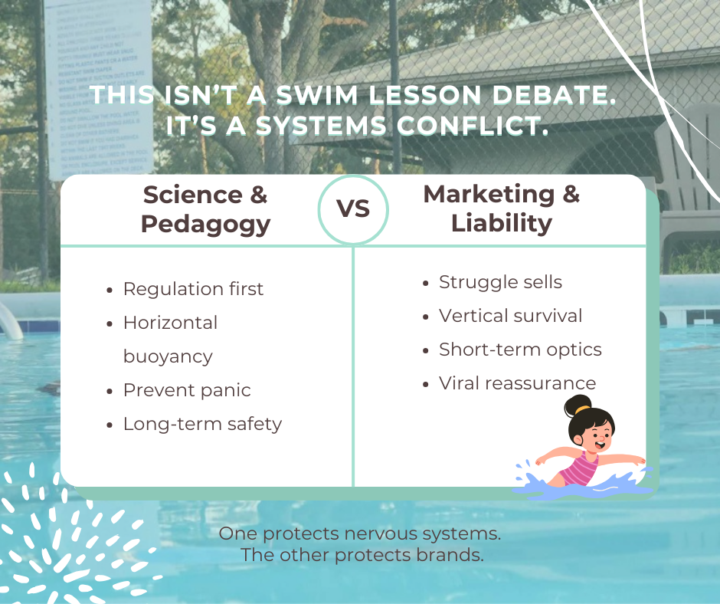
When you apply science, pedagogy, and trauma-informed practice to aquatics, you challenge a system built on marketing optics and liability protection. Science focuses on cognitive load, emotional regulation, and preventing panic. Viral content focuses on struggle, vertical survival, and “drown-proofing” narratives that look good on camera. The friction happens when nuance threatens simplicity — and empathy gets mislabeled as weakness. Both claim safety. Only one builds long-term aquatic literacy. Trauma-informed safety doesn’t trend — but it saves lives.

1 like • Dec '25
Love this, research supports most people respond better to reinforcement over punishment! This definitely supports your argument.
1-1 of 1

@breanna-merhar-9190
I teach adaptive swim lessons & work with and educate around challenging behaviors including elopement in the pool setting. My passion is inclusion!
Active 8d ago
Joined Nov 10, 2025
Minnesota