Activity
Mon
Wed
Fri
Sun
May
Jun
Jul
Aug
Sep
Oct
Nov
Dec
Jan
Feb
Mar
Apr
What is this?
Less
More
Memberships
Home Grower Hangout gbb101
25 members • Free
6 contributions to Home Grower Hangout gbb101


Nov '25 •
The Frost Frontier: The Complete Story of Trichomes in Cannabis
By Big Red Introduction – The Sparkle That Started It All You know that moment when the light hits a cola just right and it looks like it’s been rolled in crushed diamonds? That’s not magic; that’s trichomes doing their thing. Those tiny resin factories are where the soul of cannabis lives. Every smell that makes your nose twitch, every buzz that melts your body into the couch, every spark of creativity that shoots across your brain — all of it starts inside a trichome. They’re the most important microscopic feature a grower can learn to read. In this essay, we’re digging deep — from the cellular level to the grow-room hacks that make your buds look like they’ve been snowed on. We’ll cover the biology, chemistry, and physics of frost, and then I’ll show you how to push those trichomes to work overtime until they glisten like glass under your LEDs. 1. Anatomy of Frost – What Trichomes Actually Are Trichomes are specialized epidermal outgrowths — think tiny glandular factories on the surface of the plant. Cannabis carries three main kinds: 1. Bulbous trichomes – microscopic blisters that cover the leaf surface like invisible armor. 2. Capitate-sessile trichomes – medium-sized glands that sit low on the epidermis; small heads, short stalks, moderate resin output. 3. Capitate-stalked trichomes – the giants, visible even to the naked eye. Long neck, bulbous head, and a chamber packed with cannabinoids, terpenes, and flavonoids. Each gland head is like a tiny pressure cooker: the stalk channels nutrients and precursors from the plant’s vascular system, while the head’s disk cells assemble those molecules into sticky resin. When light hits that dome, it refracts like crystal — the sparkle we chase. 2. Evolutionary Roots – Why Cannabis Built Resin Armor Trichomes didn’t evolve to get humans high; they evolved to keep the plant alive. Out in the wild, cannabis deals with predators, UV radiation, drought, wind, and microbes. Those glands are a multi-tool defense system:


1 like • Nov '25
Always chasing the frost and bud swell
Nov '25 •
Welcome
Good afternoon members, Im glad to have you. I welcome everyone and anyone to post there knowledge, questions whatever pics lets build a community thats top tier like weve done for years on other platforms
1 like • Nov '25
Thanks big red, i see this platform doing big things in the future

Nov '25 •
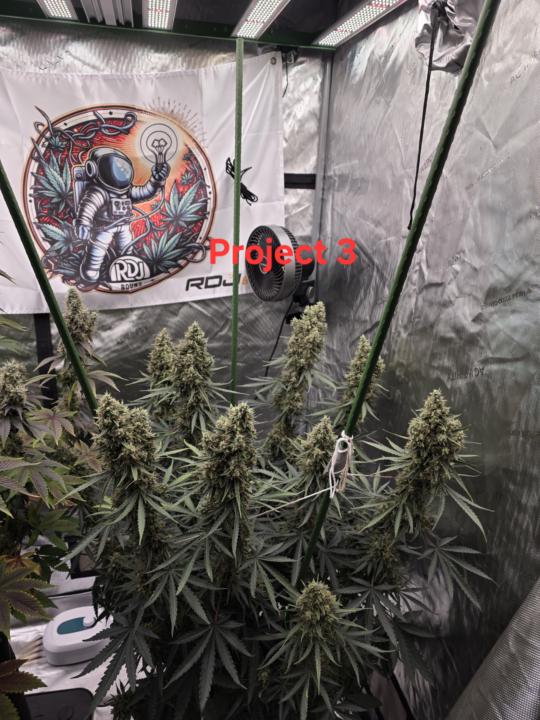
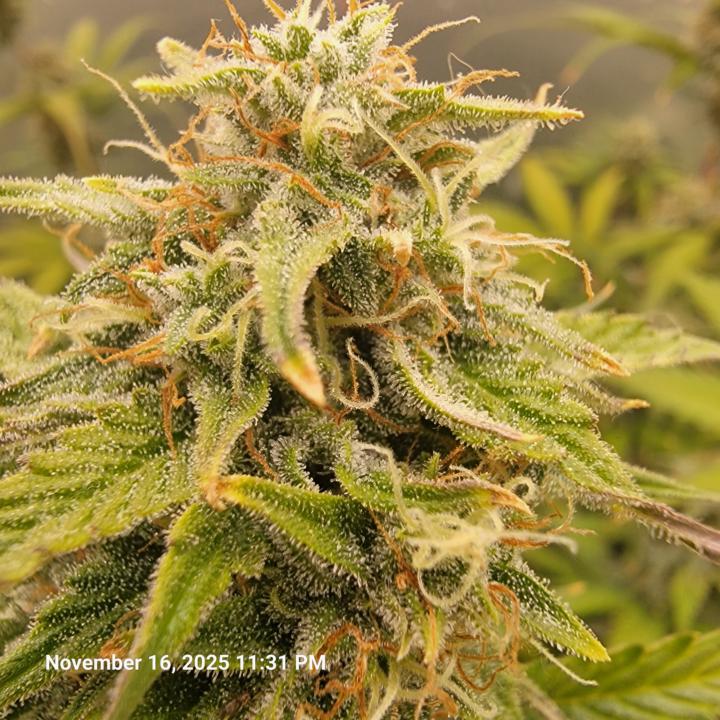
Photoperiod plants 8weeks of flower
They are stinking up the house. I love it. Harvesting after Thanksgiving
2 likes • Nov '25
Beautiful work right there
2 likes • Nov '25
@Stephanie Musser thank you
1-6 of 6

@bob-carroll-6131
Growing is a passion for me. Deep love for this plant. Grwoing for myself as well as disabled veterans
Active 155d ago
Joined Nov 8, 2025