Activity
Mon
Wed
Fri
Sun
Nov
Dec
Jan
Feb
Mar
Apr
May
Jun
Jul
Aug
Sep
Oct
What is this?
Less
More
Cancer Warriors
558
5.0
Free
Cancer Warriors Vault
44
Free
718 contributions to Cancer Warriors
17d •
Non profit organization
Would anyone have an idea of a good organization to support integrative cancer research. Specifically Her + breast cancer? My daughter passed away this past April and it’s my 70 th birthday and thought if I promote any organization it would be one for integrative medicine.
6 likes • 14d
Gwen, first of all, I’m so sorry about your daughter. Wanting to do something meaningful in her memory for your 70th birthday is incredibly thoughtful ❤️🙏 I’ve thought about this quite a lot because I would also love to see more support going towards integrative and metabolic approaches to cancer. Dr. Thomas Seyfried’s research is obviously hugely important to many of us here. My personal feeling, though, is that established researchers and institutions generally have greater access to grants, donors and academic funding than individual cancer patients do. For me, there is something incredibly meaningful about helping fellow Cancer Warriors directly, especially people who are going through cancer while also struggling financially. We have some amazing people in this community who continually support others, share what they’ve learned and add so much value to the group. We’ve also sadly lost wonderful members, whose presence and contributions are still very much remembered. For me, knowing that a donation was directly helping a fellow warrior who genuinely needed it would be incredibly meaningful. Sometimes even relatively modest support can make a very real difference to an individual person. Whatever you decide, Gwen, I think wanting to honour your daughter by helping other people affected by cancer is a beautiful thing 🙏❤️
1 like • 12d
@Svetlana Soboleva thank you for the kind words my friend 🙏❤️ much appreciated!

19d •
Physical Activity before and after cancer diagnosis
Another interesting video that I believe in. https://youtu.be/hqAFIsQEib4
0 likes • 14d
Thanks for sharing, Wayne.

Sep 2 •
Pitts, J.
If my PSA has been stable for a year, appearing the prostate cancer is in remission, should a PET scan be necessary at this point?
1 like • 28d
If your PSA has genuinely remained stable for a year and you have no new symptoms, it may be worth asking your oncologist what additional information a PET scan would provide and whether the result would actually change management. Current prostate cancer guidelines generally don’t recommend routine imaging after curative treatment when PSA remains stable and the patient is asymptomatic. PSA trends remain one of the main surveillance tools. There are also less invasive blood-based approaches worth discussing, including liquid biopsy looking at circulating tumour DNA (ctDNA) or circulating tumour cells (CTCs). These are very interesting technologies, although at present they aren’t generally considered a replacement for PET/CT when imaging is clinically indicated. If there is a genuine suspicion of recurrence, a PSMA PET/CT can be extremely useful because it can identify relatively small sites of prostate cancer and potentially change treatment decisions. So personally I’d ask: What are we looking for, how likely is the scan to find something given my current PSA trend, and would finding it change what we do? If the answer is unlikely to change management, continued PSA monitoring may be reasonable to discuss.
Aug 21 •
Update
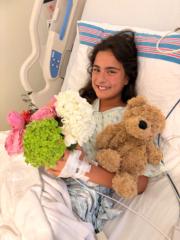
My daughter had her post radiation MRI on Monday and she had a 60% reduction in her DIPG tumor!! All Glory to God! We have been doing a few supplements along with the radiation but God is hard at work with her and nothing is impossible for him! Don’t give up , keep praying and believing for you and your loved ones ❤️
0 likes • Aug 22
🙏❤️

Aug 16 •
We are all blessed to be alive!
In life, there are truly moments that awaken you to what is really important. On one hand, we had a devasting Fire a couple days ago. We are EXTREMELY lucky. I have a big practice in a large home in the Netherlands (you hear me speaking Dutch in the video) At 3am, the police woke us up... There was a FIRE in the back of our practice.. . One of the fireman is a patient of mine, so he knew the building and it was put out quickly. 5 more minutes, and we would have lost the building. BUT, nobody was hurts. We are all okay, and I have great insurance so that isn't an issue. In truth... this is really a BLESSING. Our neighbor happen to have her window open. She got up, saw the fire, and alerted everyone. SHE IS A HERO!! And we are lucky to be alive. My amazing partner, Kaiyann Isa, says this is the summer of the Chinese Fire Horse... A time of rebirth. I love this perspective. Her practice is basically destroyed. We are finding a new space for her and the other amazing practioncers at our location that suddenly have no place to treat their clients... All will be well, eventually. The fire started spontaneously in the dryer. It was not even on. You can look at this like we are cursed... But we do not. With all things, there is balance. With every light, there attracts a balancing darkness. It all evens out. Here, we ARE BLESSED. Nobody was hurt... and if the fire burned a bit more, we would have lost our home. We feel this will create an amazing new start... and we are FOR IT! Lemons into lemonade! I feel personally DEEPLE grateful. And am MASSIVELY touched by all the gratitude and concern and care from everyone. I'm SO BLESSED and lucky... and can feel that. You guys here all understand how the suddenly your life really comes into PERSPECTIVE. What REALLY matters... as opposed to what we often stress about.
1 like • Aug 18
God bless 🙏
1-10 of 718
@bernardohenriques
Cancer Warriors was inspired by my mum. Building metabolictherapy.com so patients, caregivers & families can access research, education and community
Active 8h ago
Joined Aug 2, 2024
Powered by