Activity
Mon
Wed
Fri
Sun
Aug
Sep
Oct
Nov
Dec
Jan
Feb
Mar
Apr
May
Jun
What is this?
Less
More
Memberships
The Productive Property
44 members • Free
The Farmyard
286 members • $19/month
Oasis Builders
139 members • Free
Gardeners Growing Together
568 members • Free
Perma Resilience
1.2k members • $7/month
DP
Dryland Permaculture
90 members • Free
Living Soil Community
1.3k members • Free
Food Forest Family (FREE)
3.7k members • Free
Bee Happy
243 members • Free
9 contributions to Oasis Builders

🔥
3d •
Preparedness Becomes Stronger When We Use the Pantry
Recently we looked at the home as a working system. Food, water, first aid, light, tools, and family need all work better when the family as a whole understands how the household actually runs. The next step is to practice with the pantry. A pantry is not just extra food on a shelf. A useful pantry is food the family typically eats and knows how to cook. One simple way to learn your pantry is to make preparing meals from the pantry a game. Look through the cabinets, refrigerator, freezer, and garden if you have one. Then ask, “How many meals could we make before we had to go to the store?” Not fancy meals, but life-giving, wholesome meals. Beans and rice, soup and bread, pasta and sauce, oats, tacos, eggs, tuna salad, fried potatoes, pancakes, or whatever your family already eats. As you do this, observe the shelf life and whether something could be bought in a larger quantity at a better price. For example, I like Ro-Tel. I found that the large can is considerably cheaper, although I used to buy the smaller cans because I did not want waste. Now I buy the large can, use what I need, and put the rest in a clean quart jar in the refrigerator to use in the next week or so. This is a simple example although the goal is not to make this complicated. The goal is to save food cost and set the household up to eat for a period without constantly running to the grocery store. These observations will show what foods you really use and what comes up missing frequently. Do we have enough salt, oil, seasoning, stock, sauce, flour, eggs, or other common items that turn stored food into normal meals? Then start noticing the small grocery runs. Did we go for milk, bread, eggs, coffee, butter, pet food, toilet paper, dish soap, onions, snacks, or something for lunches? Repeated runs are clues. Preparedness does not need to begin with special emergency food supplies. Sometimes it begins by keeping more of the normal things the household reaches for every week. If we use pasta sauce every week, one jar is fragile. Four or six jars give the home more breathing room. If we use rice, oats, coffee, peanut butter, canned tomatoes, beans, broth, or animal feed all the time, those are not random storage items. They are part of the household rhythm.
Poll
12 members have voted

3 likes • 3d
We went to the store in may, won't be going back till august. that is more than 28 days but that was the biggest option you had.

9d •
Less is more
The heatwave forecast for next week has now turned into an extreme weather warning, with 40+ degrees Celsius , already drought restrictions are in force, which means private people are not allowed to water plants or wash cars, windows etc.. So at the start of the year when I decided only to cut a minimum of grass areas and not to do a large chop and drop mid season, has worked well, long vegetation Keeps soil temperature down and shades young trees and fruit bushes. It's also provides extra wildlife habitat and allows the development of new seedlings and a bigger wildflower seed bank.(Sometimes with plants like thistle it's not so good, although they can be weeded out individually.) On the whole it has produced more biomass and an impression of volume, at the same time making a sense of compaction and closeness. Proving that ultimately doing less is more.
2 likes • 9d
I am noticing similar my self. I got behind cutting grass/weeds and noticed the long thick areas are super wet and hard to cut. Where as the areas I cut earlier and recutting are much dryer.
2 likes • 9d
@Phillip Greenwood So much to learn!
🔥
12d •
Some Herbs Build Slowly
Last week we talked about what an herb is doing in the body. Now we need to add one more layer. Some herbs are gentle supports. They are not always used because something is wrong right now. They are used because they help the body stay nourished, steady, and resilient over time. Nettle is a good example. It is mineral-rich and often used when the body feels run down or depleted. Oatstraw is another steady herb. It supports the nervous system in a slow, nourishing way. Rosehips can bring gentle daily support through food-like nourishment. These herbs are more like compost in the garden. We do not add compost and expect the whole garden to change overnight. We use it because it helps build the ground. This week, pick one gentle herb and ask: Would this herb be useful as steady support, or am I expecting it to act like a quick fix? A strong home apothecary starts with simple herbs we can understand and use with care.
1 like • 12d
I you need a little zipity do da to get some work done take a spoonful of Nettle seeds. While the leaves might be a gentle support, the seeds will give an short term energy boost
15d •
The wheel Reinvented
Grass has three main purposes, as a source of rich biomass(mulch or compost), an animal feed and to keep an area of land fertile untill your ready to grow something more useful. Grass is not for looking nice or occasionally sitting on. What are people's thoughts on two new taxes, Hard surface/concrete tax and lawn tax, with all proceeds going towards regenerative land use projects.
3 likes • 14d
I hate taxes of any kind especially for things that are permanent. if it is yours and they can tax you, it is not really yours. I do feel like the grass people have could be put to better use. My lawn is pineapple weed, smells good keeps the bugs down.
2 likes • 13d
@Phillip Greenwood It is a 20x30 area beside the house. I am allergic to grass and wanted something different.

16d •
How many of you produce your own fertilizer?
We've always had lots of animals, including horses, goats, chickens, rabbits, etc.. so we always have an abundance of fertilizer/compost at various stages of drying out. Do you raise/make your own? Or do you buy it?
2 likes • 16d
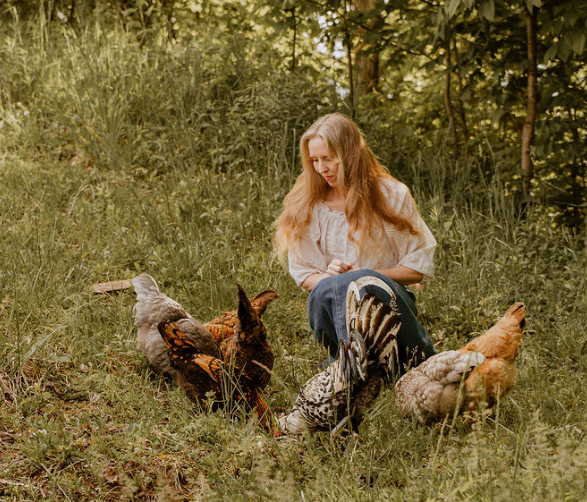
I have chickens and there a free range cows I can pick up the pats of. Plus weeds and what not to make compost out of.
1-9 of 9
Active 12h ago
Joined May 21, 2026
Wauconda WA 98859