Activity
Mon
Wed
Fri
Sun
Apr
May
Jun
Jul
Aug
Sep
Oct
Nov
Dec
Jan
Feb
Mar
What is this?
Less
More
Owned by Andrew
🥇 #1 Ranked DaVinci Resolve community on Skool 🔥 Built for busy solopreneurs & creators who want a repeatable editing process.
Memberships
Mid-Life Creator Community
187 members • $39/month
Editor Accelerator
4.8k members • Free
The YouTube Blueprint
1.5k members • Free
Skool Growth Free Training Hub
6.4k members • Free
Photography Community
2.5k members • Free
AI Online Educators & Coaches
498 members • Free
The AI Advantage
75.4k members • Free
The Color Grading Vault
41 members • Free
Skoolers
190k members • Free
2 contributions to Skool Monetization Strategies

🔥
Jan 24 •
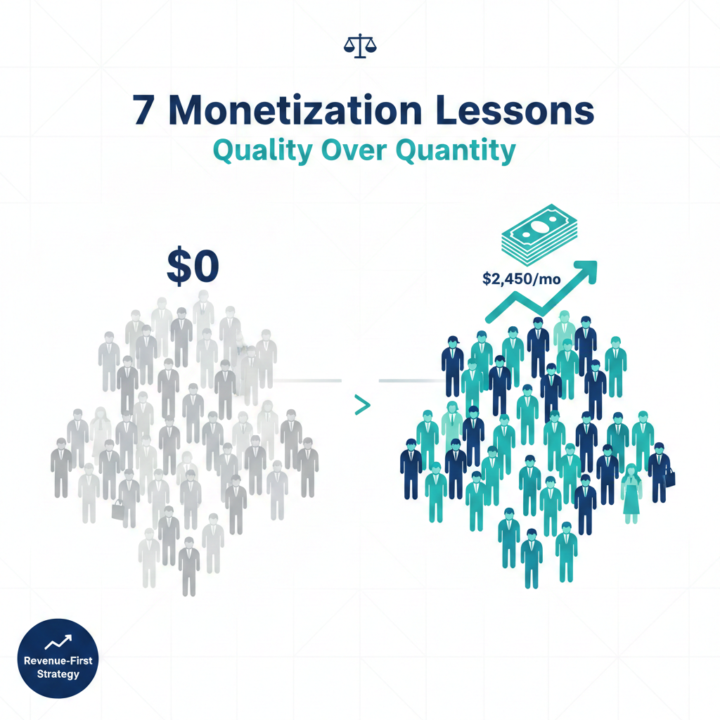
7 Monetization Lessons After Building Profitable Skool Communities
Building a profitable Skool community looks nothing like the typical growth advice suggests. After studying dozens of community owners who turned 25-50 members into $1,000-$5,000 monthly recurring revenue, the patterns are clear: most people are optimizing for the wrong metrics. The conventional wisdom says grow first, monetize later. Build to 500 members, then figure out pricing. Focus on engagement rates and post frequency. That approach fails consistently. Here's what actually works when you want to monetize a Skool community—seven lessons learned from communities that generate real revenue, not just vanity metrics. Lesson 1: Monetization Must Come Before Growth This is the hardest mindset shift for new community owners. Everyone wants to hit 100 members, 500 members, 1,000 members. The member count becomes the goal. Revenue becomes the afterthought you'll "figure out eventually." Here's what happens with that approach: You spend three months building a free community. You post daily. You answer every question. You hit 200 members and feel accomplished. Then you try to monetize. You announce a paid tier at $29/month. Maybe 5-8 people upgrade. The rest stay free. You've accidentally trained your audience to expect everything at no cost. The better approach: Start monetizing at 25-50 members. Build your pricing structure when the group is small and manageable. Prove people will pay for your expertise before scaling acquisition. A community with 40 paying members at $49/month generates $1,960 monthly. A community with 300 free members generates $0. Revenue validates that you're solving real problems. Growth without revenue just creates a larger obligation. When you're ready to start your Skool community with monetization built in from day one, this lesson matters most. Get the business model right early, then scale what's already working. Lesson 2: Transparent Pricing Is a Competitive Advantage Most community owners hide their pricing behind "DM me for details" or application forms. They think creating mystery builds perceived value.

1 like • Jan 24
This is one of the best posts I've seen on monetizing Skool communities! Nice work Des, and thank you for sharing.
🔥
Jan 14 •
Subscribe To My YouTube Channel For More Tips👇
https://tinyurl.com/skoolmonetizationlabyoutube

2 likes • Jan 22
Done ✅
1-2 of 2

@andrewgfarmer
Follower of Jesus, Husband, Dad of 5, Helping Creators Make Better Videos, F1 Fan, Tech Nerd, & I Drink Cold Coffee.
Active 48m ago
Joined Jan 22, 2026