Activity
Mon
Wed
Fri
Sun
Jun
Jul
Aug
Sep
Oct
Nov
Dec
Jan
Feb
Mar
Apr
May
What is this?
Less
More
Owned by Amy
A supportive space for women who want steady, natural energy and simple wellness habits, without complicated routines or restrictive diets.
Memberships
Midlife Badassery
228 members • Free
Effing Happy
10 members • Free
Skool Scale Camp
4.9k members • Free
Email Marketing Skool
1.1k members • $9/month
Quietly Ambitious Business
704 members • Free
Pinterest Skool
4.5k members • Free
Email Summit 2026
1.5k members • Free
Next Level Peak Performance
903 members • Free
Leadership Skool
1.5k members • Free
12 contributions to Healthy People Have Gardens

Mar 31 •
Ginger mini course
In the classroom is a mini course on growing ginger indoors. It is not a fast process, but it is not super technical or expensive once you know a few tricks.

1 like • 20d
I love fresh ginger, but never seem to use it up before it shrivels. So home-grown sounds like a great option for me. Thanks for sharing this!
28d •
Duck telenovela update
This video was really popular in my social media, so I am sharing here. I added a few more (what was supposed to be) girl ducks and the drakes were violent towards them. So the new ducks have their own space and Sweet Pea gets the boys to herself. It is mostly working. Pancake is still her favorite, but he and Waffles now have a common enemy so they are getting along again. They got a pool this week, and it has been a hit.

1 like • 20d
So cute, they are loving the splashes!
Mar 26 •
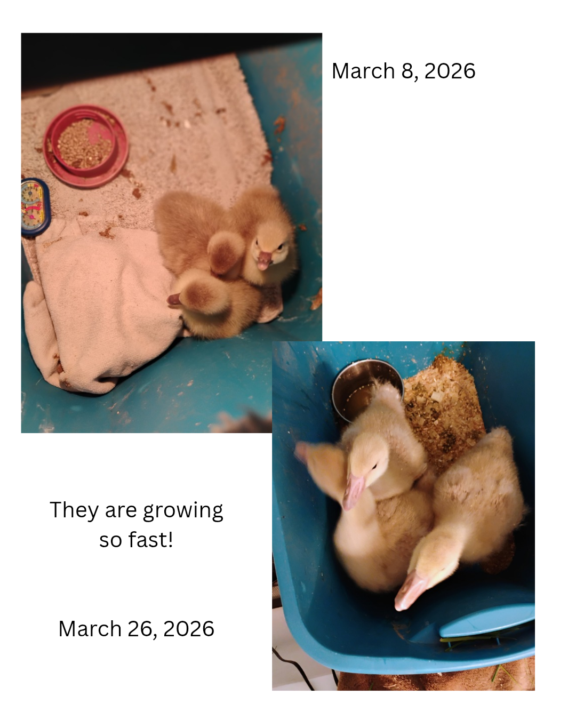
Gosling update..
The goslings got to swim for the first time today. Afterwards I put them back in their old tote to let them dry off. Absolutely amazing how fast they are growing.
0 likes • Apr 4
so cute!
Mar 7 •
Guess the due date...
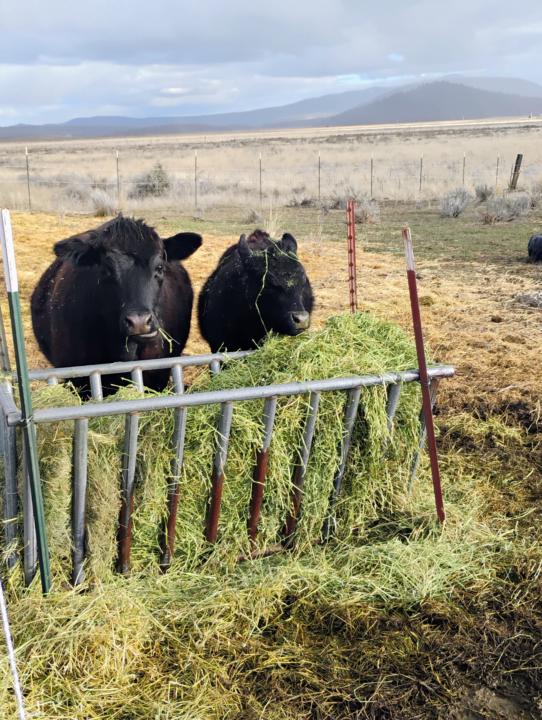
Agnes is due to deliver her first calf sometime in the next few weeks. Between March 7th and March 28th. Put your guess in the poll below. Person who gets closest will get a few packets of my favorite seeds. I'm guessing March 13th because I will be gone the whole day... 😂
Poll
5 members have voted
1 like • Mar 9
I'm so excited and can't wait to hear the updates!
Feb 11 •
Do I have enough at home to survive for at least 10 days?
On Monday I got tested on whether I am walking my talk. I was heading to town (an hour from my house), and just as I was making a turn towards my first stop, my car started making a horrible noise. Fortunately, I was only three blocks away from a mechanic shop. So I limped my car into their parking lot. I was warned that they were booked 2-3 weeks out, but then I explained my situation and they drove it around the lot, and they put me on the schedule for next week. So it looked like I wouldn't have transportation to town (grocery, pharmacy, bank) for at least 10 days. I had to do a quick scan of the basics for the family and 83 farm animals. Do we have enough on hand? I knew the humans would be ok. Even though we were out of kid snacks, we had actual food. There would be a little protesting, but he would live. Do we need pharmacy stuff? Do I have enough rabbit food? Do I have enough cash for fuel and hay? Sooo, if YOU were stuck without warning, and couldn't get to resources for 10 days, would you survive, without having to survive on stale graham crackers? Weather events, mechanical issues, illness, supply chain disruptions or busy sports seasons all can interfere with access. In the next week I will be posting in the classroom, a 7 day workshop I ran this Fall on how to prepare your home for extended disruptions. It isn't from a place of scarcity or fear, but to help build and maintain a buffer for your family, to insulate against the unforseen events that we can all experience, so you can keep rolling forward. What is one thing in your house that you know right now isn't ready for a 10+ day disruption?
2 likes • Feb 13
toilet paper ✅ toothpaste ✅ canned salmon ✅ cat food ✅ dog food ✅ We're running low on eggs. But we've got Spotify and Netflix, so we're good. 😂
1-10 of 12

@amy-joy-4260
I help tired women experience renewed energy and joy, during midlife or any season of life.
Online now
Joined Nov 18, 2025
INFP
Chicago, IL