Activity
Mon
Wed
Fri
Sun
Sep
Oct
Nov
Dec
Jan
Feb
Mar
Apr
May
Jun
Jul
What is this?
Less
More
Owned by Alex
Use the tools and leverage the community to get high-paying AI video jobs. They work best in tandem with AI Filmmakers Directory (dot com).
CapCut Video Editing for Beginners
Memberships
Momentum Wealth Collective
284 members • Free
Skooligans
584 members • Free
AI Video Bootcamp
26k members • $9/month
Synthesizer: Free Skool Growth
44.9k members • Free
AI Automation Mastery
605 members • Free
Claude Learning Skool
669 members • Free
AI Automation Vault
25.7k members • Free
Entrepreneurs 2.0 (Communauté)
1.1k members • Free
The Vibe Marketing Lab
146 members • Free
2 contributions to AIography
Mar 3 •
This week in AI filmmaking… things escalated.
A digital “Tillyverse” for AI actors is coming. The WGA West canceled its awards ceremony over a staff strike. Luma dropped Ray 3.14 and put $1M on the table at Cannes. And fresh data from 120,000+ AI-generated videos shows just how mainstream this has become. What’s fascinating isn’t just the tech getting better (it is). It’s that acceleration and resistance are happening at the same time. On one side: synthetic talent ecosystems, production-ready video engines, vertical video dominance, global adoption. On the other: labor unrest, anti-AI film festivals backed by Oscar winners, and guild tensions playing out in public. We’re not watching a trend. We’re watching the industry reorganize itself. I break all of this down in today’s AIography—including what actually matters for filmmakers trying to build careers right now (not just argue on Twitter). If you’re not subscribed yet, it’s free and takes about 7 minutes to read. 👉 Click HERE to subscribe. And as always—I'm curious: Are we heading toward two parallel Hollywoods? Or does this all eventually merge? Let’s discuss.

7 likes • Mar 3
Great post. We may not be heading toward two parallel “Hollywoods,” because AI filmmaking is inherently decentralized. But after a recent comment from one of my clients — who felt his AI-generated ad looked a bit too synthetic and slightly corny — I’ve been thinking: Maybe we’re not splitting industries.Maybe we’re splitting aesthetics. Even before the AI explosion, many filmmakers preferred practical effects, real stunts, and live sets over heavy CGI. There has always been a bias toward what feels tangible, embodied, and physically present. So perhaps what’s emerging isn’t AI vs. non-AI. It’s two aesthetic sensibilities: • Biological / organic / human-based• Synthetic / generated / constructed AI visuals are extraordinary. They allow us to depict scenes that would be impossible, unsafe, or financially unrealistic. The creative leverage is unprecedented. And yet — they often feel synthetic. Human actors on real sets, interacting with physical environments, may continue to hold a perceptual advantage when it comes to suspension of disbelief. Micro-expressions, gravity, friction, imperfection — our nervous systems register these details instantly. I’m not anti-AI — I founded the AI Filmmakers Directory two months ago specifically to help AI filmmakers be found by AI search models as well as by studios, producers, and collaborators. But I do think we’re entering an era where “real” becomes a premium aesthetic. Not because AI lacks power.But because humans are wired to believe humans.
2 likes • Mar 4
@Sherah Danielle thanks for asking. The AI Filmmakers Directory is a new directory I recently launched to help people discover creators who specialize in AI-driven video and filmmaking. The idea is simple: as AI video tools like Runway, Sora, Kling, and others evolve quickly, it’s becoming harder for brands, agencies, and producers to know who actually knows how to use these tools well. The directory is meant to highlight filmmakers who are experimenting, building workflows, and producing real work with AI. My intention is twofold: 1. Help AI filmmakers get discovered by clients, collaborators, and studios. 2. Give companies a reliable place to find people who can create high-quality AI video projects. It’s also designed so that AI agents and LLMs can easily understand and surface the creators listed there, which I think will become increasingly important. It just launched recently, so it’s still early — but the goal is to grow it into a useful hub for the emerging AI filmmaking community.
Sep '25 •
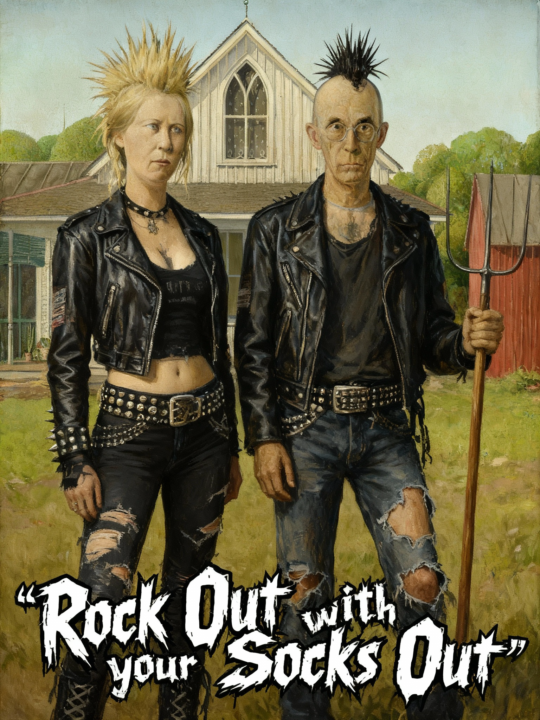
Seedream v4 Just Landed — And It’s a BEAST!
ByteDance’s new model folds text-to-image + image editing into one engine, so you can generate and surgically edit in the same flow. Think: swap subjects, rewrite poster text while preserving font/kerning, relight scenes, or build consistent looks from multiple reference images. It’s also fast and goes up to 4K. If Nano-Banana wowed you, this one will BLOW. YOUR. MIND. 🤯 Why it’s cool: - One model for gen + edit (less tool-hopping). - Batch & multi-reference for style/character consistency. - Up to 4K output; faster than the last version. Designers: don’t fear it — master it and dominate. Now go make something and post it below. 💥🎬 Check it out HERE!
1 like • Sep '25
How much?
1 like • Sep '25
@Lawrence Jordan ok thanks!
1-2 of 2

@alex-vachon-6153
Filmmaker with a passion for great stories. I make films for those who want to be remembered, brands and individuals.
Active 1h ago
Joined Feb 25, 2025
New York City
Powered by