Activity
Mon
Wed
Fri
Sun
Aug
Sep
Oct
Nov
Dec
Jan
Feb
Mar
Apr
May
Jun
Jul
What is this?
Less
More
Owned by Akassh Ashok
Create Digital Authority without lifting a finger! Curious? Join the community and DM me to understand
Movement for established pros done feeding algorithms — building owned digital assets with purpose, new-age technology, and a vision that compounds
Memberships
Spiritual Badasses Warrior Up
344 members • Free
CC
Connect & Collab
6 members • Free
Ninjas AI Automation
4.2k members • Free
Skoolers
162.7k members • Free
Meta Ads For Low & High Ticket
5.5k members • Free
Founders Accelerator (Free)™
21.1k members • Free
Lifestyle Founders Group™
13k members • Free
The AI Advantage
126.9k members • Free
2 contributions to The YouTube Skool

Sep '25 •
Is the real value of a community in content… or connection?
I’ve been reflecting on how Skoolers itself works for us. It’s not just a forum. It’s a support system — a place where community builders share challenges, wins, and ideas, and that collective energy keeps everyone moving forward. Now imagine if more professionals ran their own niche communities this way. Take a therapist, trainer, or consultant for example. Most of them charge around $100–$200 an hour for 1:1 sessions. Sounds good, but in reality: - They can only serve a handful of people each day - They hit an income ceiling quickly - And clients often drop off because there’s no ongoing support once the session ends But what if instead of stretching more 1:1 hours, they built a Magnetic Support System for their niche? A space where dozens or even hundreds of clients could stay connected, get guidance, and keep progressing — while the professional spends just an hour a day leading the group. Here’s where it gets interesting. If even 100 members joined at a modest subscription, that could match what many earn through daily 1:1 sessions. At 200 or 500 members, they’d already surpass their usual ceiling. And with 1,000 members, it becomes a career-defining shift — one that’s simply not possible through 1:1 alone. For new people, platforms like YouTube can organically feed members into such communities the same way this Skoolers space attracts and retains us. The thought that excites me: How different would the average professional’s career look if their work was powered by a community engine instead of just a calendar of appointments? Curious to hear: - Do you see this ceiling in your own field? - Have you seen examples of professionals making the shift to a community model? - What do you think holds most people back from creating their own support system?

Mar '25 •
Perfection is killing your channel
Waiting for the “perfect plan” is just procrastination in disguise. If you keep holding back, you’ll stay stuck while others pass you by. 1. Take messy action. 2. Learn as you go. 3. Get better through doing, not waiting. 💡 Key Insight: Public failure isn’t the enemy—it’s the process. Every great creator started messy. The only way to improve is to start. 🚀
1 like • Sep '25
@Jonathan Mcelrea You’re spot on, waiting for perfect is what keeps most channels stuck. The creators who grow are usually the ones who take action, learn from the data, and double down on what works. In my experience, YouTube doesn’t reward polish as much as it rewards getting people to click and then keeping them watching. Once you’re publishing consistently, that’s when the algorithm starts compounding your efforts. I’m curious, when you put out new videos, do you spend more energy on crafting the content itself or on making sure the title and thumbnail pull people in?
1-2 of 2
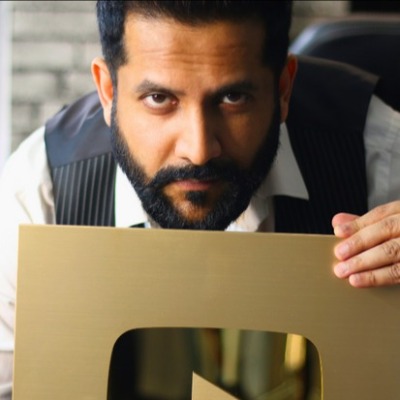
@akasshashokgupta
Helping experts turn their knowledge into content that works 24/7 | 1MN+ YouTube subs | 20Y in Business | Founder @GetCloned.in
👉 See how it works
Active 22m ago
Joined Mar 27, 2025
ENFP
Gurgaon, Delhi NCR, India