Activity
Mon
Wed
Fri
Sun
Aug
Sep
Oct
Nov
Dec
Jan
Feb
Mar
Apr
May
Jun
What is this?
Less
More
Owned by Anthony
Where science meets results. Learn peptides, training, recovery & more. No ego, no fluff—just smarter bodies, better minds, built to adapt.
Memberships
Program Delta Performance Lab
7 members • Free
DDT Method
201 members • $10/m
Business Facilitating
102 members • Free
Enhanced Executive Coaching
31 members • Free
Cody Moxley Coaching
6 members • Free
Skoolers
167.3k members • Free
397 contributions to Castore: Built to Adapt

2d •
The Biometric Blackout Challenge
The Biometric Blackout: A 30-Day Challenge I wear a tracker. And if I am honest, I obsess over the numbers. A conversation yesterday, and some reflection after it, left me with a question I cannot shake: what if the number on my wrist is not helping me move forward? What if, some days, it is the thing holding me back? I am not asking this rhetorically. I am genuinely questioning it. So I want to test it, and I want you to test it with me. What would have to be true For any metric on your wrist to earn its place, three things have to hold up. One: you understand what the number actually means. Two: it is measured accurately and consistently, day to day, on your body. Three: its interpretation tracks real progress. Not just what the app says, but what you can objectively measure and what you honestly feel and perform. If even one of those links is weak, the number stops being neutral information. It can quietly become a governor on your effort. You wake up, see a low recovery score, and talk yourself into a smaller session than your body was ready for. The device did not measure your ceiling that day. It set it. That is the possibility I want to put under a microscope. The challenge For five days, go blind. Wear the device if you like, but do not look at the data. Each morning, before you get out of bed, take your own resting heart rate by hand. Same time, same conditions, sixty seconds, before coffee or before your feet hit the floor. Write it down. Then, through the day, journal a few simple markers and rate each one from 1 to 5: 1. How good was your workout 2. How was your energy during the day 3. How tired did you feel 4. How refreshed did you feel when you woke up That is it. A number you took yourself, and four honest scores. Five days. The reveal On day six, pull up your device data and lay it next to your notes. Where did they agree? More importantly, where did they not? Find the days the device said you were cooked and you actually felt great and trained well. Find the days it said you were recovered and you were flat.

1 like • 23d
@Lucy Macedo https://shop.nubioage.com/Castore Coupon Code - Castore10 It should also be in the post for the classroom along with some visual aids I made to support the webinar. Thank you for your support.
1 like • 4d
@Lucy Macedo Lucy I appologize I just saw this. If you message me direct I am happy to give you the ordering information and I can get the product shipped out to you as soon as tomorrow.
5d •
Zoom Link For Live Webinar
Zoom Link for Q&A Anthony Castore is inviting you to a scheduled Zoom meeting. Topic: Member's Q&A Time: Jun 30, 2026 12:00 PM Eastern Time (US and Canada) Join Zoom Meeting https://us06web.zoom.us/j/86756226187?pwd=nqDxwUhiuGZxb7PRZ4b9axf7tTwZIg.1 Meeting chat link https://us06web.zoom.us/launch/jc/86756226187 View meeting insights https://us06web.zoom.us/launch/edl?muid=b4525aa9-cf8d-48d0-b47a-d8721da01fc3 Meeting ID: 867 5622 6187 Passcode: 890532 --- One tap mobile +16469313860,,86756226187#,,,,*890532# US +13017158592,,86756226187#,,,,*890532# US (Washington DC) --- Join by SIP • 86756226187@zoomcrc.com Join instructions https://us06web.zoom.us/meetings/86756226187/invitations?signature=3C9V5AyVG-7fUTfVGR80fn8-_pg8Oo4AUjwPWVAQSyQ
0 likes • 4d
There will be recordings available in the members community with bonus materials (visuals including slides and infographic). Should be edited and up by tomorrow
7d •
Post Bodybuilding Prep/Rebound Recovery Protocol
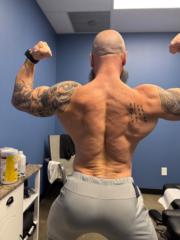
Looking for feedback and/or any suggestions. This is post bodybuilding prep/short rebound. Looking to begin the health phase, decrease inflammation, and set up for a productive offseason. 4 Week Recovery Phase: TRT SS-31 - 2mg/day in am M. Blue - 20-35mg/day in am Oral KPV - 1mg pre-bed GHK-Cu - 2mg/day pre-bed Epithalon - 1mg/day 5 on 2 off for 2 weeks *this does not include your standard support/ancillaries
2 likes • 7d
Appreciate you putting this out there. Posting a full stack openly takes some guts, and I can tell you have put real thought into the recovery phase. I am going to resist the urge to hand you a list, because I think that would actually do you a disservice. Let me explain why, and then offer you something better. Two quick things first. "TRT" tells me almost nothing on its own. Ester, dose, frequency, where your trough sits, what E2 and SHBG are doing, whether you are aromatizing. Those details change everything downstream. The word is doing a lot of hiding. "Standard support and ancillaries" is the part I would actually slow down on. People treat that line as the afterthought. In a recovery phase it may be the main event. The cofactors and the terrain are what let any of these tools work. Without them you are sending signals into a cell that cannot answer. Here is the reframe I would offer. Instead of starting with what to add, start with how you got here. There is a sequence I use, and it works for anyone willing to think it through. Phenotype, source, signal, repair, protect. Phenotype is what you can see right now. Post-prep, depleted, inflamed, nervous system running hot. It is the dashboard warning lights. Not the problem itself, but the honest picture of where you are. Source is where that picture is coming from. Months of an energy deficit, high output, low intake. That is the actual fault under the hood, not the light on the dash. Signal is the message your cells are running because of that source. After a hard prep the cell is usually still in conserve and survive mode. It is whispering store, protect, do not build yet. Push growth tools into that and you are working against a cell that is still bracing for famine. Repair is helping the cell switch programs, from survival back to build. Restoring the machinery before you ask it to perform. Rehab, not just taking the cast off. Protect is guarding that progress so it does not get undone the moment life gets stressful again. The guardrails.
1 like • 6d
@Mitch FlorenceHappy to help with this. I see it as a great opportunity to support you while we learn from each other, which is exactly what I’m hoping to build with this community.”
7d •
The Fire You Cannot See: Why The Type Of Ketone You Use Matters
A man I coach sent me a photo last spring. Not a lift, not a plate of food. A handheld meter with one number glowing on it. 2.1. Underneath he wrote, "Dialed in." He had chased that number for weeks and finally caught it, and I was happy for him. I was also quietly certain it had told him almost nothing about what was happening inside his cells. That gap, between the number a device reports and the work a cell is actually doing, is the whole argument about ketones, and it is where nearly everyone gets lost. Two people can hold up meters reading the same 2.1 and be living in completely different bodies. One fed a fire. The other smothered it. The meter cannot tell them apart. So let me take you inside the cell the slow way, and let the fire teach the rest. Inside almost every cell sit structures called mitochondria, and it is fair, almost literally, to call them furnaces. They take fuel and oxygen and burn the two together to release energy, the way a wood stove turns logs and draft into heat. What comes out is not flame but a molecule called ATP, the cell's spendable currency. The intuition of a fire holds all the way down. A fire cares what you feed it, how fast you feed it, and how much air it can pull. Get any of those wrong and the same fuel that should warm the room fills it with smoke. Ketones are a fuel for that fire. Beta-hydroxybutyrate, or BHB, is the main one. Your liver makes it from fat whenever food runs short, and your heart and brain burn it gladly. The trouble starts the moment someone sells you BHB in a tub. Here is the first thing the meter hides. When you prick your finger, it reads how much BHB is floating in your blood that instant. It does not read how much is being pulled into a furnace and burned. Those are different questions, and confusing them is the original mistake underneath almost all ketone marketing. A reading of 2.1 tells you a certain amount of firewood is stacked in the yard. It says nothing about whether any of it is in the stove, catching, throwing heat. Dump more wood in the yard than the stove could ever take, and the surplus gets hauled off. In the body the haulers are your kidneys. Past a certain blood level you spill ketones into your urine, and the meter counts that lost fuel as a triumph your cells never touch.
2 likes • 7d
@Mike Schultz R3HBG. Let me save you the rabbit hole. It stands for R-3-hydroxybutyrate glycerides. Picture a glycerol backbone with three D-BHB molecules hanging off it, like fatty acids on a triglyceride. You drink it, gut enzymes snip the bonds, and free D-BHB hits your blood. A clean way to deliver the exact ketone your body already makes, no salt load, no rocket-fuel taste. The chemistry is legit. Pure D-BHB, not the 50/50 junk in most salts. Against ketone salts, it wins. Here is where it slows down. Every comparison is against salts or MCT oil. Never against the monoester, which is the molecule that actually carries the human research. That is picking the easy opponent and skipping the real one.“100 percent bioidentical” is doing a lot of work. The BHB it releases is bioidentical. The molecule you swallow is engineered, and about a tenth of it by weight is glycerol, which is not a ketone at all. The “3 to 6 millimolar in 30 minutes” line has no dose and no study attached. The monoester needs around 25 grams to hit that. These shots are 6 to 10. The math does not line up. And “FDA recognized” is marketing. An NDI filing is a voluntary safety notification, not an endorsement that it works. Same label still reads “not evaluated by the FDA.” Bottom line. R3HBG is a sensible delivery format. Pure, salt-free, pre-formed. What it has not earned yet is the clinically superior label. And remember, BHB is not a free pass. Burning it pushes your NAD couple more reduced. Ketones earn their keep when the problem is an energy supply gap, not as something you throw at everything.
1-10 of 397
@anthony-castore-4271
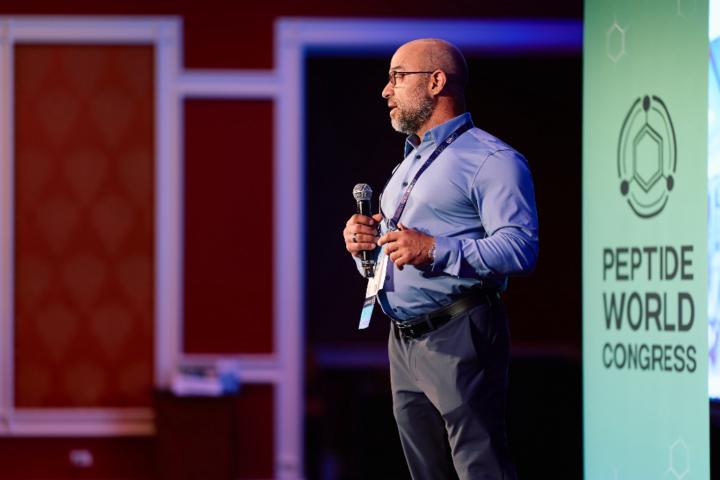
Anthony Castore — SSRP Fellow & strength coach blending peptides, training, and cellular medicine to optimize performance and recovery.
Active 9h ago
Joined Jul 31, 2025
Powell, OH
Powered by