Activity
Mon
Wed
Fri
Sun
Apr
May
Jun
Jul
Aug
Sep
Oct
Nov
Dec
Jan
Feb
Mar
What is this?
Less
More
Owned by Aaron
Build autonomous AI agents. Stop manual admin. We teach investors to Vibe Code custom tools for leads & ops. 90-Day ROI Challenge. Code to Close.
Memberships
Scale Your Doors Mastermind
9 members • Free
Skoolers
189.9k members • Free
AI Automation Society
275.4k members • Free
Real Estate & Beyond
78 members • Free
Capital Raising Mastery Hub
1.2k members • Free
Elite Capital Raiser (Free)
1.3k members • Free
The Video Dept.
4.9k members • Free
Flip Flop Flipper Real-Estate
4k members • Free
Apex Real Estate
219 members • $127/m
17 contributions to Retirement CASH FLOW

3 likes • Jan 19
I’m interested in all the people interested in traveling to Puerto Rico @Mike Ruscica Go Beyond San Juan baby!!!

🔥
Nov '25 •
The day I quit my job...
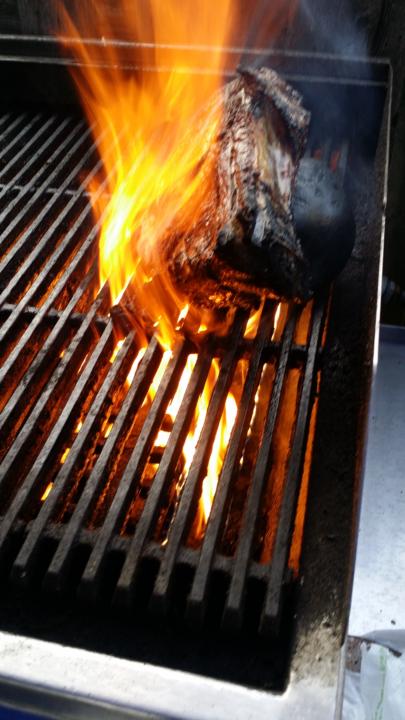
I came home with a Restaurant grade charbroiler! Up until that day we had a favorite steakhouse here in town, Clarks Landing. We were able to tour the kitchen one night and I saw how they made such awesome steaks seared perfectly. I'm like...I'm getting one of those! So I quit my J.O.B. (Just Over Broke) on Friday and Saturday morning I went to the Restaurant supply and bought an $1,800 36" Charbroiler and a stainless table and my wife thought I was nuts! "You quit your job and spend that kind of money the next day? She soon figured out my logic. We were dropping $150 every steak session at Clarks Landing (roughly every 3 weeks) and now that I am Voluntarily Self Unemployed, things had to change. Up until that tour of the restaurant kitchen, I kept buying outdoor grills that would fall apart every 3 years and they never had the sear heat to properly cook a steak! It's been 20 years now and I have almost never bought a steak in a restaurant...and I still have the same charbroiler!
3 likes • Dec '25
Love the mindset. My partner would have sniffed out my thought process though lol.
🔥
Nov '25 •
Straight from Rich Dad Poor Dad
Asset or Liability? 🤔 Most people never get this one simple idea: An asset puts money in your pocket.A liability takes money OUT of your pocket. That’s it. That’s the whole game. 👇 1️⃣ Your house - If it costs you money every month (mortgage, taxes, repairs) and doesn’t pay you… it’s a Liability. - If it’s a rental that sends you cash flow every month after all expenses… it’s an Asset. 2️⃣ Your car - Car payment, insurance, gas, repairs = money leaving your pocket every month 🚗💸 - Unless that car is being used to produce income (delivery, Turo, business vehicle that nets profit), it’s a liability. 3️⃣ Your credit cards - If you’re using them to buy stuff that doesn’t pay you back… that balance is a liability. - Debt tied to cash-flowing assets (notes, rentals, etc.) can be good if the cash flow > payment. 4️⃣ Investments - Stocks that don’t pay you? You hope they go up. That’s speculation. - Notes, rentals, private lending, cash-flow deals? They PAY YOU while you sleep. That’s an asset. 5️⃣ Retirement accounts - A 401(k) sitting in mutual funds, praying the market behaves = 🚩 - A self-directed account owning notes, rentals, private deals spitting out cash flow = real assets. If you look at your life right now… Are you stacking assets or collecting liabilities with fancy names? 👇 Drop one thing in your life that you thought was an asset… but now realize is actually a liability.
5 likes • Nov '25
Put your “assets” in to it 😂 Love this post @Mike Ruscica
🔥
Nov '25 •
Flipping Houses vs The Note Business
I just spent 3 days (7 hours a day) at a big real estate event and here’s what hit me. They broke the whole game down into 3 roles: Finder The dog on the bone. Calling homeowners, chasing FSBOs, digging through every crack in the market trying to find real deals at 60 cents on the dollar. Their job is to feed the Operator. Operator The flipper. The one in the chaos. Hiring contractors, buying materials, lining up the money, paying everybody, dealing with inspectors, buyers, lenders, drama, delays, all the shit that has to be handled just to get one house sold. Funder The money. Private lender comes in, looks at the numbers, decides yes or no, wires the funds, and then goes back to their life while the Operator sweats it out. When the deal closes, they get paid and look for the next one. Everyone in that room—attendees and coaches—kept pointing to the same “endgame”: 👉 Be the Funder Be the Funder Be the Funder And I’m sitting there thinking: I’ve been doing a version of this for 20 years… but louder. Because the note business is the Funder on steroids. We’re not funding one or two flips, getting cashed out, then letting our money sit around hoping for the next “good deal” to come along. It's also a race to the bottom. The operator is always looking for the cheapest money. Why borrow at 12% when I can get it for 7 or 8 or 6. Those are crap numbers. As note investors, we buy the paper. We buy groups of deals. We control the income stream. We work them out, restructure, modify, foreclose when we have to, and get paid from multiple directions. Some notes pay my retirement accounts for 20 years tax free! My family business can comfortably work 5–6 deals at the same time. Any more than that and yeah, we start to go a little bonkers—but in a good way. That’s leverage. That’s control. That’s being the Funder with way more options than a one-off flip. If you’re tired of only swinging a hammer or chasing leads and you want to see how the “Funder on steroids” side really works, drop a 🔥 in the comments or message me “NOTES” and I’ll walk you through how this model actually builds long-term cash flow.
0 likes • Nov '25
🔥 notes
🔥
Nov '25 •
This is Americas' best kept secret
Most people let their dead 401(k) rot in some old account they never look at. Here’s how to wake it up and turn it into tax-free cash flow 👇 Step 1 – Roll the dead 401(k) into a Traditional Self-Directed IRAQuit, fired, laid off, whatever… that old 401(k) is eligible. You move it (direct rollover) into a Traditional Self-Directed IRA so you can control the investments, not Wall Street. Step 2 – Convert to a Roth Self-Directed IRA Once it’s inside the Traditional SDIRA, you choose how much to convert to Roth.Yes, you pay tax on the amount you convert. That’s the seed.But from that point on, all qualified growth + cash flow in the Roth can be 100% tax-free. Step 3 – Invest the Roth into real, cash-flowing assets Now your Roth SDIRA can: - Buy performing notes - Fund non-performing notes you can fix - Buy rentals - Partner on deals - Own pieces of real businesses All the rent, interest, and profits come back into the Roth, not your pocket, so it can stack up tax-free. Tax on the seed once. Let the tree feed you for life. 🌳

2 likes • Nov '25
@Mike Ruscica Id be up for some conversation on this topic. I’m new to your group ( well I’ve been lurking I guess) but it’s one of my favorite topics too!
1-10 of 17

@aaron-st-john
Real Estate Investor/STR Fanatic/Raising Capital for Epic Deals/Maine and Puerto Rico
Schedule a time to chat with the link 👇
Active 2d ago
Joined Mar 20, 2025
Maine
Powered by