Activity
Mon
Wed
Fri
Sun
Apr
May
Jun
Jul
Aug
Sep
Oct
Nov
Dec
Jan
Feb
Mar
What is this?
Less
More
Memberships
Liberty Politics Discussion
3.9k members • Free
20 contributions to Liberty Politics Discussion

4d •
So… draft: yes or no?
According to White House Press Secretary Karoline Leavitt, the president “does not remove options off the table.” Officials say a draft is not currently planned, but the administration has refused to rule it out amid the Iran conflict. If the answer is truly no, why not just say so clearly? If yes, will the children of political elites be asked to participate? Source: https://youtu.be/4LxhsTC_RaA?si=QpJ7K4kF6jT1Z7ck
0 likes • 2d
@Muhammad Ghufran I understand the argument that reinstating a draft would require Congress and is therefore extremely unlikely. That’s true as a matter of law. But that also assumes Congress would actively exercise its authority in this situation. The concern some people have is that this administration has already taken several significant actions — from tariffs to military strikes — using broad executive authority, sometimes without prior congressional authorization. In the case of Iran, for example, the strikes were ordered before Congress approved them. So when people say, “Don’t worry, Congress would have to approve it,” I think it’s reasonable to ask why we should assume that process would work differently this time, given the recent pattern of expanding executive power in national security decisions. Unless, of course, the expectation is simply that the public should trust the administration to exercise that authority responsibly in all circumstances — which is exactly why democratic systems are designed with checks and balances in the first place.
0 likes • 7m
@Red Logan Putting the “pussy” in pussy footing. I’m actually glad you clarified that point — I agree a President can’t unilaterally implement a draft. That would require Congress, and that’s exactly why people ask questions and pay attention to how these things are discussed in the first place. My point was never that a draft is being ordered. It’s that when the administration says it “keeps options on the table” during an active conflict, people are naturally going to ask what those options include.
13d •
The Death of U.S. Soldiers Is Not a PR Problem
When American service members die in combat, reporting it is not “trying to make the president look bad.” It is the basic duty of a free press. Pete Hegseth complained that when U.S. troops are killed, the media makes it “front-page news,” suggesting journalists are simply trying to embarrass the president. Karoline Leavitt then backed him up, scolding reporters and defending the administration’s criticism of the coverage. This is an outrageous way to talk about the deaths of American soldiers. When Americans die in war, it should be front-page news. Their sacrifice is not a public-relations problem for the White House to manage. These are human beings who volunteered to serve their country. Treating the reporting of their deaths as political sabotage dishonors the very people the government claims to support. If anything deserves national attention, scrutiny, and reflection, it is the loss of American lives in war. Thoughts for discussion? Sources: C-SPAN: https://m.youtube.com/watch?v=WBMvalJnBXY CNN: https://youtube.com/shorts/gas4clAq53U Fox News: https://youtu.be/X7yeVfsETeY The Independent: https://youtu.be/06DeDUYX4_M
1 like • 10d
@Sabina Scott Conrad Yes, and like you said, it does speak to their sensitivity about facts being reported that they fear would make them look bad. Reporting the facts is a way to keep our leaders accountable.
0 likes • 2d
@Soap Box I see, so by your response I am guessing you define relevancy? Also, please expand on my injection of “strange political motivations and agendas.” Lastly, you might have some Mewtwo psychic-type powers to see through my “Good” or “Bad” faith.

5d •
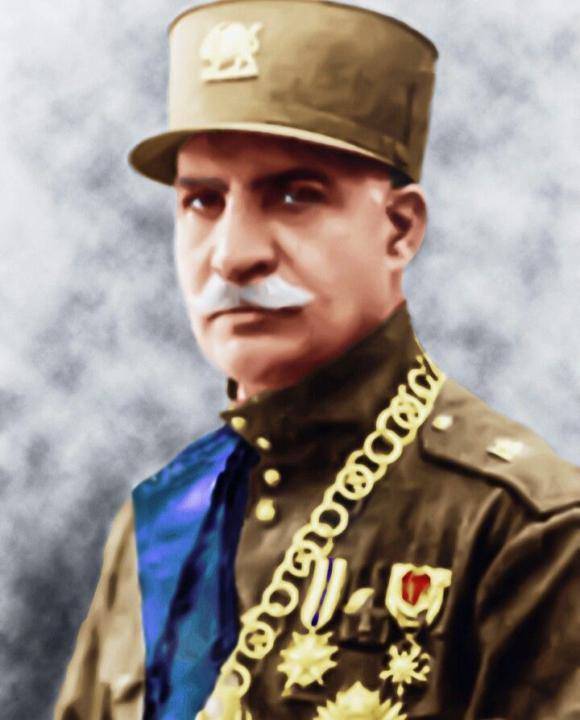
Shāhanshāh Reza Pahlavi the Great
Founder of Modern Iran (Aryana) — This is the person who modernized, industrialized and professionalized the country and nation of Iran with his militant discipline and efficiency when rising to power in 1925 to fullfil the classic liberal principles and sensible progressive aims of the 1906 Iranian Constitutional Movement and the 1906 Iranian Constitutional Revolution which brought Unitary Parliamentary Constitutional Monarchy in Iran which was a first time phenomena in the entire history of Asia to move towards into such a progressive direction where women were liberated, religious minorities were protected and respected equally under the law Make Iran Great Again 🦁🟩⬜🟥 Long Live The PAHLAVI DYNASTY 🕊️✌️💜 💯 Salute to Imperial IRAN 👑☑️ 2,500+ years of Iranian Monarchy 7,000+ years of Iranian Civilization
0 likes • 4d
According to my reading, Reza Shah’s rise to power actually began with the 1921 military coup. While parliament later crowned him Shah in 1925, his rule quickly became highly centralized and authoritarian, weakening many of the constitutional limits created during the 1906 Constitutional Revolution. He did pursue modernization reforms, but describing his rule as fulfilling classical liberal constitutionalism is a very contested interpretation in my opinion. Also, The phrase “sensible progressive aims” sounds more like political framing than history.
4d •
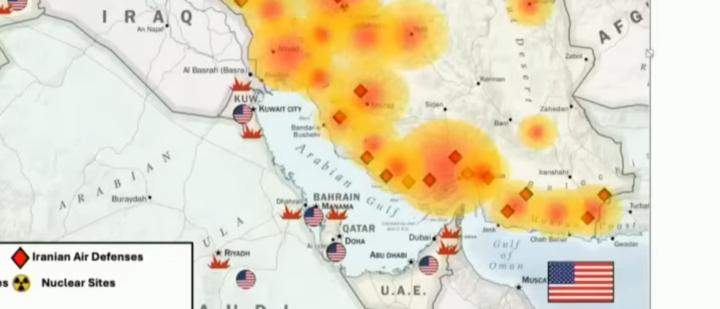
The PERSIAN gulf
Why does the Trump administration continue to refer to the Persian Gulf as the Arabian Gulf? I still remember Trump's remarks about wanting to change the name, but now I'm seeing Hegseth and Caine talk about the war with a map of Iran behind him the refers to the Persian gulf as the Arabian gulf. This is pretty insulting...is there a good reason for this? What is this administration trying to tell us?
1 like • 4d
@Farbod Babaeipirouz I agree, why would the U.S. government casually use terminology that many Iranians see as historically inaccurate or insulting. The Persian Gulf has been called that for centuries and that’s still the name used by most of the world. And honestly, I’m sure many Iranians couldn’t care less what Arab governments prefer to call it. If the goal is to encourage Iranians to push back against the regime, gestures that look dismissive of Iranian identity are probably counterproductive. Instead of weakening the regime, it can make people rally around the flag. For me it raises another question: is there anything this administration does that the pro-Trump base will actually question? Or does the “great leader” just get the benefit of the doubt on everything?
3 likes • 4d
Nothing builds trust like renaming someone else’s history.
7d •
Trump's comments
In a recent interview, Trump was asked if he thoguht ending the war without regime change is a betrayal of the Iranians he promised to liberate. In response, he said he'd like to liberate them if they behave an that they're been behaving very badly so far. I feel like that's insulting to the people who have given blood to differentiate between the people and the regime. What exactly have the Iranian people done that's considered bad behavior in Trump's book?
0 likes • 5d
@Rebecca Abbott I appreciate the explanation of how you evaluate media sources. I actually agree with you on one important point: all media—mainstream or independent—should be approached with a degree of skepticism. Bias and spin exist everywhere. Where I find the discussion becoming uneven is in how that scrutiny is applied. For example, you’re clearly critical of outlets like the BBC or commentators like Cenk and Ana, which is fair if you believe they are being deceptive or manipulative. But I’m surprised you don’t seem to apply the same level of skepticism to figures like Trump, who has made many demonstrably false or misleading claims (if not outright dangerous). Just to name a few examples: statements portraying immigrants as criminals despite crime statistics showing most crimes are committed by native-born citizens; the claim about immigrants “eating dogs”; the assertion during the debate that doctors execute babies after birth; the minimization of right-wing extremism despite domestic terrorism reports that show it has been a major source of attacks; and the decision to pardon individuals involved in the January 6 events (a president that pardons crime when done by his base but does not for what he considers the opposite side’s base). More broadly, there is also the issue that he attempted to overturn the outcome of an election, pressuring officials and promoting claims of widespread fraud that courts repeatedly rejected. His latest scuffle with Anthropic is another example of his creeping authoritarianism. Whatever one’s political leanings are, that raises serious concerns about the state of our democratic institutions.
1 like • 5d
@Rebecca Abbott I appreciate the clarification, and I apologize if I misunderstood you earlier. I didn’t mean to suggest that you have a blind spot for Trump. I can see now that you were explaining how you evaluate different sources. I could tell from some of your earlier comments that you were from the UK, but the way you explained the BBC’s role in British media actually helped me understand that much better. It made me realize that the relationship people have with the BBC is quite different from the relationship Americans have with most media outlets here. In the U.S. media is very fragmented and openly partisan, so people usually approach outlets already assuming some kind of bias. And yeah, from my understanding the BBC has historically presented itself as a neutral public institution, which makes the starting level of trust different. That probably means it can shape public opinion in ways that private or openly partisan media often can’t. I’ll admit I was not considering that distinction consciously — I guess I was a bit in my own bubble about it. It also sounds like we share at least some common ground when it comes to China and other international conflicts. On the extremism point, it does seem like the security challenges are somewhat different depending on the region. My understanding is that in Europe Islamist terrorism has been a major concern for quite some time, whereas in the United States the most lethal domestic extremist violence in recent years has more often come from far-right actors (considering outlier events like 9/11). The local societal dynamics also seem to be different. About the issue you mentioned about grooming gangs, I have also read that in some cases there were serious failures by local authorities to respond adequately, which understandably and good reasons caused a lot of anger and distrust. That clearly deserved scrutiny and accountability. In any case, thank you for taking the time to explain your perspective and engage in a thoughtful discussion. I appreciate the exchange.
1-10 of 20