Activity
Mon
Wed
Fri
Sun
Jun
Jul
Aug
Sep
Oct
Nov
Dec
Jan
Feb
Mar
Apr
What is this?
Less
More
Memberships
Prime Tech Academy USA
225 members • Free
n8n
1.3k members • $9/month
Bikimbawdar
1.3k members • $79/month
مجتمع ن8ن بالعربي
3.4k members • Free
TC
This Community Moved
1.8k members • Free
Master Talent Academy
9 members • Free
مجتمع الثراء الرقمي المجاني
32.5k members • Free
MB USA Academy
862 members • Free
60 contributions to MB USA Academy

Mar 7 •
Advanced AI Orchestration Challenge – My Solution
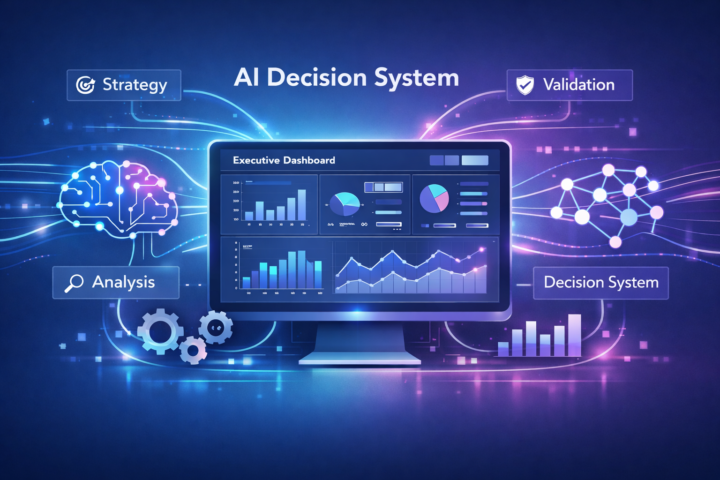
Hey skool community I've worked on a professional AI challenge. The goal was not just using AI tools… but designing an AI Decision System like an AI Architect. Here is the process step by step 👇 1️⃣ The Problem I Chose Wrong management decisions because data is scattered. Many companies have data in many places: • CRM• Sales tools• Marketing platforms• Customer support systems• Excel sheets Because the data is not connected, managers make decisions with incomplete information. Why this is dangerous • Slow decisions• Conflicting reports• Wasted marketing budget• Missed business opportunities If this problem continues, leaders may stop trusting the data. 2️⃣ AI System Design I designed an AI Decision Intelligence System. Inputs (Data) • Sales data• Customer data• Marketing campaign data• Customer support messages• Performance metrics AI Engines 1️⃣ Data processing AI– clean data– merge different sources 2️⃣ Prediction models– sales prediction– customer churn prediction 3️⃣ Pattern detection– detect performance problems 4️⃣ Recommendation engine– suggest management decisions Outputs • smart reports• early alerts• business insights• executive decision dashboard 3️⃣ Tool Roles (Important Part) I used multiple AI tools, not just one. Tool 1 – ChatGPTRole: Strategy & system design Why:Very strong in architecture thinking. Tool 2 – GeminiRole: Data analysis Why:Good at structuring data and analysis steps. Tool 3 – ClaudeRole: Risk review Why:Very strong in critique and risk detection. 4️⃣ Prompts I Used Prompt 1 – Strategy Prompt You are an enterprise AI strategist. Your task is to design a scalable AI-driven decision system for a mid-sized company that suffers from fragmented data across CRM, sales, marketing, and customer support tools. Provide: • system architecture• AI components• data flow• risks• success metrics Prompt 2 – Analysis Prompt Act as a senior data analyst. Break down the required data types and processing steps needed to build an AI-powered decision intelligence system.
0 likes • Mar 7
Gemini result Building an AI-powered Decision Intelligence (DI) system requires moving beyond traditional Business Intelligence (BI). While BI tells you what happened, DI tells you why it happened and what action will lead to the best outcome. As a senior analyst, I’ve broken this down into the fundamental technical pillars required to bridge the gap between raw data and automated or human-assisted decisions. 1. Required Data Types To create a holistic decision model, you must ingest more than just your standard SQL tables. - Structured Data: Traditional transactional data (sales records, inventory levels, CRM entries). This forms the quantitative baseline. - Unstructured Data: This is where the "intelligence" often sits. It includes customer feedback (text), call center recordings (audio), and PDF contracts. - External/Environmental Data: Market trends, competitor pricing, weather patterns, or geopolitical shifts that influence decision outcomes but aren’t captured in internal systems. - Decision Logs (The "Feedback Loop"): Data regarding past decisions—who made them, what the predicted outcome was, and what the actual result was. This is the most overlooked data type in DI. 2. Data Integration Strategy Integration for DI must be dynamic and low-latency. A "batch-only" approach usually fails in fast-moving decision environments. - Unified Semantic Layer: Instead of raw tables, analysts should interact with a "Business Knowledge Graph." This maps how different entities (e.g., Customer, Product, Supply Chain) relate to one another. - ELT over ETL: Extract, Load, and then Transform. By loading raw data into a cloud data warehouse (like Snowflake or BigQuery) before transforming it, you preserve the original context needed for deep AI auditing. - Change Data Capture (CDC): Use tools to stream updates from your databases in real-time. If a decision relies on inventory levels, a 24-hour delay is unacceptable. 3. Machine Learning Techniques
0 likes • Mar 7
Claude response: AI Risk Audit Report AI Decision Intelligence Platform for Fragmented Enterprise Data Executive Summary The proposed system addresses a real and serious business problem. However, as currently designed, it carries significant technical, ethical, and operational risks that would undermine trustworthiness in production. Below is a structured audit across six risk dimensions. 1. Technical Weaknesses Data Integration Fragility The architecture assumes clean, connectable data sources (CRM, Excel, sales, support). In reality, these systems often have incompatible schemas, duplicate records, and inconsistent field naming. The ETL layer is described in one line — this is where most enterprise AI projects fail. No mention of conflict resolution logic when sources contradict each other. No Feedback Loop Mechanism The system produces recommendations but has no stated mechanism to learn whether those recommendations were correct, acted upon, or harmful. Without a feedback loop, model drift goes undetected and the system degrades silently over time. Batch vs. Real-Time Ambiguity The architecture does not distinguish between real-time streaming data (e.g., live support tickets) and batch data (e.g., monthly sales exports). Mixing these without explicit pipeline design leads to stale insights presented as current. No Fallback When Data Is Incomplete The system's reliability when data sources are unavailable or corrupted is unaddressed. A recommendation engine operating on 40% of expected data with no warning is more dangerous than no recommendation at all. Vague ML Model Selection "Prediction Models" and "Pattern Detection" are named without specifying model types, training strategies, validation methods, or retraining schedules. This is not production-ready architecture. 2. Bias Risks Historical Data Encodes Past Decisions If training data reflects past managerial decisions — which may have been biased toward certain markets, customer segments, or products — the model will learn and amplify those biases as "optimal" patterns.

Mar 6 •
أتمتة سير العمل VS تنسيق سير العمل
في هذا المنشور شرح موجز للفرق بين أتمتة سير العمل و تنسيق سير العمل AI workflow automation VS AI workflow orchestration لمــــــــــــاذا يجب توضيح الفرق بينهم ؟؟ لأن هنالك تباين في المفهوم و لكن يتجلى الاختلاف بعد هذا الشرح الموجز والدقيق ============================================================== 1️⃣ أتمتة سير العمل بالذكاء الاصطناعي (AI Workflow Automation) تعني استخدام الذكاء الاصطناعي لتنفيذ مهام محددة داخل عملية ما بشكل تلقائي دون تدخل بشري. مثال: - الذكاء الاصطناعي يقرأ رسائل البريد الإلكتروني 📧 - يستخرج المعلومات المهمة - يرسل ردودًا تلقائية أو يحدّث قاعدة البيانات ➡️ التركيز: أتمتة المهام الفردية ______________________________________________________________________________________________________ 2️⃣ تنسيق سير العمل بالذكاء الاصطناعي (AI Workflow Orchestration) يعني تنظيم وإدارة عدة عمليات مؤتمتة وأنظمة ذكاء اصطناعي معًا بحيث تعمل كعملية متكاملة من البداية إلى النهاية. مثال: - يستقبل الذكاء الاصطناعي طلب العميل - يرسله إلى نموذج الذكاء الاصطناعي المناسب - يحدّث قاعدة البيانات - يرسل إشعارًا للموظفين - يسجل النتائج في الأنظمة المختلفة ➡️ التركيز: إدارة وتنسيق عدة عمليات مؤتمتة معًا ______________________________________________________________________________________________________ ✅ الفرق ببساطة (ORCHES) الأتمتة التنسيق(AUTO) تنفيذ المهام تلقائيًا إدارة كيفية عمل المهام معًا على مستوى المهمة على مستوى النظام مثال: رد تلقائي على البريد مثال: نظام خدمة عملاء كامل باختصار: 🤖 Automation = تنفيذ العمل تلقائيًا 🎼 Orchestration = تنسيق جميع الأنظمة المؤتمتة لتعمل معًا @Ali Atabani @Lubna Taha @Fatima Hassan @Ahmed Ibrahim

0 likes • Mar 7
مستر يوسف احسنت البحث والنشر الآن الفرق بين أتمتة المهام وتنظيم العمليات بقى واضح جدا
Mar 6 •
The Full Pulse: My 3-Weeks Journey Building Nabd — From Foundation to Mastery
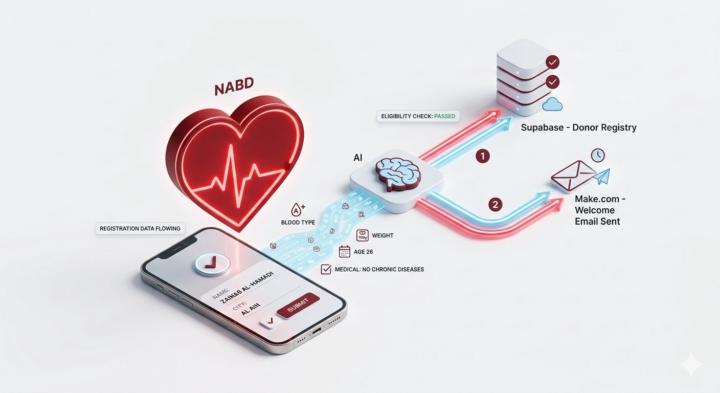
Hey Skool family! 👋 I’ve officially hit 100% completion on my 3 Weeks: Mastery goals! It’s been an intense ride, but looking back at where this started vs. where it is now feels incredible. The Mission: Why "Nabd-نبض"? In Arabic, "Nabd-نبض" means pulse. My goal was to build a bridge between hospitals in need and donors ready to help. I wanted a system that didn't just store data but acted on it automatically during emergencies. Week 1: The Foundation 🏗️ Everything started with the basics. I focused on: - Automation Principles: Understanding how to move data without manual work. - UI/UX with AI: Using AI-assisted coding to build a high-converting landing page and hospital dashboard using React and Tailwind CSS. - First Win: Deploying the first version of the project and seeing the ""Nabd-نبض"" theme come to life. Week 2: The Integration (and the Struggles!) 🔗 This is where things got "real"—and a bit messy. - Database Power: I integrated Supabase to manage donor registrations and hospital authentication. - The "Submission Failed" Glitch: I hit my first major roadblock when the blood request form kept failing. - Learning to Debug: I spent hours on the "Debug an integration failure" task, eventually fixing Row Level Security (RLS) and Webhook mapping issues. It was frustrating, but it was the best way to learn how the backend actually talks to the frontend. Week 3: Mastery — The "Brain" is Born 🧠 The final week was about scaling up to a production-ready app. - The 5-Step Automation: I built a complex scenario in Make.com that handles the entire life cycle of a blood request: - Final Polishing: i will review a tricky 404 error on the donation centers map to ensure the UI was flawless. The Tech Stack Summary 🛠️ - Frontend: React, Tailwind CSS, Lucide Icons (HeartPulse, Droplets, Activity). - Backend: Supabase (Auth, Real-time Database, Edge Functions). - Automation: Make.com (Webhooks, Multi-App Workflows). - Documentation: Gamma AI.
0 likes • Mar 7
@Lubna Taha تسلمي يادكتورة على الكلام الجميل 🤍
1 like • Mar 7
@Asma Hassan كلامك أسعدني والله، ربنا يبارك فيك 🌸

Feb 1 •
الذكية"Laveigene" كنز المعرفة - المحطة الثانية: استراتيجية
بعد مرحلة الفهم، انتقلت في الأسبوع الثاني إلى التخطيط الاستراتيجي لرسم مستقبل كعلامة تجارية رائدة في تكنولوجيا الجمال. إليكم ملخص الرحلة في نقاط مختصرة Laveigene 1/ الإطار الاستراتيجي (AI Strategy) الأهداف: تفعيل التوصيات المخصصة، وخدمة العملاء الذكية، مع الالتزام التام بخصوصية البيانات الطموح : رفع معدل التحويل بنسبة 21%+ وتحقيق رضا عملاء يتجاوز 90%. 2/ الهوية البصرية (Visual Identity) :الفلسفة مزيج بين الرفاهية والطبيعة باستخدام ألوان (Sage Green, Soft Rose, Warm Gold). التصميم: بساطة راقية تعتمد خطوط Serif الأنيقة (Oranienbaum) لتعكس قيم الاستدامة. 3/ خارطة الطريق والتمكين (Roadmap) :التنفيذ خطة زمنية تبدأ بإطلاق اول شات بوت ذكي (0-3 أشهر) وصولاً إلى التكامل الكامل لتحقيق عائد استثماري يصل لـ 5 أضعاف. :الفريق تدريب تخصصي يرسخ مبدأ أن الذكاء الاصطناعي "مُضاعف للقدرات البشرية 4/ الإنتاج المرئي الذكي (AI Video) الكفاءة: اعتماد أدوات (Runway , flow, meta…..) لإنتاج محتوى فيديو احترافي. النتائج: توفير 80% من وقت الإنتاج و 70% من التكاليف التقليدية. الخلاصة في الأسبوع الثاني، لم نبني تكنولوجيا فحسب، بل صغنا "العقل الاستراتيجي" لـ Laveigene. الرحلة مستمرة.. والكنز في التنفيذ #ذكاء_اصطناعي #Laveigene #AI_Strategy #Branding #كنز_المعرفة

1 like • Feb 16
Nice share tayseer very inspiring and insightful mashallah and the video is very professional
Feb 15 •
الاسبوع 1 مسار برمجة وتصميم: الاساس
1) نظرة عامة على أدوات التصميم بالذكاء الاصطناعي التحول لم يعد في استخدام الأدوات، بل في إدارة الإبداع عبر الخوارزميات. أدوات التصميم بالذكاء الاصطناعي تنقسم إلى أربع فئات رئيسية: الفئة الاولي هي: توليد الصور والهوية البصرية - Midjourney: إخراج فني احترافي، مثالي للبراندنج والحملات. - DALL·E: مرونة في تحويل النص إلى صورة. - Adobe Firefly: تكامل مباشر مع Photoshop وIllustrator. - Stable Diffusion: تحكم تقني أوسع للمطورين. الفئة الثانية هي: تصميم الواجهات والمحتوى - Canva AI - Figma AI - Framer AI - Looka (تصميم الشعارات) الفئة الثالتة هي: الفيديو والموشن - Runway ML - Pika - Kling AI الفئة الرابعة هي: تحويل النصوص إلى كود - ChatGPT - GitHub Copilot - Replit AI القيمة الحقيقية: تقليل زمن الإنتاج بنسبة تصل إلى 70% مع رفع جودة المخرجات. __________________________________________________________________________________________________ 2) مقدمة في البرمجة بمساعدة الذكاء الاصطناعي البرمجة لم تعد تبدأ من سطر فارغ. تبدأ بفكرة واضحة وصياغة دقيقة. كيف يساعد الذكاء الاصطناعي؟ - توليد كود HTML / CSS / JS - شرح الأخطاء Debugging - تحسين الأداء - تحويل الفكرة إلى Prototype خلال دقائق مثال عملي طلب: أنشئ صفحة هبوط بسيطة لمنتج تعليمي الناتج: كود جاهز قابل للتعديل خلال ثوانٍ. النتيجة: المطور أصبح “مدير عملية” بدل “كاتب كود فقط”.

0 likes • Feb 16
Great overview Mr. yusuf very helpful and easy to follow
1-10 of 60

@fatima-hassan-4856
A Specialist in Artificial Intelligence & E-Commerce | Empowering Innovation and Online Success
Active 23d ago
Joined Feb 18, 2025
UAE