Activity
Mon
Wed
Fri
Sun
Aug
Sep
Oct
Nov
Dec
Jan
Feb
Mar
Apr
May
Jun
Jul
What is this?
Less
More
Owned by Coach
MMTGN is a community for Magic players & collectors to share pulls, talk decks, connect 4 Arena play & stay updated on Whatnot streams and giveaways.
Memberships
Energy Cultivation
184 members • Free
The Hip-Hop Formula
20 members • Free
High Vibe Tribe
81.1k members • Free
52 contributions to Energy Cultivation

14d •
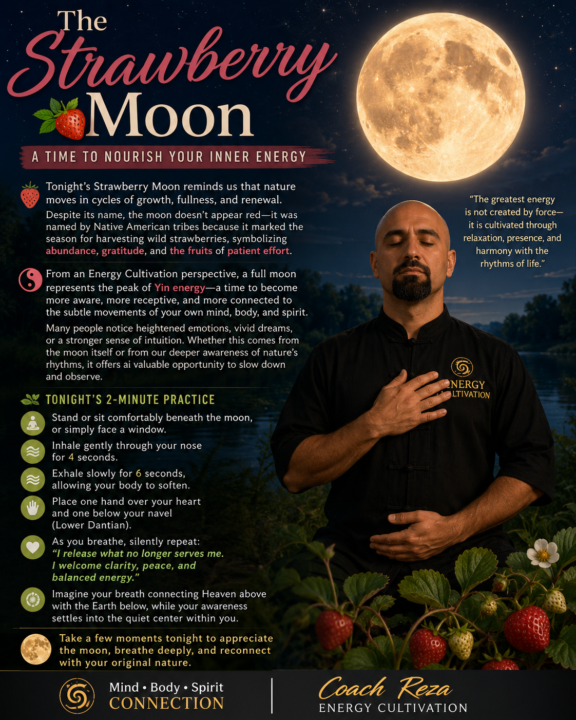
🌕The Strawberry Moon: A Time to Nourish Your Inner Energy 🍓
Tonight's Strawberry Moon reminds us that nature moves in cycles of growth, fullness, and renewal. Despite its name, the moon doesn't appear red—it was named by Native American tribes because it marked the season for harvesting wild strawberries, symbolizing abundance, gratitude, and the fruits of patient effort. From an Energy Cultivation perspective, a full moon represents the peak of Yin energy—a time to become more aware, more receptive, and more connected to the subtle movements of your own mind, body, and spirit. Many people notice heightened emotions, vivid dreams, or a stronger sense of intuition. Whether this comes from the moon itself or from our deeper awareness of nature's rhythms, it offers a valuable opportunity to slow down and observe. 🌿 Tonight's 2-Minute Practice Stand or sit comfortably beneath the moon, or simply face a window. Inhale gently through your nose for 4 seconds. Exhale slowly for 6 seconds, allowing your body to soften. Place one hand over your heart and one below your navel (Lower Dantian). As you breathe, silently repeat: "I release what no longer serves me. I welcome clarity, peace, and balanced energy." Imagine your breath connecting Heaven above with the Earth below, while your awareness settles into the quiet center within you. The greatest energy is not created by force—it is cultivated through relaxation, presence, and harmony with the rhythms of life. 🌕 Take a few moments tonight to appreciate the moon, breathe deeply, and reconnect with your original nature. Mind • Body • Spirit Connection — Coach Reza | Energy Cultivation
1
0
21d •
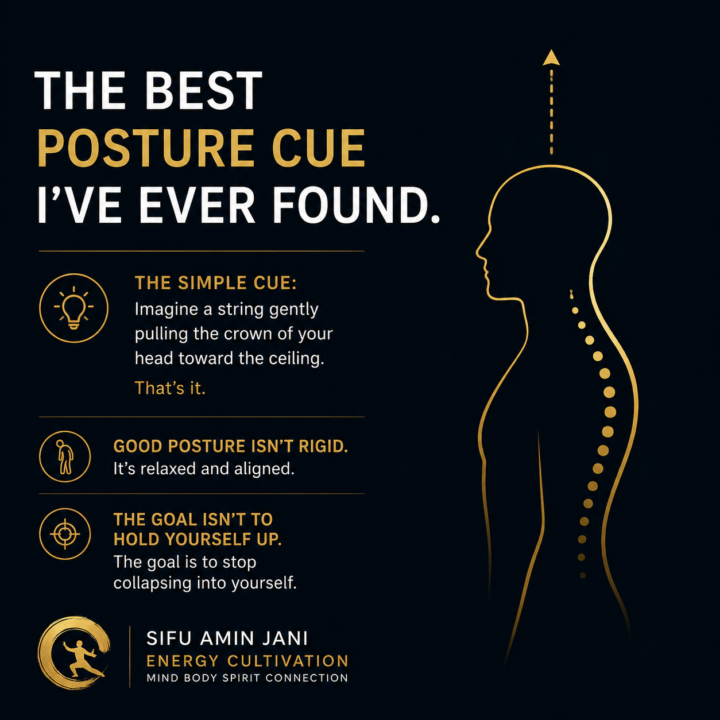
The Best Posture Cue I’ve Ever Found
Forget complicated posture instructions. Here’s the simplest cue I’ve found: Imagine a string gently pulling the crown of your head toward the ceiling. That’s it. When people hear “good posture,” they often think military stiffness. Chest out. Shoulders back. Everything rigid. But healthy posture isn’t rigid. It’s relaxed and aligned. The goal isn’t to hold yourself up. The goal is to stop collapsing into yourself. One simple cue can change how your body feels all day. What’s your favorite posture tip? #Posture #Health #Wellness #EnergyCultivation
0 likes • 21d
The posture exercises in our classroom will correct a person's natural posture, creating a balance between proper tension and relaxation while staying properly aligned, improving balance, strength, blood circulation and energy flow!😉
28d •
2 Hours of Yoga/Breathwork & Qigong/Taichi
This is a 2 hour class recording at George Mason University. Follow along with me to learn Pranayama, Yoga, Meditation, Qigong & Taichi! https://youtu.be/Qd2VnT1uQ5U?is=KzqvsVHzIItawB-3
Jun 6 •
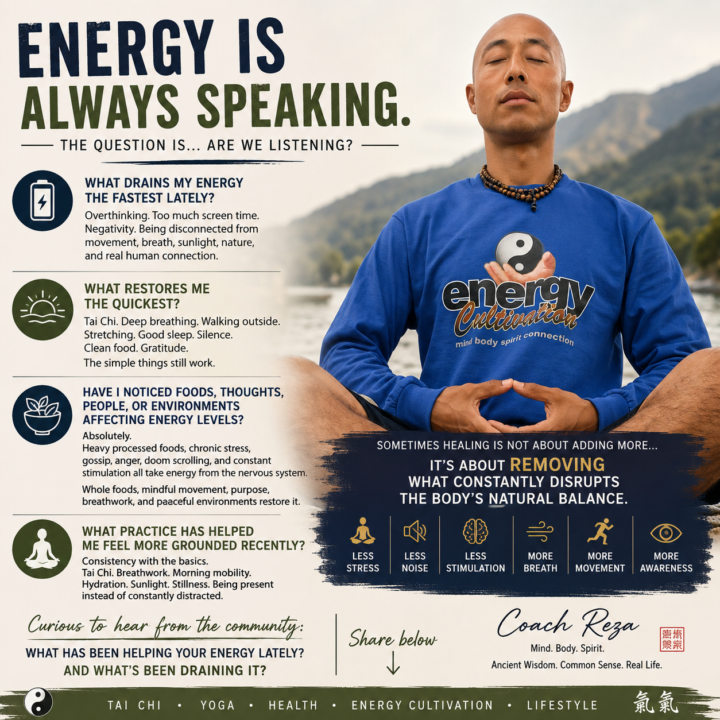
Friday Energy Check-In
Most people wait until they feel exhausted, anxious, stiff, sick, or mentally foggy before listening to their body. But what if energy is always communicating with us before things fall apart? Ancient practices like Tai Chi, breathwork, yoga, meditation, proper sleep, sunlight, whole foods, and mindful movement all point to the same idea: Your body is constantly adapting to the way you think, breathe, move, eat, and recover. Modern life teaches us to override signals. Ancient wisdom teaches us to notice them. A few questions for the community: What drains your energy the fastest lately? What restores you the quickest? Have you noticed certain foods, thoughts, people, environments, or habits affecting your energy levels? What practice has helped you feel more grounded recently? For me, one of the biggest lessons has been this: Sometimes healing isn’t about adding more… It’s about removing what constantly disrupts the body’s natural balance. Rather than focusing constantly on pleasing, the 5 senses. Listen to what the body is truly asking for and look to satisfy it's hunger to strengthen, to regulate, to recover, & to improve Less stress. Less noise. Less overstimulation. More breath. More movement. More awareness. Curious to hear everyone’s thoughts and experiences. Let’s learn from each other. 👇
2
0
Apr 29 •
Tai Chi Class
Sitting down for long periods of time requires healthy movement to improve joint mobility, posture and over all energy levels! Follow along with the video if you have an hour to practice, or just try the first 10 minutes to feel better balance and less joint stifness! https://youtu.be/cTC8Bd6cNEE?si=bGyinryR5HAxLr1r
1 like • May 21
Let me know if you have further questions. Parking can be tricky, but I can walk you through it!
1 like • May 24
@Jennifer Liarakos Contact me when you are interested in attending! I will help you get a free parking pass!
1-10 of 52
@coach-reza-9150
We are all connected as cells in this body of Earth, small as individuals, but a force when we work together
Lets all learn, share, support & grow!
Active 6h ago
Joined Oct 4, 2024
Powered by