Activity
Mon
Wed
Fri
Sun
Aug
Sep
Oct
Nov
Dec
Jan
Feb
Mar
Apr
May
Jun
Jul
What is this?
Less
More
Memberships
The Daily Sit
162 members • Free
8 contributions to The Daily Sit

Feb 12 •
Day 4 - No Morning Phone Quest!
Morning reset ☀️ First 30 minutes after you woke up… Who was in charge? You — or your phone? No scroll. No notifications. Just breathing, moving, being. I left my phone inside and stepped out for a quiet walk. Slowed down enough to actually see the green around me 🌿 Check in: 🟢 FREE — kept it phone-free 🔴 LOCKED — went straight to the screen If you stayed FREE, what did you do instead? Attention is a muscle. We train it daily. @Venkat A @Rex Loyer @Clinton Ramil Harris @Grant Meyer @Maxwell Riseman @Jenny Landis @Dieter Kaufhold @Tori Cadry @Krystallos Wolfe @Frank Zhu +anyone else who wants to join this quest!
Poll
7 members have voted

1 like • Feb 13
No good. I just realized that I forgot about this quest. Yet, I have committed myself into it - so I will start tomorrow. I leave the phone (it’s 11pm in Switzerland) right here in my living room - for a head start. I’ll report in tomorrow - Day 1 of my slightly off track individual quest. Sorry, people. Would have loved to do this together with you!!
Feb 3 •
Purpose Is What Makes Life’s Pain Bearable
I’ve met a lot of successful people who were deeply lost. There are many people in the world walking around without a real sense of purpose or vision. I feel genuine compassion for that, because this may be one of the most important things a human can have. The common counterargument is, “My family is my purpose. My kids are my purpose.” That’s meaningful — and it’s also incomplete. Children grow up. They become young adults. They become citizens of society. And eventually, they leave. If your entire sense of meaning is tied to them, there may come a moment when you’re left asking, Now what? At some point, we all have to reckon with a deeper question: What am I building that will outlast my immediate role? What am I leaving behind for society? Many people choose the route of safety. A decent job they don’t love but tolerate. Predictability. Comfort. And that can work — for a while. But eventually, most people hit a quiet moment where a harder question shows up: What did I actually build with my life? What did I really leave behind? These are powerful questions. They’re far better asked now than postponed until your 60s or 70s. And even if you’re already there — or in your 80s — it’s still worth asking. History is full of people who started meaningful companies, movements, or nonprofits later in life and made a real impact. What matters is this: you need a goal big enough to make the pain of life bearable. Pain is inevitable. That’s not pessimism — it’s honesty. Suffering, however, is optional. A meaningful aim transforms unavoidable pain into something workable, even purposeful. So what is that aim for you? What is the thing that’s uncomfortable to look at, but impossible to ignore? This is where contemplative practice matters. Daily meditation. Daily prayer. Daily journaling. These practices create space — silence — room to hear what’s already trying to speak. Take an hour a day if you can. If not, take 30 minutes. If not that, take 15. Even 10. Even three.

2 likes • Feb 6
Here is my purpose in life - and there is no-one on this planet who can stop me from believing in it and following through accordingly: “I am here, wherever my feet touch the ground, to help others improve their daily life.” Doesn’t work in context of my family - they run when I start suggesting whatsoever “improvement”… ;-)) Works quite well in my biz environment, since I am getting hired to improve processes, team cooperation and transformational activities. The beauty of it? I am focused on people - always (even when the task is about “process improvement” - it’s ALWAYS about people…) There is nothing I can think of being more meaningful, more important than a focus on people…
2 likes • Feb 6
In this context, meditation has become an essential “activator” to keep going than the sh.. hits the fan. And believe me, it happens all the time… ;-)))

1 like • Feb 6
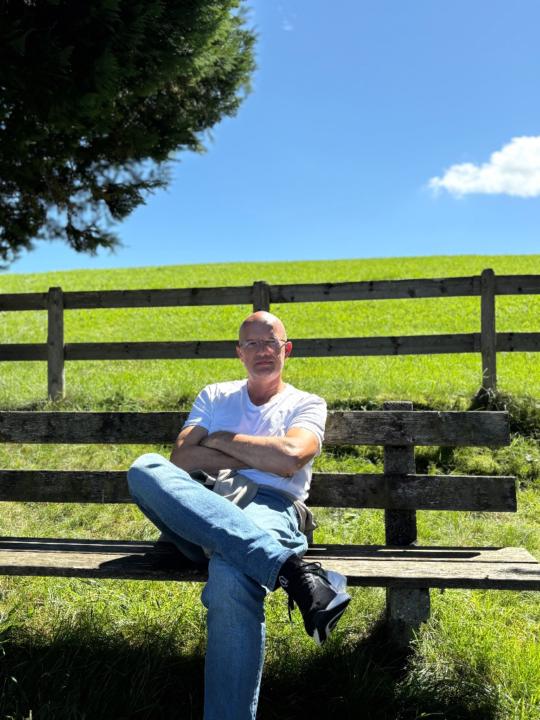
Here is me. Right now. Have in mind, I am located in Switzerland - it’s 8 pm. That damn work week is over and done - and my meditation today was smmmmooooth…. Thanks Brandon!! 🙏
Feb 2 •
Cool meditation for visualization I'm trying out these days
Love to know your thoughts on this one!
2 likes • Feb 2
It’s too much talking. It disturbs my focus on the meditation part Didi
1 like • Feb 4
It’s on MY calendar as well now…
Jan 29 •
7-Day No Morning Phone Challenge
Do you want calmer mornings or do you enjoy waking up stressed and scrolling like a raccoon 🦝📱 The quest: For 7 days, no phone for the first 30 minutes after waking up. No scrolling. No messages. No “just checking.” Why: Less noise. More clarity. Mornings that feel like yours. How: Each day, comment under the (quest) tab: “Day X done.” That’s it. We start Monday (2.9.26). Comment YES if you’re in. Comment NO if your phone owns you 😌 @Brian Diep and myself @Brandon Mehrgut will be leading the quest!
Poll
14 members have voted

1 like • Feb 4
My phone out. Me in. Sounds right to me…
1-8 of 8
@dieter-kaufhold-5707
Brandon trained mindful meditation practitioner since 2018.
I started meditation to - finally - find a way to calm down and relax.
Active 128d ago
Joined Oct 6, 2025
ISTJ
Switzerland
Powered by