Activity
Mon
Wed
Fri
Sun
Aug
Sep
Oct
Nov
Dec
Jan
Feb
Mar
Apr
May
Jun
What is this?
Less
More
Owned by Sarah
Faith, freedom, and holistic living — join a community where we share tools and truth to live healthy, prepared, and self-reliant lives.
Memberships
Skoolers
169.1k members • Free
Skool Growth Free Training Hub
8.6k members • Free
Freedom Lovers Only
40 members • Free
Synthesizer: Free Skool Growth
44.4k members • Free
Oasis Builders
139 members • Free
LR
Living Ready Collective
35 members • Free
TH
The Holistic Hippy Mama
424 members • Free
Digital Growth Community
60.6k members • Free
The Creators Community
4.4k members • Free
31 contributions to Oasis Builders

14h •
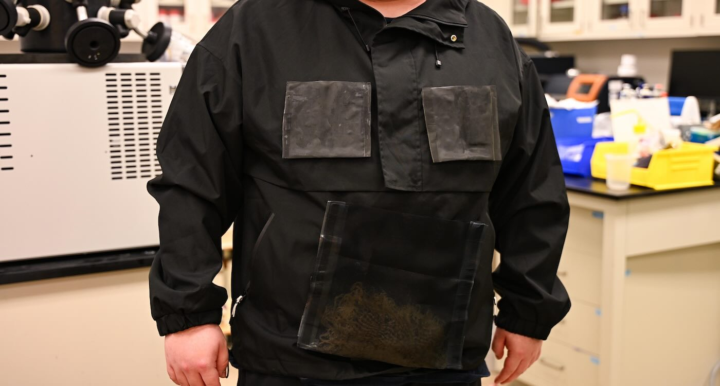
High Tech Jacket Prototype Pulls Drinking Water From Thin Air
Very interesting news article I came across - A new high tech jacket developed by engineers at the University of Texas can pull drinking water from thin air. With the advance in fabric technology, the jacket can collect up to one-and-a-half pints of drinkable water a day, say scientists. They suggest the ground-breaking technology could benefit anyone who spends a lot of time in areas without easy access to drinking water, like hikers, campers, runners, agricultural workers, and soldiers. “Water harvesting from air is usually imagined as a stationary device such as a box, a panel. We wanted to rethink the form,” said research co-leader Professor Guihua Yu. By focusing on the fibers rather than building another bulky device, the researchers overcame a common problem in the field. He explained that the textile incorporated into the jacket collects moisture and funnels it to detachable harvesting units, which are then “placed in a foldable collector and heated to produce the water”. The jacket produced between 400 and 900 milliliters (0.7 to 1.5 pints) of drinkable water per day, depending on humidity levels, according to a study published in the journal Science Advances. Compared with conventional water-harvesting materials, the textile showed a three- to 10-fold improvement at scale. “The important advance here is that the team did not simply make another material that absorbs water,” said study co-author Professor Keith Johnston. “They designed a pathway for water to move quickly, from vapor in the air to liquid on the fiber surface, and then into the interior of the textile. The researchers are now eyeing applications beyond clothing – including backpacks, tents, emergency shelters and other outdoor gear, allowing items people carry every day to help collect water. They also plan to look at applying the technology to remote field operations, disaster response, and water access in arid or infrastructure-limited regions.

🔥
3d •
Weeds Can Be Soil Clues
Recently we looked at how the soil surface gives us clues. Crusting, cracking, stale smells, disappearing mulch, and runoff can all show us what is happening in the garden. Weeds give us another layer of clues. Most of us have been trained to see weeds as something to pull, spray, or get rid of quickly. Sometimes that is the right move. Some weeds crowd young vegetables, spread by roots, or go to seed faster than we can keep up with them. Although before we pull everything, it helps to ask what the plant may be showing us. Plantain, chickweed, dandelion, or dock may point toward compacted, disturbed, or heavy soil. Rushes, sedges, buttercup, and horsetail often show up where soil stays wet. Mullein, yarrow, thistle, and pigweed can handle dry, open, disturbed ground. Nettles and lamb’s quarters often show up where fertility and nitrogen are stronger. One weed does not give us a complete soil report. It is a clue, not a final answer. We still need to use a soil test, a moisture check, a shovel, and common sense. A plant identification app can help. I use PictureThis quite often as a starting point. Apps are not perfect, but they can help us put a possible name to a plant. Before eating, using, or letting a plant spread, it is wise to compare it with another trusted source. In nature, bare soil does not stay bare for long. If we leave ground open, nature will send plants to shade the soil, hold moisture, feed insects, catch minerals, and begin rebuilding cover. For soil regeneration, nature is doing the hard work by planting every inch. Our goal is to manage with understanding. We can leave some flowering weeds on edges, pathways, or wild corners for pollinators, while keeping them away from vegetable rows and young plants. We can chop and drop some weeds before seed heads form, mulch open soil, and plant beds more densely to limit bare ground and reduce opportunistic seed germination. Some weeds are edible or useful herbs, including dandelion, plantain, chickweed, lamb’s quarters, purslane, violet, nettle, and cleavers, although proper identification is important before we eat or use a plant medicinally. We also avoid plants from roadsides, sprayed yards, pet areas, polluted soil, or places we do not know well.
Poll
4 members have voted
1 like • 14h
Now that I've been foraging more, I seek to identify them first! I left some horseradish in my garden area this year because last year my neighbor went out in search of it!

1d •
Nothing you can do
Where I am located, this year is likely to be the hottest and driest summer in living memory , being realistic, I know things will fall, plants are going to die and working to exhaustion trying to save them is not what gardening is about, sometimes there's nothing you can do.
0 likes • 14h
It gets super hot here during the summer, but somehow we almost always end up with at least one 'summer storm' a week. Thankfully our well has never gone dry, but we have neighbors that lose all water and have to fill up a big tank on the back of their truck to bring it in.
🔥
15h •
Brix, Plant Health, and the Soil Life Connection
A lot of us have seen this in the garden before we ever had the words for it. Two plants can be growing in the same general area, but one gets covered in aphids, beetles, or disease pressure, while the other seems to stand stronger. The difference is not always luck. Many times, the plant under pressure shows us something about its energy, minerals, water rhythm, soil biology, or stress level. One way to watch that pattern is with Brix. Brix is a reading of soluble solids in plant sap or juice. Most of the time we think of it as sugar, although it is not only sugar. It can also reflect dissolved minerals, amino acids, organic acids, proteins, and other soluble compounds moving through the plant. In plain garden language, Brix gives us one clue about how well the plant is photosynthesizing and how much energy is moving through the system. When a plant has good sunlight, water, minerals, and living soil around its roots, it can make sugars through photosynthesis. Those sugars do not just stay in the leaves. The plant uses them to grow roots, stems, leaves, fruit, seed, and protective compounds. Then the plant sends part of that carbon through the roots as root exudates. Those exudates feed bacteria, fungi, and other soil life. That is one of the most important exchanges in the garden. The plant feeds the soil life with carbon. Soil life then helps unlock, cycle, and deliver nutrients in forms the plant can use. As that loop gets stronger, the plant has more of what it needs to build strong cell walls, balanced proteins, better flavor, deeper color, and more protective compounds such as flavonoids and other plant metabolites. That is where Brix, nutrition, and pest resistance begin to connect. The phrase “insects cannot eat high-Brix plants” gets used a lot, although I think we need to say it carefully. A high-Brix plant is not invisible, and no garden plant is completely pest-proof. Insects can still nibble. But a plant with strong photosynthesis, balanced minerals, good protein formation, and active defense compounds is usually less attractive and harder for many pests to feed on successfully.
1 like • 14h
Super interesting information Jim. I've never heard of most of this!

12d •
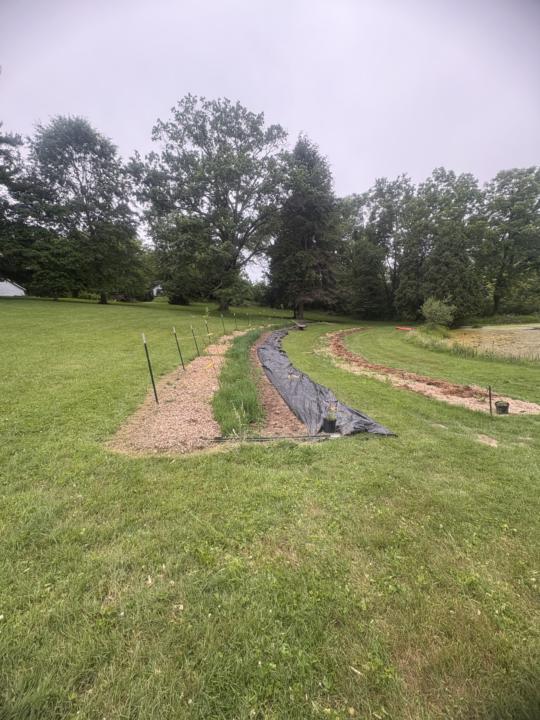
One step at a time
Yesterday I finished the first two rows of the food forest. I’m officially in maintenance mode until late fall, which is a great feeling. It’s not perfect, and not everything rooted, but the system is established and, most importantly, there are roots in the ground. There are still a few small projects left—building borders, weed eating, and continuing to move mulch to create a thick layer that suppresses weeds and feeds the soil. If I end up with a surplus of wood chips, I’ll start laying out future beds now to give them a head start for fall and spring planting. One of the biggest lessons I’ve learned is to start with a manageable plan. It’s far easier to successfully establish a few beds than to spread yourself across ten. Another lesson: grass pressure is no joke. The sooner you address it, the less maintenance you’ll have down the road. Progress in a food forest isn’t measured by perfection. It’s measured by roots in the ground, soil being built, and systems becoming more established each year. 🌱
2 likes • 9d
@Jon Shobe hopefully it will stay that way! The deer here will run through our electric fence in our horse pasture and get into anything that's not got a tall fence around it, unless it's by our back porch. I watch them on our security system cameras.
2 likes • 3d
@Betsy Moll we have a motion activated high powered sprinkler but we have so much wildlife up here that it would end up getting more than just the deer, and probably our cats too!
1-10 of 31

@sarah-peterson
Christian wife, mom of 5, researcher & homesteader. Sharing resources on health, freedom, preparedness, faith, natural living, and self-reliance.
Active 13m ago
Joined Jun 8, 2026
S.E. Ohio