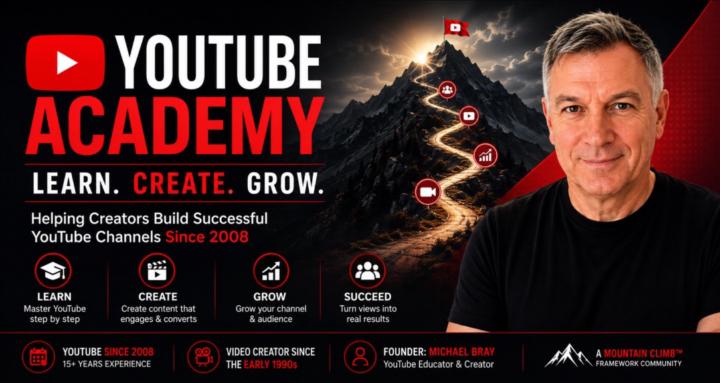
YouTube Academy
Private
2k members
Free

Grow and Implement Your Youtube Channel With Strategy, Systems & Support
Join creators, entrepreneurs and business owners learning how to grow faster on YouTube, implementing proven frameworks, content strategy and real-world tactics
THIS ACADEMY IS ALL ABOUT TRANSFORMATION:
Syllabus:: Here's what we cover:
✅ How to use AI tools to research and deploy the right Niche
✅ How to choose and use the right AI tools to increase your creativity
✅ How to create and optimise your Channel
✅ How to monetise your YouTube channel.
✅ How to grow your channel faster
✅ How to get more views consistently
✅ How to use AI tools to create thumbnails and research titles
✅ How to build authority in your niche
✅ How to generate leads or income from YouTube
✅ How the algorithm actually works
✅ How to create content people are searching for.
✅ How to avoid being de-monetised or banned by YouTube
Download the Skool App: https://www.skool.com/refer?ref=ecf7853fa96348c3a653629c7a5ece7c
skool.com/youtube-academy
Build a YouTube Channel that delivers.
Where Creators, Entrepreneurs & Business Owners come to learn & deploy a successful YouTube Channel.
Powered by