
Write something
Pinned
Nov '25 •
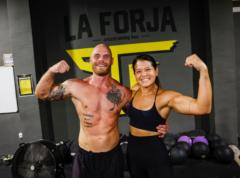
Welcome to We The Fit People!
Hey there! We’re Sabrina & Randy, and we’re so happy you’re here! This is our space to grow, learn, and get stronger together. What this community is about: We created We The Fit People to help you reconnect with your body, mind, and purpose through: 💪 Functional training 🥗 Holistic nutrition 🧘 Mental & emotional balance 🤝 Genuine connection Here, you’ll find: ✨ Courses, classes, and resources to support your journey 🔥 Monthly challenges & discussions 🌍 Opportunities to meet like-minded people (and in-person events soon!) A few things to keep in mind · Introduce yourself below: tell us who you are, where you’re from, and what you’re working toward! · Be kind, supportive, and curious: we’re all here to learn and grow. · Engage! 🚀 The more you share, the more everyone benefits. This is your space: a community built on truth, connection, and growth. We’re so excited to have you here Welcome to the We The Fit People family —Let’s get stronger, together!

3d •
THINGS WE DON'T TALK ABOUT...
I Don't Want to Be Needed Right Now. You can love being someone's safe person... and still occasionally want everyone to leave you the hell alone. 😂 Because being needed requires something from us. Attention. Energy. Listening. Decisions. Problem-solving. Emotional presence. And when you've spent all day being available to everyone else, even a small request can land like: “Can you carry one more thing?” Sometimes the answer is: Not right now. That doesn't automatically make you selfish, uncaring, or a bad partner, parent, friend, or family member. There is a difference between: “I don't care about you.” and “I care about you, but I don't have the capacity for this right now.” You can love someone deeply and still need moments when nobody needs anything from you. 🪶 Feather for Thought: What tells you that you've reached your limit for being available to everyone else? Until next time... be well. 💜 Educational purposes only. This content is not a substitute for therapy or professional mental health care. #ThingsWeDontTalkAbout #EmotionalCapacity #MentalLoad #Relationships #Boundaries #Overwhelmed #NeurodivergentAffirming #MentalHealth #TexasTherapist #FlyFree #FowlerCounseling
0
0

Apr 8 •
Your blood says you are fine, but you do not feel fine?
I am proud to announce that my second article in a series of 10 has been published on Brainz Magazine! In this article I will take you through the journey of some real life clients who have been struggling with their health and struggling to get recognition for their struggles as well. During the series we will explore functional medicine and the grey zone of health. In my daily practice I am still surprised how often we seem to miss early dysfunction and misbalance in bodily systems, just because our standardized clinical tests and references have not been adjusted to detect early dysfunction. They have been designed to detect illness and projected against 95% of the average population (a population that in general struggles metabolically). On top of that, illness is the end of the line of a yearlong, sometimes decennia long process and early intervention needs to happen long before illness is detected! Have a look at the article and please reach out if any of his interests you. https://www.brainzmagazine.com/post/your-blood-test-says-normal-but-your-body-says-otherwise-who-do-you-believe
2
0
Mar 18 •
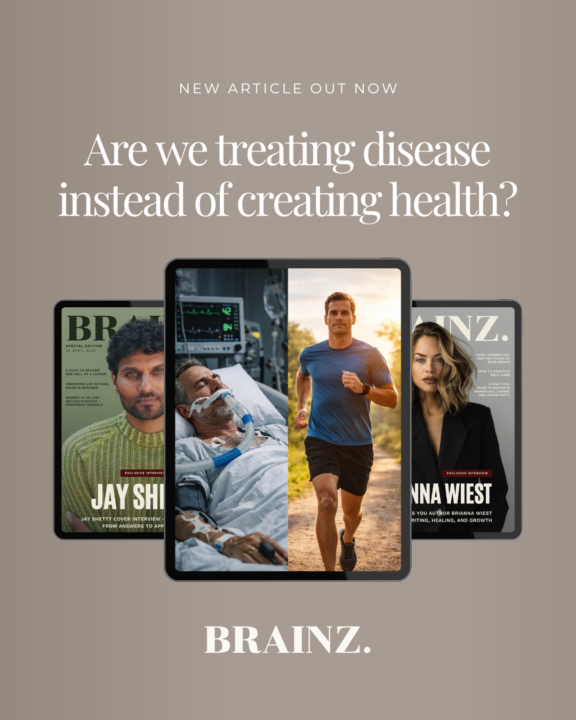
Are we treating disease instead of creating health?
Did you know that only about 3-4% of healthcare budgets is spend on prevention? How come our healthcare systems work in such a way that we only intervene once illness has been diagnosed? I have written my first article for Brainz magazine putting this question up for discussion. Have a read and follow for more insights and information to come! https://www.brainzmagazine.com/post/are-we-treating-disease-instead-of-creating-health
Feb 26 •
Albert Ellis's 12 irrational thought patterns
Do you recognize yourself self-sabotaging? Do you tend to fall back in unhelpful behavioral patterns and ever wondered why? Our mind is much bigger than we can consciously fathom. It’s often said that only about 10–20% of our mental activity happens in the conscious mind. That means roughly 80–90% is happening beneath the surface, in the subconscious. Under the surface more often than not, our mental constructs, convictions and needs are at the root of our behavior. A man, named Albert Ellis, one of the grandfathers of modern day Cognitive Behavioral Therapy came up with a list of 12 irrational (or unhelpful) thought patterns in which many of us will recognize ourselves. Have a look at the list and ask yourself, which ones do you recognize within you? 1: “I must be loved and approved by everyone.” → The belief that your worth depends on other people’s opinions. → Leads to people-pleasing, fear of failure, and loss of authenticity. 2: “I must always be competent, successful, and capable.” → The drive to perform flawlessly and never make mistakes. → Leads to perfectionism, exhaustion, and fear of trying. 3: “Bad people must be severely punished.” → Rigid moral thinking, often paired with anger and judgment. → Keeps you trapped in resentment and blocks forgiveness or empathy. 4: “It’s terrible when things don’t go the way I want.” → Low frustration tolerance: experiencing discomfort as unbearable. → Leads to stress, anger, and a sense of helplessness. 5: “Human unhappiness is caused by external factors I have no control over.” → The belief that your feelings depend on circumstances or other people. → Removes personal responsibility and inner agency. 6: “If something dangerous or bad could happen, I must worry about it intensely.” → Catastrophic thinking that leads to overthinking, hypervigilance, and anxiety. 7: “It is easier to avoid problems than to face them.” → Avoidance as a coping mechanism. → Leads to greater suffering over time and loss of confidence.
0
0
1-23 of 23
powered by

skool.com/we-the-fit-people-1801
Your space for holistic health, functional fitness, mindset growth, lifestyle, and connection. Make health available to us all!
Suggested communities
Powered by