
Write something

Mar '25 •
Tell me about Yourself!
Hi there! I'm here to help you improve your Japanese skills and connect with amazing people in this community! Please introduce yourself and say hi to your new friends! Let’s start with me! - Name: Mone Takagi - Nationality: I'm Japanese and was raised in Osaka 🐙 (so I have a Kansai dialect!) - What are your amazing skills? Speaking English, Dancing 🎧 - What's your favorite way to spend your time? Talking with people, going to the gym, and enjoying coffee at a café ☕️ - What do you do for work? I used to be a police officer in Japan, but I wanted to see and experience more of the world. Now, I’m a Japanese tutor on Preply! ✅ My Preply Profile - What's your goal in this community? I want to make this community the best platform for all Japanese learners, regardless of their level! I understand that learning a new language or traveling to a foreign country alone can feel scary and lonely. Through this platform, I hope to help everyone feel more confident! Now it’s your turn! 🚀 - Name - Nationality - What are your amazing skills? - What's your favorite way to spend your time? - What do you do for work? - What's your goal in this community?
Jun '25 •
N4 verb🚀
✅ 集める meaning: to collect, to gather pronunciation: atsumeru 🌟 This verb is used when collecting things or gathering people, like in “collecting stamps” or “gathering people.” example: - 古い切手を集めています。 ふるいきってをあつめています。 Furui kitte o atsumete imasu. I collect old stamps. - 明日のパーティーのために人を集めました。 あしたのパーティーのためにひとをあつめました。 Ashita no paatii no tame ni hito o atsumemashita. I gathered people for tomorrow's party. ✅ 謝る meaning: to apologize pronunciation: ayamaru 🌟 This verb is used when you want to say “sorry” or apologize to someone, like when you're late or make a mistake. example: - 友だちに遅れて謝りました。 ともだちにおくれてあやまりました。 Tomodachi ni okurete ayamarimashita. I apologized to my friend for being late. - 間違えたときは、すぐに謝ったほうがいいです。 まちがえたときは、すぐにあやまったほうがいいです。 Machigaeta toki wa, sugu ni ayamatta hou ga ii desu. When you make a mistake, it's best to apologize quickly. ✅ 注意する meaning: to warn, to be careful, to point something out pronunciation: chuui suru 🌟 You can use this verb when warning someone or telling them to be careful. It’s also used when you point out a problem or correct someone’s behavior. example: - 車に注意してください。 くるまにちゅういしてください。 Kuruma ni chuui shite kudasai. Please watch out for cars. - 先生は学生にスマホを使わないように注意しました。 せんせいはがくせいにスマホをつかわないようにちゅういしました。 Sensei wa gakusei ni sumaho o tsukawanai you ni chuui shimashita. The teacher warned the students not to use their smartphone. ✅ 遠慮する meaning: to hold back, to decline politely pronunciation: enryo suru 🌟 This verb is used when you politely decline something or hold back out of consideration. It’s common in Japanese culture to show modesty. example: - お酒は弱いので、今日は遠慮します。 おさけはよわいので、きょうはえんりょします。 Osake wa yowai node, kyou wa enryo shimasu. I’m not good with alcohol, so I’ll pass today. - 遠慮しないで、何でも聞いてください。 えんりょしないで、なんでもきいてください。 Enryo shinaide, nandemo kiite kudasai. Don’t hesitate—feel free to ask anything.
5
0
Jun '25 •
N5 NEW Word✨
✅ 初めて はじめて meaning: first time pronunciation: hajimete 🌟 Often used when doing something for the first time. example: - 日本に来るのは初めてです。 nihon ni kuru no wa, hajimete desu. It's my first time coming to Japan. - 初めて寿司を食べました。 hajimete sushi wo tabe mashita. I ate sushi for the first time. ✅ 色々 いろいろ meaning: various, several pronunciation: iroiro 🌟 Often used to describe different kinds of things, experiences. example: - 色々な国に行きたいです。 Iroiro na hito to hanashite, tanoshikatta desu. I want to visit many different countries. - 色々な人と話して、楽しかったです。 iroiro na hito to hanashite, tanoshi katta desu. It was fun talking to many different people. ✅ 結構 けっこう meaning: quite, pretty (much) pronunciation: kekkou 🌟 Used to express moderate emphasis. example: - このケーキ、結構甘いね。 Kono keeki, kekkou amai ne. This cake is quite sweet. - このラーメン、結構おいしい! kono ramen, kekkou oishii. This ramen is pretty good! ✅ もっと meaning: more pronunciation: motto 🌟 Used when you want something additionally, or want to do something to a greater extent. example: - もっと日本語を話したいです。 motto nihongo wo hanashitai desu. I want to speak more Japanese. - もっと食べてもいいですか? motto tabetemo ii desuka? Can I eat some more? ✨ Let’s keep learning together! Which word was new for you? 👇
Jun '25 •
What’s the difference? 👉 “Arimasu” vs “Imasu”
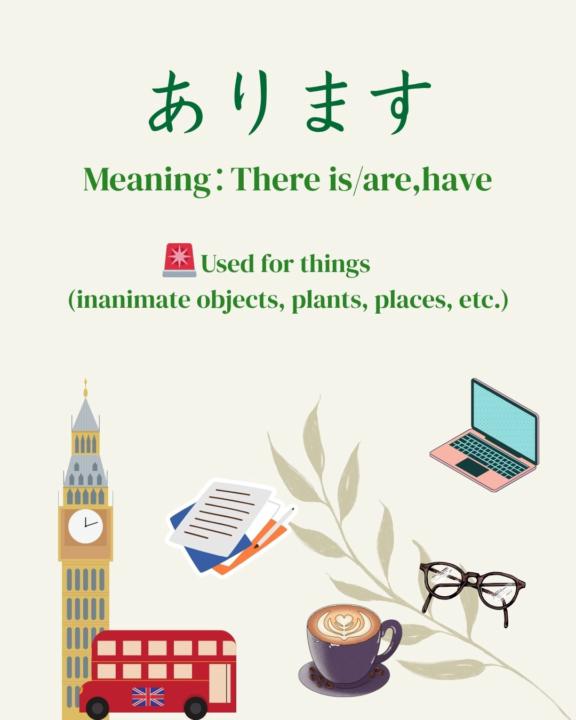
Let’s learn the difference between “arimasu” and “imasu”! They both mean “there is” / “there are” — but we use them differently! Structure: __ が あります/います。 __ ga arimasu/imasu. 💥[what’s different!?] ✅ あります (arimasu) Used for things (inanimate objects, plants, places, etc.) 🗣 Examples: - つくえの上に ほん が あります。 - ロンドンに ビックベン が あります。 ✅ います (imasu) Used for living beings (people, animals, bugs, etc.) 🗣 Examples: - わたしのいえにいぬ が います。 - がっこうに せんせい が います。 🤔 Quick Quiz! Which one is correct? たぶん わたしのいえ に ゴキブリ が ◯◯◯。 tabun watashi no ie ni gokiburi ga ◯◯◯. 🪳 Maybe there are cockroaches in my house. A. います B. あります 💬 Comment your answer below! 👇
Jun '25 •
How Many Things Can You Do with GOHAN?" 🍚🔥🍴
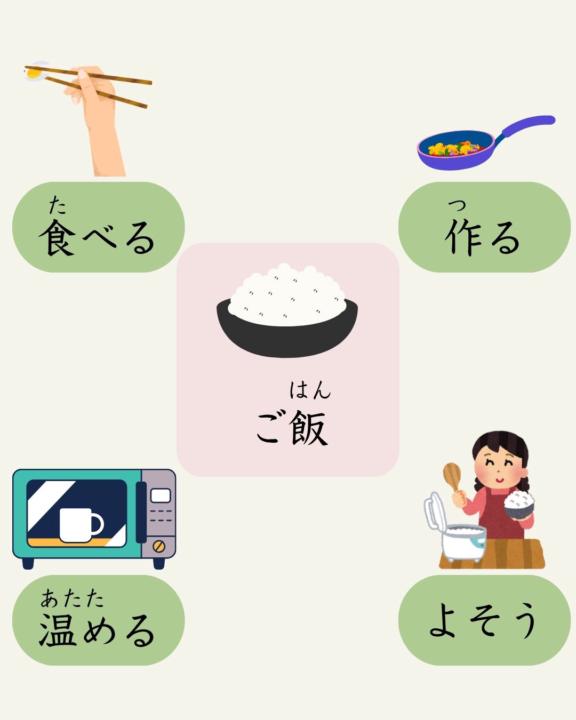
Let’s explore verbs that go with the word gohan (rice/meal)! For example: 🍽 ご飯を食べる “gohan wo taberu”= eat rice 👩 ご飯を作る “gohan wo tsukuru”= cook rice 🔥 ご飯を温める “gohan wo atatameru” = heat up rice 🍚 ご飯をよそう “gohan wo yosou”= serve rice (into a bowl) 💬 Can you think of other verbs? Try making a sentence with「ご飯を〜」in the comments!
1-30 of 58

skool.com/toiro-japanese-with-mone-3429
Find Your Japanese Study Buddy! You’re never alone! Find your friends and let's reach fluency together!
Leaderboard (30-day)
1

+2
Powered by