
Write something
9d •
Loving What and Who You Are!
There’s something deeply human about the way we flinch, not always visibly, but internally, when faced with our own reflection. A mirror is never just a surface. It’s a confrontation with the version of ourselves we’ve been negotiating with, avoiding, performing for, or trying to outrun. When someone struggles to look at their reflection, it isn’t simply discomfort with appearance. It’s a collision with the internal architecture they haven’t yet reconciled.
1
0

14d •
The Self as a Temporary Coherence Pattern
When i say the self doesn’t exist as a fixed entity, I’m naming what both quantum theory and depth psychology struggle to articulate: the self is not an object; it is a pattern of organization within consciousness. It is the field briefly stabilizing into a recognizable configuration. In this framing, “self” becomes the experience of consciousness folding into a localized perspective, not a permanent entity with fixed edges. This is why the self feels real, because coherence always feels real from the inside, but it is not a thing that exists independently of the field that produces it. It’s an expression, not an object. A formation, not a substance. Learn more https://themergelab.com/
1
0

18d •
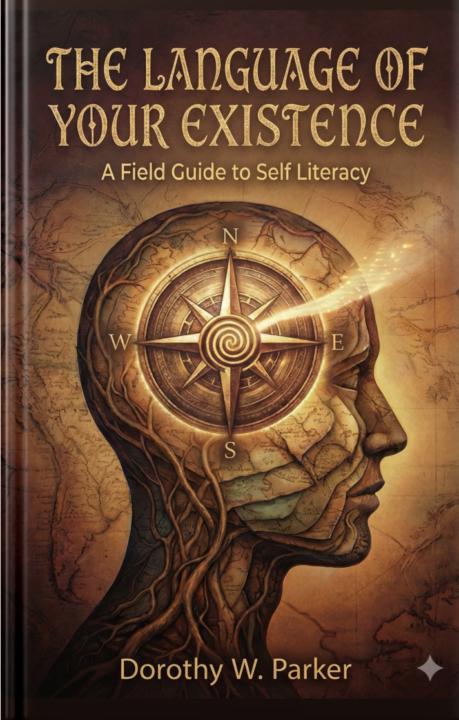
Self Literacy: The Skill Most People Never Learn, But Every Life Depends On
Community Post for The MERGE Lab™ on Skool Most people don’t realize how often they silence themselves. It happens in subtle ways long before it becomes a pattern, brushing off a sensation in the chest, dismissing an instinct, agreeing to something that tightens the gut, or calling a clear signal “confusion.” Over time, these small dismissals build into something larger: a life that no longer speaks in your own voice. Self Literacy is the practice of reversing that drift. It is not simply self-awareness; it is a disciplined capacity to read, decode, and trust the internal language that your life, body, and experiences have been speaking from the beginning. Your internal signals, your sensations, instincts, emotional shifts, subtle expansions or contractions, form a structured language. They are not random. They are data. And as one of your foundational texts states, Self Literacy is the ability to comprehend the language of your own existence . In most people, this language has been covered by layers of external noise. Society’s expectations, family systems, trauma responses, spiritual authority structures, and cultural performance scripts make what should be obvious feel distant or even unsafe. This is why so many find it easier to trust a stranger’s input than their own. We learn to outsource clarity, not because we lack wisdom, but because we have forgotten how to hear ourselves. This dynamic, the “Stranger is Safer” paradox, has been documented across your work, where the external voice becomes louder than the one encoded within . Self Literacy restores that internal authority by grounding people in three core practices: 1. Learning the Grammar of Sensation. Your body is not an accessory to consciousness, it is the antenna. Sensation is the syntax. Expansion and contraction are the binary code beneath every decision, relationship, or direction. When the field resonates, you feel openness; when it dissonates, you feel restriction. This grammar is the first step in rebuilding internal trust
1
0
22d •
Potential As A Self
The self doesn’t exist as a fixed entity but as a potential existing as a self. When the self is understood as potential, fragmentation stops looking like danger. It becomes part of the natural process of expression. A potential can manifest in many ways without losing its core logic. This is why you can exist across multiple timelines or realities without the universe losing track of you. The core is not the version, it is the underlying field that produces the versions. And because the field is continuous, every expression remains tethered to the same source. Seeing the self as potential also explains why coherence matters so much. Coherence isn’t about perfect stability; it’s about alignment with the underlying potential. When you become coherent, you’re not “finding your true self” as if it’s a single identity waiting to be discovered. You’re stabilizing around the deeper field that generates all versions of you. You feel centered because you’re aligned with the potential, not because the potential has one fixed form. This understanding brings freedom back into the conversation. If the self were fixed, choice would be limited by identity. But when the self is potential, choice becomes the mechanism through which different aspects of that potential come forward. You’re not changing who you are, you’re selecting which expression of yourself becomes active in this moment, this timeline, this version of reality. Every choice is an experiment in becoming, not a departure from essence. This also explains why the universe can hold multiple realities without losing coherence. Each version of “you” is not a separate self; it is a different stabilization of the same potential under different conditions. There is no risk of losing yourself because the “self” is not a singular object. It is the underlying potential that every version expresses in its own way.
1
0
1-4 of 4
skool.com/themergelab
You’ve entered a space built on one simple but radical premise: Your life is speaking to you.
Every emotion, pattern, and pause is data.
Powered by