
Write something

30d •
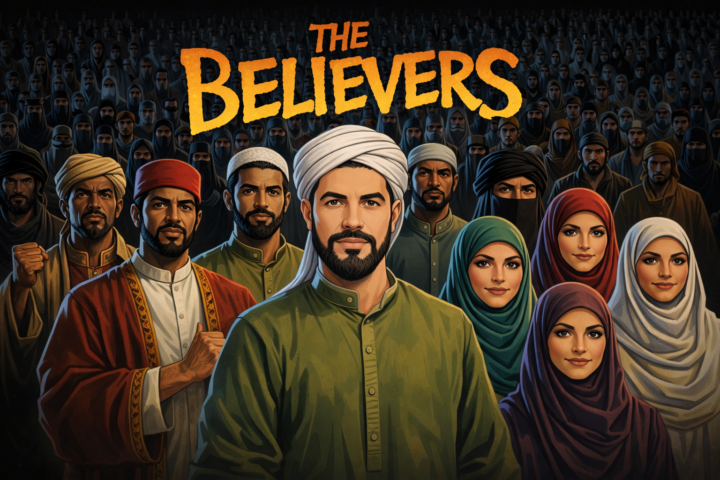
The Believers
The Believers is not intended to be another online space for passive consumption, nor a place where ideas are entertained without consequence. It is conceived as a gathering of individuals who recognise that faith is not merely something one holds, but something one becomes. At its core lies a simple premise: that the modern world, with all its noise and fragmentation, has distanced us from our natural state—the fitrah—and that the task before us is to return to it with clarity, discipline, and intention. To speak of the fitrah is to speak of something primordial, something already embedded within the human being. It is not constructed through trends, nor discovered through endless novelty, but uncovered through a process of removal—of distractions, distortions, and excess. In this sense, the work of the Believers is not to invent a new identity, but to recover an original one. This recovery, however, cannot remain abstract. It must take shape in the mind, the body, and the practice of religion itself. The mind, in our time, is constantly pulled in competing directions. It is shaped by algorithms, conditioned by reaction, and often deprived of stillness. Reclaiming the mind therefore means restoring its capacity for focus, discernment, and truthfulness. It requires learning how to think properly, how to distinguish between what is essential and what is trivial, and how to resist the constant pressure to conform to prevailing narratives. Without this intellectual clarity, faith risks becoming superficial—something inherited or imitated, rather than understood and lived. The body, too, is part of this reclamation. It is not incidental to spiritual life, but integral to it. A neglected body often leads to a weakened will, and a weakened will struggles to uphold discipline in matters of faith. Strength, health, and physical presence are therefore not separate from religious commitment; they are among its necessary supports. To take the body seriously is to recognise that the human being is not divided into isolated compartments, but is a unified whole.
1-1 of 1

Leaderboard (30-day)
1

+1
Powered by