
Write something
🔥
Jan 19 •
Cameras and Lenses for Wildlife
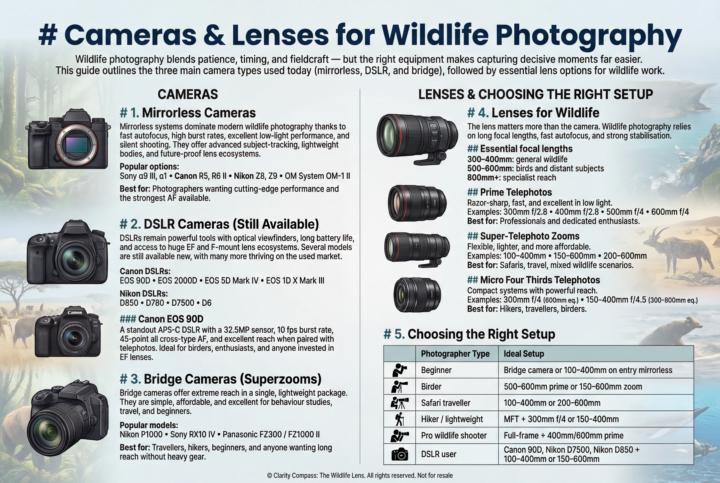
I was asked which cameras and lenses are best for wildlife photography. The truth is, there’s no single answer — every photographer has different needs, budgets, and shooting styles. What I can do is show you what’s available, how each option fits into the wildlife world, and what strengths they bring to the field. From mirrorless bodies to DSLRs and bridge cameras, and from versatile zooms to specialist primes, here’s a clear overview of the tools you can choose from.
🔥
Jan 19 •
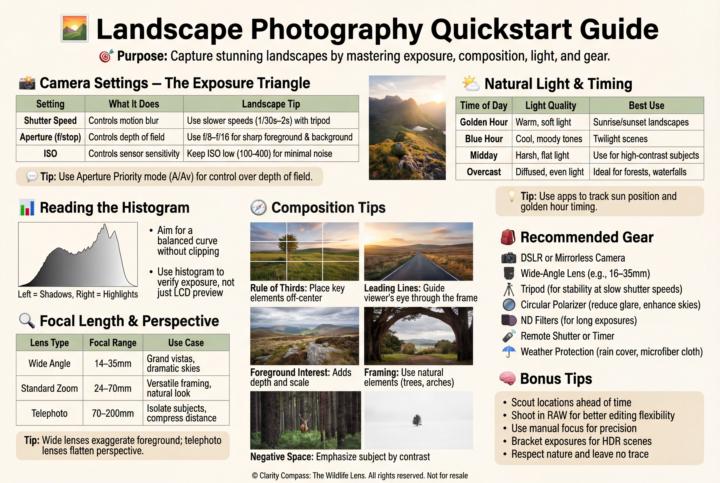
Landscape Photography
Whether you're drawn to misty moorlands, golden savannahs, or the quiet poetry of a forest floor, The Wildlife Lens is your sanctuary for deepening connection—with nature, with your craft, and with a community that sees the world through a wilder lens. We’re not just about sharp shots or rare sightings. We’re about presence. About noticing the curve of a heron’s neck, the hush before sunrise, the way light dances across a dew-covered leaf. Here, photography becomes a practice of reverence and curiosity. Led by seasoned naturalists and photographers, our space offers: - 🧭 Field-tested location guides and seasonal intelligence - 🐾 Species ID support and ecological context - 🎓 Structured modules for all skill levels - 🤝 A tiered pathway into Wildlife Cornucopia, our advanced creative and mentoring hub Whether you're just picking up a camera or refining your field technique, The Wildlife Lens invites you to slow down, look closer, and share the wonder.
3
0
🔥
Jan 19 •
Wildlife Photography Tips
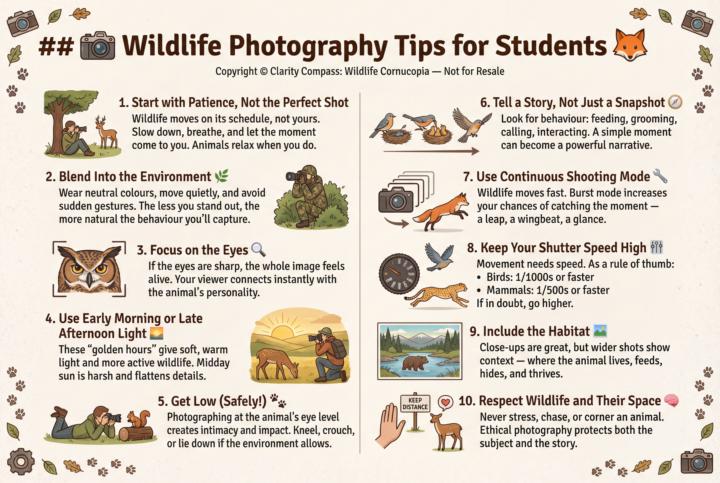
This poster titled "Wildlife Photography Tips for Students" is a vibrant, educational infographic created by The Nature Conservancy’s Nature Lab. It’s designed to guide budding wildlife photographers—especially students—through ten foundational principles that blend technical advice with ethical awareness. Each tip is paired with a small, engaging illustration that visually reinforces the concept, making the poster both informative and visually appealing. The layout is clean and accessible, ideal for classrooms, workshops, or field guides. 🦉 Key Themes and Tips: 1. Patience Over Perfection – Encourages beginners to value time and curiosity over chasing flawless shots. 2. Storytelling Through Imagery – Promotes capturing the animal’s life and environment, not just its appearance. 3. Use Continuous Shoot – Suggests burst mode to catch dynamic behavior and movement. 4. Focus on the Eyes – Highlights the emotional impact of sharp, expressive eyes. 5. High Shutter Speed – Recommends fast settings to freeze motion and avoid blur. 6. Use the Environment – Advises including natural elements to contextualize the subject. 7. Include Habitat – Reinforces the importance of showing where the animal lives. 8. Light is the Moment – Suggests shooting during golden hours for optimal lighting. 9. Get Low (Safely!) – Encourages eye-level shots for intimacy and perspective. 10. Respect Wildlife and Nature – Stresses ethical behavior: no disturbance, no damage. The tone is warm, encouraging, and grounded in both photographic technique and conservation ethics—perfect for nurturing thoughtful, responsible nature photographers.
2
0
🔥
Jan 19 •
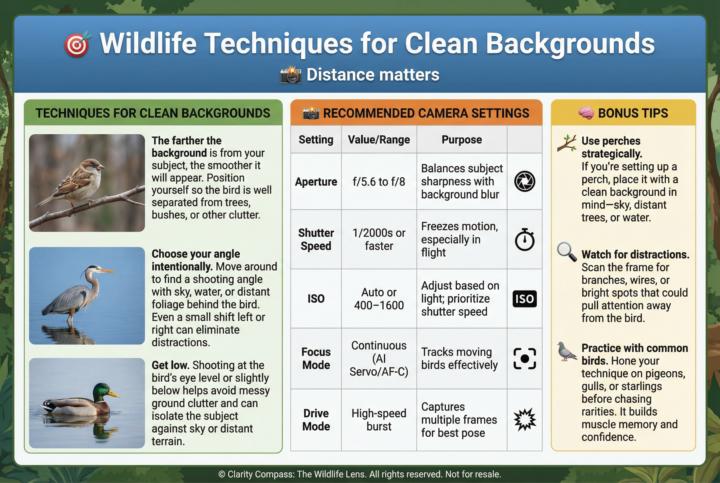
How to get a clear background
Getting a clear background is all about controlling the distance and angle between your subject and whatever sits behind it. When the background is far away, your lens naturally blurs it into smooth colour and tone, helping the animal stand out sharply. You can achieve this by choosing a shooting position where the background is distant—like sky, water, or far‑off foliage—and by getting to the animal’s eye level so you’re not shooting down into clutter. Longer lenses and wider apertures enhance this effect, but the real magic comes from moving your feet and selecting the cleanest angle before you even raise the camera. This approach works for any wildlife: a perched bird, a deer in a meadow, or a lizard on a rock. The more you pay attention to background distance and shooting angle, the more consistently you’ll create images where the subject pops and the distractions melt away.
2
0
🔥
Jan 19 •
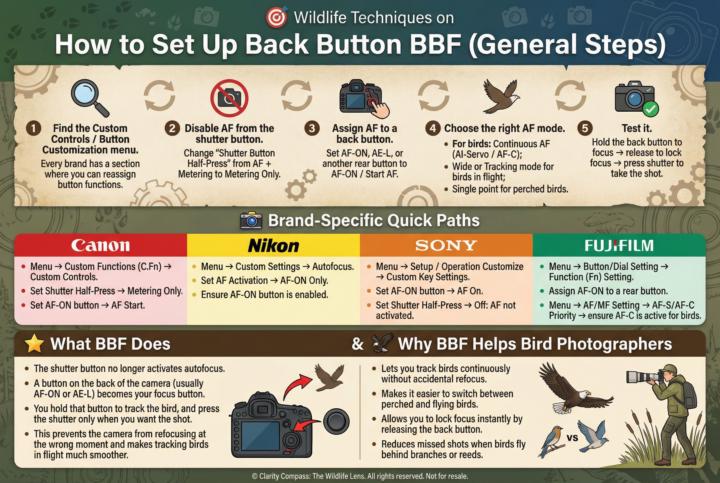
Back Button Focus
Back‑button focus (BBF) is a focusing method where you move autofocus control from the shutter button to a dedicated button on the back of the camera. Instead of half‑pressing the shutter to focus, you use the rear button to start and stop autofocus, and the shutter button only takes the photo. This separation gives you far more control when photographing wildlife of any kind. You can track moving animals smoothly, lock focus instantly by lifting your thumb, and avoid the camera refocusing at the wrong moment. Whether it’s a bird in flight, a deer stepping out of the trees, or a lizard pausing on a rock, BBF helps you react faster and keep focus exactly where you want it.
1
0
1-6 of 6
skool.com/the-wildlife-lens
Have fun, Find wildlife. Grow skills. Connect with people who get it. A warm community for naturalists and photographers who'd rather be out there.
Leaderboard (30-day)
1
+26
2

🔥
+19
3

🔥
+14
4

🔥
+5
5
+5
Powered by