
Nov '25 • General discussion
The big why of two times sensemaking
# Making Sense of Stories: Two Essential Phases in Participatory Narrative Work
When we work with stories in organizational or community settings, we’re not just collecting interesting anecdotes. We’re engaging in a deliberate process of sensemaking that happens in two distinct but interconnected phases. Understanding these phases can transform how we facilitate story work and what we get from it.
First Sensemaking: The Story Sharer’s Moment
The first sensemaking happens when someone tells their story. This is deeply personal and often revelatory, not primarily for the listener, but for the teller themselves.
Cynthia Kurtz, through her extensive work with participatory narrative methods, emphasizes that storytelling is itself an act of meaning-making. When we ask someone to share an experience about a time they felt proud at work, or when they saw collaboration succeed or fail, we’re inviting them into a reflective space. In that moment of telling, people often discover things they didn’t fully realize they knew.
This first sensemaking is where the story sharer connects events to meaning. They’re not just recounting what happened; they’re actively interpreting their experience as they speak. The act of putting experience into narrative form—choosing what to include, what matters, how things connect—is itself a form of understanding. This is why people often say “I didn’t realize that until I said it out loud.”
In StoryConnect’s story cycle framework, this happens during the collection phase, but it’s crucial to recognize it’s not passive collection at all. When story sharers then answer interpretive questions about their own stories—tagging them with dimensions like “this story shows high trust” or “collaboration happened informally here”—they’re extending that first sensemaking. They’re the first and often most important interpreters of their own experience.
Second Sensemaking: Multiperspective Pattern-Finding
The second phase of sensemaking happens when we bring stories together in a work session. This is where Kurtz’s approach to participatory narrative inquiry really shines—it’s designed specifically to create productive encounters between multiple perspectives.
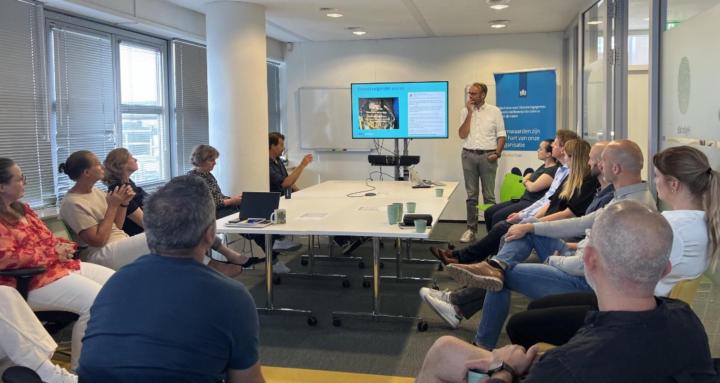
In a StoryConnect work session, participants aren’t sitting through presentations of findings. They’re actively working with the stories themselves—reading them, comparing them, looking for patterns, exploring tensions and contradictions. This is multiperspective sensemaking: many minds engaging with many experiences to build a richer, more nuanced understanding than any single perspective could provide.
This phase works because of the diversity principle: patterns that emerge across multiple perspectives are more trustworthy and more actionable than patterns identified by experts alone. When a group discovers together that stories about successful change all involve informal conversations before formal decisions, or that stories of belonging cluster around specific practices, that discovery carries weight. It has legitimacy because it emerged from collective interpretation.
The work session design matters enormously here. You’re not looking for consensus—you’re looking for productive friction between different readings of the same material. One person sees a story as evidence of leadership failure; another sees it as showing necessary adaptation. Both readings might be valid, and the conversation between them reveals complexity that a single interpretation would flatten.
Connecting the Two Phases
These two phases of sensemaking work together in a cycle. The first sensemaking generates authentic raw material—stories that carry real experience and the teller’s initial interpretation. The second sensemaking puts those stories in conversation with each other and with multiple interpreters, revealing patterns and meanings that transcend individual experience.
This is why the story cycle in participatory narrative work is so powerful. It honors individual meaning-making while also creating space for collective discovery. The story sharer’s interpretation isn’t overwritten by group analysis; it becomes one voice in a richer conversation.
For practitioners, this means two things:
First, create the conditions for good first sensemaking. Give story sharers time and space to reflect. Use questions that invite meaningful interpretation. Respect their agency as interpreters of their own experience.
Second, design work sessions that genuinely enable multiperspective engagement. Don’t shortcut to “here’s what the stories mean”—let participants do the work of pattern-finding themselves. Create structures that surface different interpretations rather than suppressing them. Use the tension between perspectives as a resource, not a problem to solve.
When both phases work well, something remarkable happens: people don’t just learn about the topic you’re exploring, they develop a shared capacity to make sense of complexity together. And that capacity—that ability to hold multiple perspectives while finding meaningful patterns—may be the most valuable outcome of narrative work.
0
0 comments
The big why of two times sensemaking
powered by
skool.com/the-story-commons-community-9565
Learn in 4 weeks how to work with stories to better understand people, uncover patterns, and design meaningful change.
Suggested communities
Powered by