

Mar 19 •
Recognising chords
Here is a clip from my last lesson with Benedict where I had asked if it will help, if I could recognise what chords I am playing. I hope you find this helpful and I'd like to know if you know what chords you are and if that helps your playing and learning new pieces?


Mar 5 •
Minor keys in jazz
Putting this question here in case it helps someone else, or in case anyone else knows the answer! @Benedict King, a minor 7th tetrad (triad with 7th) in a major key has a flattened 7th right. E.g. in C major, the II in Dm7 which is D,F,A,C. But in a minor key, would the tonic tetrad still be a minor 7th? I am so used to minor tetrads always being m7. I would expect though it to be a major 7th because the 7th in a minor key is not flattened, e.g. in C minor the 7th is B not Bb, so surely the I tetrad in C minor is Cm#7. Or how else would you notate that? CmM7?! This can’t be right!

Nov '25 •
New Guide: How to Identify Composers from a Score
I’ve just added a new guide to the Online Resources Hub — it walks you through how to identify composers and musical periods from a written score. If you’re preparing for ABRSM theory exams, this will help you recognise style, texture, harmony, and period markers much more confidently. It’s designed as a clear, step-by-step process you can use with any unseen score. You’ll find it in the Online Resources Hub now if you’d like to explore it. Benedict
3
0
Oct '25 •
🎼 New Video: Grade 6 Harmony Made Simple — How to Harmonise a Melody Step-by-Step
If you’ve ever looked at a Grade 6 harmonisation question and thought, “Where do I even start?”, this new walkthrough is for you. In this calm, practical video, I take you through a real exam-style question from blank page to finished answer — showing how to think logically and musically at every step. 🎹 What you’ll learn: • How to find the key and map your cadences before adding any chords • The role of predominant chords (ii°, IV, I⁶⁴) in shaping good harmonic flow • How to use inversions to create smooth bass lines and avoid parallel fifths • A final checklist for clean, confident answers This is especially useful for those working towards Grade 5–7 theory exams, but it’s just as valuable if you want to hear harmony more clearly when you play. 💬 Once you’ve watched, try harmonising a short melody of your own and post it in the Theory Made Simple section — I’d love to give you some feedback!
2
0
Sep '25 •
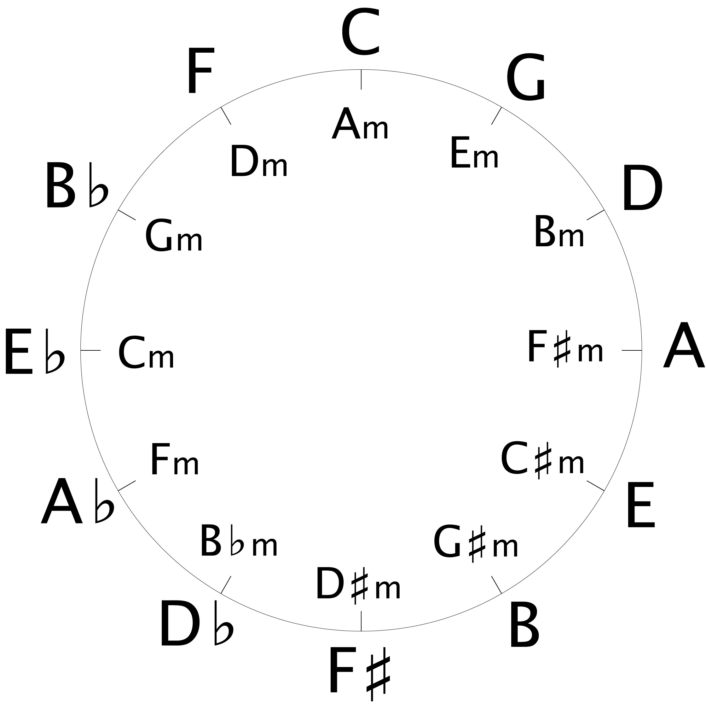
🎼 The Circle of Fifths… Made Simple
The Circle of Fifths looks complicated at first, but it’s actually one of the most useful shortcuts in music. Here’s how to think about it: 1. Each step clockwise adds a sharp (G, D, A, E, etc.). 2. Each step counter-clockwise adds a flat (F, Bb, Eb, etc.). 3. Major and relative minor keys share the same “slice” (C major & A minor, G major & E minor, and so on). 👉 Why it matters: - It helps you know which chords “fit” together. - It makes transposing (changing key) way less scary. - It’s the secret to spotting patterns in almost any piece of music. What’s been your experience with the Circle of Fifths? - “I’ve used it before.” - “I’ve seen it but don’t get it.” - “What even is that??” Drop your answer below — I’ll make sure to share some examples that match where you’re at.
1-6 of 6
powered by
skool.com/the-self-taught-pianist-circle-7074
Stop practising in isolation. Build proper skills with a supportive community of adult learners. Join the Independent Pianist Circle today!
Suggested communities
Powered by