
Write something

Jun 14 •
Hey Anima Amen-Ra, The Return To Self Collective 🚀
Hey Anima Amen-Ra 👋 Just checked out The Return To Self Collective. You're still early enough to structure the community properly before growth starts kicking in — which honestly is the best possible timing. We're currently helping new Skool owners turn empty/basic communities into launch-ready ecosystems completely free. Examples + full breakdown here: 👉 Community Launch Before vs after examples below 👇


Jun 8 •
🌿 FOLLOW-UP REFLECTION + ACTION 🌿
Cardiovascular + Respiratory Systems Earlier this week, we talked about how the cardiovascular and respiratory systems work together through circulation, oxygen, breath, and movement. Now let’s bring that awareness into the body. Today’s action is simple: Take 5 minutes to observe your breath and circulation. You are not trying to change anything at first. Just notice. Pay attention to: • Is your breath shallow or deep? • Are you breathing more through your chest or belly? • Does your heartbeat feel calm, fast, heavy, or steady? • Do your hands or feet feel warm, cool, tense, or relaxed? • Does your breath change after standing, walking, stretching, or sitting still? Then, take 3 slow breaths and notice if anything shifts. This is not about doing it “right.” This is about building awareness. As practitioners, we have to learn how the body communicates before we can support others with confidence and care. Comment below: 1. What did you notice about your breath? 2. What did you notice about your heartbeat or circulation? 3. Did anything change after slowing down for a moment? Awareness first. Understanding follows. 🤍

Jun 4 •
🌿 CARDIOVASCULAR + RESPIRATORY SYSTEMS 🌿
Circulation. Oxygen. Breath. This week, we are looking at two systems that work closely together: the cardiovascular system and the respiratory system. The cardiovascular system includes the heart, blood, and blood vessels. Its job is to move blood throughout the body, carrying oxygen, nutrients, and other important materials where they need to go. The respiratory system includes the lungs and airways. Its job is to bring oxygen into the body and help release carbon dioxide when we exhale. These two systems are constantly working together. The breath brings oxygen in.The blood carries oxygen through the body.The heart keeps everything moving. In bodywork, this matters because the body responds to touch, pressure, movement, stress, and relaxation. When a person feels calm and supported, their breathing may slow down. Their body may soften. Their circulation may feel different. They may become more aware of areas of tension or restriction. This is one reason why learning the body matters. We begin to understand that the body is not made of separate parts working alone. It is connected. A client’s breathing, posture, stress level, muscle tension, and overall comfort can all influence how they experience a session. As practitioners, we do not need to know everything at once. But we do need to stay curious. Learning how the body moves oxygen, responds to breath, and circulates blood helps us become more aware, more intentional, and more respectful in the work we do. This week, pay attention to your own breath. Notice how it changes when you are calm, rushed, tired, focused, or overwhelmed. Your breath can teach you a lot about your body. 🤍
0
0

May 30 •
🌿 WEEKEND REFLECTION + ACTION 🌿
Earlier this week, we talked about why learning the body matters — systems, function, movement, and proper language. Now let’s make it personal. This weekend, choose one body system or body function to become more aware of. You do not have to study deeply yet. Just observe, notice, and get curious. Pick one: • Breath — Notice how your breathing changes when you are calm, stressed, tired, or focused. • Circulation — Notice warmth, coldness, heart rate, or how your body feels after movement. • Nervous system — Notice what makes you feel tense, relaxed, alert, or safe. • Movement — Notice how you sit, stand, walk, stretch, or hold tension. • Language — Look up the proper name for one body part, movement, or system you use often. Action step: Take 5–10 minutes today and observe your own body without judgment. Then come back and share: Which area did you choose? What did you notice? What do you want to learn more about? Awareness is the beginning of understanding. 🤍
May 26 •
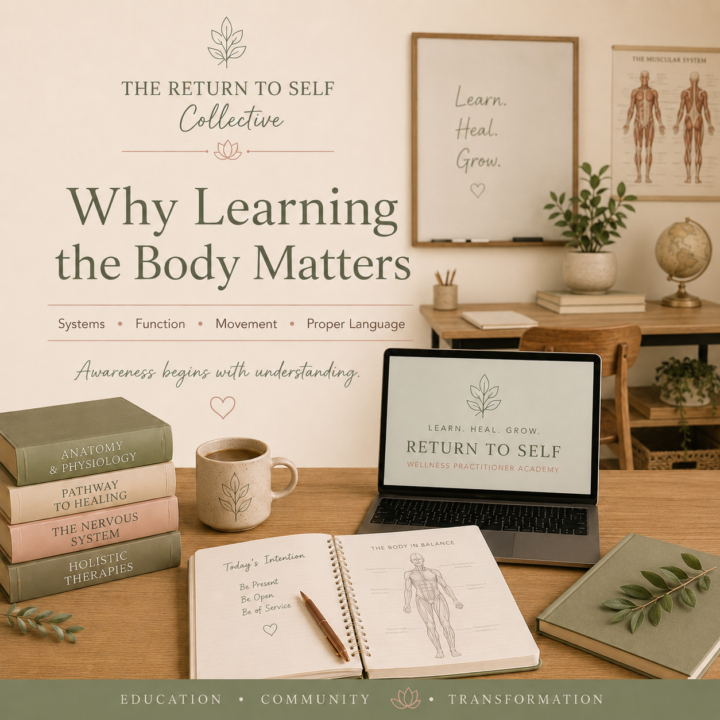
Why Learning the Body Matters
Before we can truly support healing in others, we have to begin understanding the body. Massage and wellness work are not just about relaxing muscles. The body is made up of systems that communicate with each other every second — the cardiovascular system, respiratory system, nervous system, lymphatic system, muscular system, and more. Each system has a function.Each movement has a purpose.Each part of the body has a name. When we begin learning the body, we start to see people differently. We understand that tension, pain, stress, breathing, posture, circulation, and movement are all connected. This does not mean you need to memorize everything overnight. It means you stay curious. You ask questions. You seek knowledge. You buy books. You watch educational videos. You take classes. You learn the proper language so you can communicate clearly, safely, and professionally. The more you understand the body, the more aware you become — not only of your clients, but of yourself. Learning the body is one of the first steps in becoming a more intentional, grounded, and responsible practitioner. This week, we begin with awareness. 🤍
1
0
1-6 of 6
powered by
skool.com/the-return-to-self-collective-5814
Massage, nervous system regulation, grounding, and practitioner growth for wellness professionals seeking deeper healing work.
Suggested communities
Powered by