
Write something

Feb 5 •
The question nobody asked you
Think about the biggest decisions of your life. Your career. Where you live. How you spend your days. Now ask yourself something uncomfortable: how many of those decisions did you actually make? Not chose from a menu someone else wrote. Actually made. From scratch. Without a path already laid out in front of you. Most of us followed a sequence. School led to exams. Exams led to university or a trade. That led to a job. The job led to a mortgage. The mortgage led to staying in the job. And somewhere in the middle of all that forward motion, we stopped asking whether we were heading somewhere we actually wanted to go. Nobody sat you down at fourteen and said: "What kind of life do you want?" They said: "What do you want to be when you grow up?" ....which is a completely different question. One asks about living. The other asks about earning. Here's what's strange. If you put a flea in a jar with a lid on it, the flea will jump and hit the lid. Over and over. Eventually it stops jumping that high. Then you remove the lid. The flea could leave any time. But it doesn't. It's been trained. Not by force. By repetition. The question isn't whether you're in a cage. The question is whether the lid is still there, or whether you just think it is. What's one thing in your life you do purely because "that's just how it's done"? Drop it below. Let's see what we find.
2
0

Jan 22 •
Before words, we already knew.
Long before language, grammar, or speech, humans communicated. We knew who was safe. We knew who was calm. We knew who was threatening. We knew who to follow. No words were needed. The body spoke first. Breathing patterns. Posture. Eye contact. Stillness or agitation. Presence or panic. Our survival depended on reading these signals accurately. Those instincts did not disappear just because we learned to talk. They went underground. We still feel a room before we hear it. This is what The Remembering points us back to. Modern science eventually caught up and gave it a technical name. Dominant frequency projection. A clumsy phrase for a simple truth. The most stable system influences the unstable ones around it. A calm nervous system settles others. A dysregulated one unsettles them. Coherence spreads. Chaos spreads faster. This has been observed in physics, biology, and neuroscience. Heart rhythms synchronise. Brainwaves entrain. Groups unconsciously match the emotional baseline of a leader. Interestingly, when some researchers pushed this too far into human influence and non verbal communication, funding dried up, papers stopped getting published, and careers quietly stalled. Not because the observations were wrong, but because they did not fit neatly into language first models of human behaviour. We prefer to believe we are logical creatures who decide with words. We are not. Words come last. Before you speak, people already know how you are. Before you explain, they already feel your state. Before you convince, they have already decided whether they feel safe. This is not mysticism. It is memory. So here is a question worth sitting with. When you enter a room, what are you communicating without words? Not what you intend. What your nervous system is broadcasting. The Remembering is not about learning something new. It is about recalling what we always knew, before we forgot how to listen.
3
0

Jan 20 •
No wonder you didnt enjoy school!?
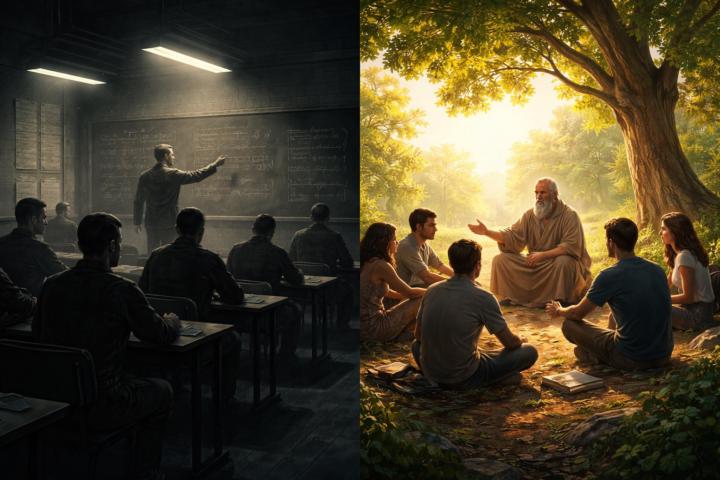
The modern/Western education system was never designed to develop thinkers. It was designed to produce obedience. The system most of us grew up in traces back to the Prussian education model. Built to train soldiers. Factory workers. Civil servants. Same age. Same classroom. Same curriculum. Same pace. Sit still. Listen. Repeat. Do not question. It worked. Just not for wisdom. but for discipline, control, conformance. Ancient Greek learning looked very different. Small groups. Mentors, not instructors. Questions, not answers. You learned by dialogue. By reflection. By walking and thinking. Knowledge was not memorised. It was examined. Character mattered. Judgement mattered. Self mastery mattered. One system trains people to comply. The other trains people to discern. And here is the uncomfortable truth: Most adults do not struggle because they lack intelligence. They struggle because they were never taught how to think. They were taught how to follow. Business mentoring, real mentoring, looks far closer to the Greek model than the Prussian one. Conversation. Challenge. Reflection. Experience. Not instruction. Not indoctrination. The question is not whether education failed you. The question is whether you are still living by a system that was never designed for who you were meant to become.
5
0
Jan 18 •
What if memory isn't stored?
A quote from my new novel, Remembering. Coming soon. “Memory isn’t stored in the brain. It’s accessed through it.” She moved to one of the alcoves. Touched a carved spiral. “We think memory is neurons firing. Synapses connecting. Chemical reactions. But that’s like saying music is stored in a radio. The radio doesn’t create the music. It receives it. Tunes into a frequency that already exists.” If this were true, and many believe it is. Would learning be less about forcing information in, and more about clearing noise out? Would thinking improve if the environment supported it, instead of constantly interrupting it? Would clarity come not from more effort, but from stillness? Is this why meditation is no longer fringe, but becoming essential? And when we look at ancient sites around the world, built with precision, silence, geometry, and used at specific times of day and year. Were they designed to store knowledge. Or to access it? Not teaching. Just asking. I’d be genuinely interested in how others see this.

Jan 15 •
the Power of Silence
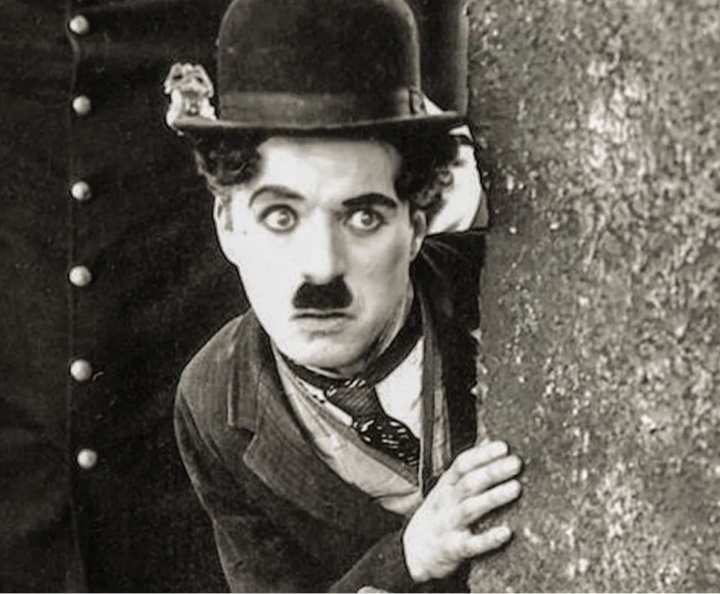
Charlie Chaplin was an incredibly eloquent speaker. If you ever watch the The Great Dictator speech, it’s impossible to deny. It’s passionate. It’s articulate. It’s fearless. What many people don’t realise is that Chaplin wrote, directed, produced, and starred in that film himself. He could speak beautifully. And yet. What made him one of the first true global superstars was not his voice. It was his understanding of silence. Chaplin realised something most people still haven’t: You can make far more noise by being silent. At a time when language divided people, silence unified them. No translation needed. No explanation required. His silence created: • Curiosity • Attention • Emotional connection People leaned in. They filled the gaps themselves. And in doing so, they became part of the story. In a world now obsessed with shouting louder, posting more, and filling every gap with noise, Chaplin’s lesson still stands. Silence isn’t weakness. It’s discipline. And when used well, it’s one of the most powerful tools you have to attract attention rather than chase it.
2
0
1-23 of 23
powered by

skool.com/the-remembering-7266
A FREE community for those who sense somethings missing. Not broken. Just incomplete. For people who question what everyone accepts. Ready to remember
Suggested communities
Powered by