
Write something
Pinned
Oct '25 •
WELCOME TO THE FOUNDER MEMBERS!
Welcome. If your member count hasn't reached 30 yet, you're in luck, because you're a Founder Member and you're eligible for a free consultation. DM me and we'll schedule the consultation. (Please note that I live in Italy, so there may be delays in responses due to time zone differences.)
0
0
Oct '25 •
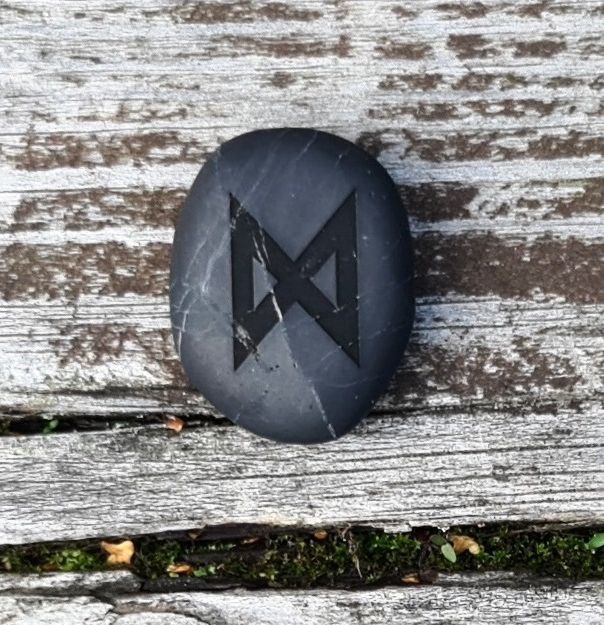
Dagaz
This is the rune of Radical Transformation and the Victory of Light over Darkness. Dagaz heralds a sudden, yet profoundly positive change—a true turning point in your life. It symbolizes the dawn, the illumination that dispels the shadow: it is the definitive closure of one cycle and the beginning of a New Era of growth and awareness. Fear not: this rune brings with it success, prosperity, and the encouragement to act with courage and certainty in your decisions. You are at a moment of awakening, where you possess the power to overturn any problematic situation and realize your dreams. The message is clear: Today is your day. Embrace this transition, follow your inner light, and prepare for a swift and profound evolution. There is no turning back; your path is one of growth and progress.
0
0
Oct '25 •
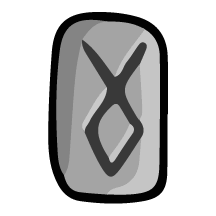
Othala Reversed — The Detachment from Roots
You have drawn Othala reversed, and this rune speaks of identity and belonging. It invites you to look within and ask yourself: Where do I truly come from, and what am I still carrying that no longer belongs to me? This rune, upside down, suggests that part of your roots has turned into a cage. You may be trying to honor family, social, or cultural expectations that no longer resonate with who you are now. Or perhaps you feel out of place — as if there’s no real “home” for you, neither within nor without. Othala reversed is not a sign of permanent loss, but of identity transition. It urges you to redefine your personal inheritance: you don’t need to reject your origins, but to consciously choose which parts to carry forward and which to release. It’s a time to ask yourself: - Which inherited beliefs am I still following, even though they no longer nourish me? - What does “home” mean to me today? - To whom or to what am I still trying to belong? If you embrace this rune as a mirror rather than a judge, it will help you rebuild an authentic sense of grounding, based on who you are now — not only on who you once were.
0
0
Oct '25 •
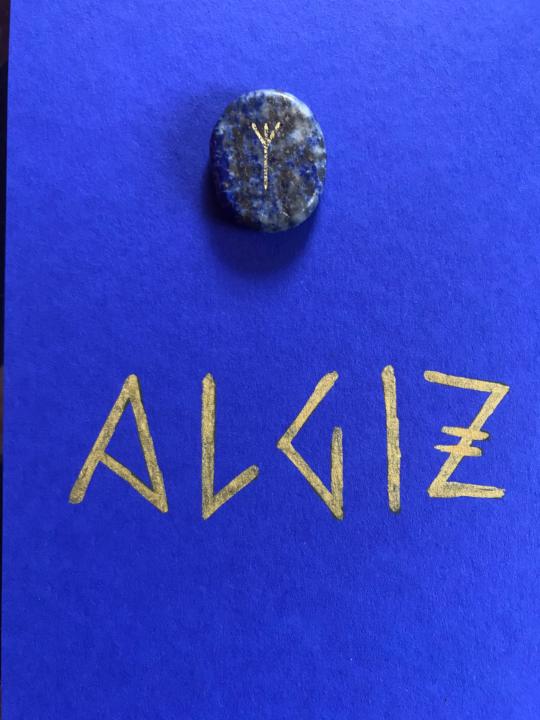
ALGIZ
The sign of Algiz is a beacon standing in the darkness, a constant warning to raise your guard. When danger silently creeps in or openly surrounds you, the first step is to learn to be wary of what seems too easy or too good to be true. Don't lower your guard in the face of ambiguous promises or inexplicable situations. This rune urges you to listen to your innermost compass: your instinct. It is the ancestral wisdom whispering in the shadow of reason. Following this inner voice, even if it contradicts apparent logic, is your greatest defense. Algiz doesn't promise the absence of threats, but arms you with the ability to see them and act to protect yourself.
0
0
Oct '25 •
The misunderstanding of celtic Runes
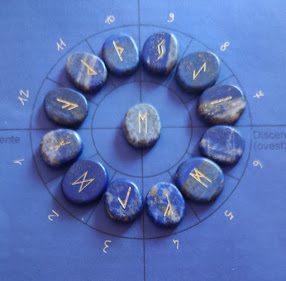
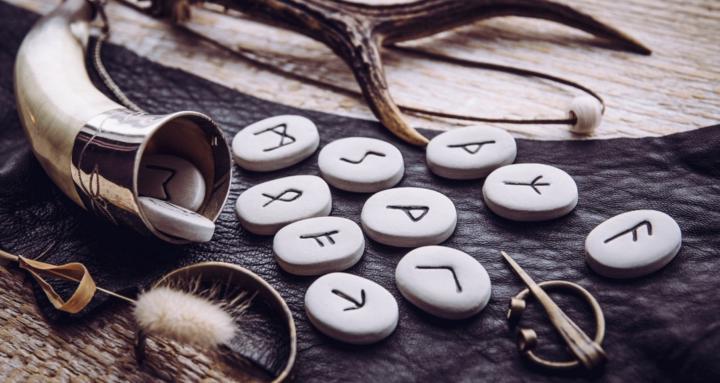
Since I started working with runes, I’ve heard countless times people talk about so-called Celtic runes. Many times, I’ve even been invited to events referencing Celtic culture to perform my readings in that context. However, I feel it is my duty, for the sake of intellectual honesty and completeness of information, to clarify this historical and cultural misunderstanding: IN REALITY, CELTIC RUNES DO NOT EXIST. It may well be true that nowadays everything associated with Celtic culture is perceived as something very cool, but in this case, the association simply isn’t there. The ancient FUTHARK, the runic alphabet whose name comes from the first six letters that compose it and whose earliest traces date back to the 1st century A.D., is of Germanic origin, not Celtic. If we are to hypothesize any influence, it is far more likely to be Etruscan, but certainly not Celtic. It is true that there are numerous inscriptions, mostly dating back to the 11th century A.D., found in the British Isles (as well as in almost all of Europe, for that matter), but this only demonstrates the wide diffusion the Futhark experienced over the centuries, undergoing some modifications along the way. This, however, does not justify the use of the term Celtic Runes, which I do not hesitate to define as entirely inappropriate. I admit that, at the beginning of my journey into this mysterious and fascinating world, I myself may have fallen into this “trap” due to lack of sufficient information. But naturally, since my interest was professional and not just a casual curiosity, it was my duty to study the origins of the tool I had decided to use for my readings. Unfortunately, runes were demonized during the Second World War because of the use made of them by the Nazis as a secret alphabet. The mental association of runes with the horrors of Nazism reduced their popularity, as one can easily imagine. Yet, every tool can be used constructively or destructively, and this does not depend on the tool itself, but on the person who wields it.
0
0
1-5 of 5
powered by
skool.com/the-power-of-runes-4295
Runes are an ancient divination tool, highly accurate and powerful.
Given to humans by Odin, they always tell the truth.
Suggested communities
Powered by