
Write something
Pinned

Jun 8 •
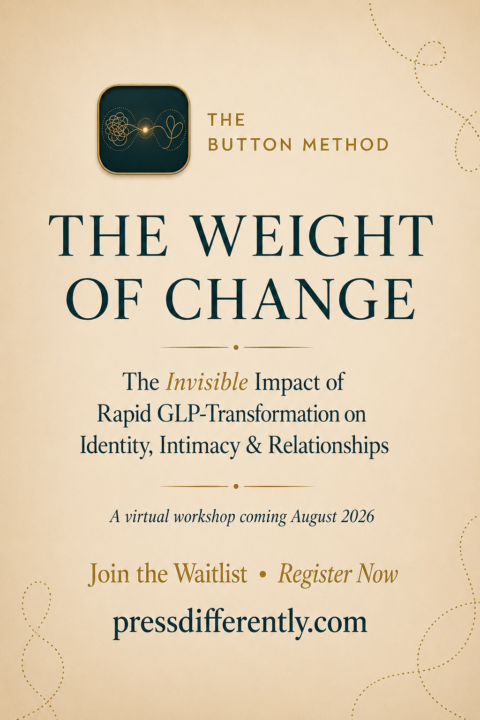
Welcome to The Weight of Change
When people talk about weight loss, they usually talk about the visible changes. The number on the scale.The clothes size.The photos.The compliments. What gets talked about far less are the invisible changes that can happen alongside them. For some people, losing weight brings confidence, energy, and freedom. For others, it can also bring unexpected emotions: • Looking in the mirror and not quite recognizing yourself• Feeling uncomfortable with increased attention from others• Grief for years lost to self-criticism or body shame• Changes in relationships, intimacy, or desire• Friends or family responding differently to you• Anxiety about regaining weight• Wondering who you are now that a long-held struggle has changed• Feeling surprised that weight loss didn’t solve everything you hoped it would Sometimes your body changes faster than your story does. And when that happens, there can be a gap between what everyone else sees and what you’re actually experiencing. This community is a place to talk about the whole journey—not just the physical transformation, but the emotional, relational, identity, and intimacy shifts that can come with it. There is no “right” way to feel. You can be grateful, excited, confused, proud, uncomfortable, hopeful, and uncertain all at the same time. If you’re comfortable sharing, I’d love to hear: What is something about your weight loss journey that nobody warned you about? Or: What has been the most unexpected change—positive or challenging—for you? Your experience might be exactly what someone else in this community needs to hear today.
Pinned
May 16 •
Welcome
Welcome to The Button Method™ Community This is a space for people navigating real life — the messy middle between what was and what’s next. Some people arrive here after heartbreak. Some after burnout. Others after rapid weight loss (in our peptide era!). Some during reinvention, grief, loneliness, parenting stress, relationship struggles, a sex life gone cold, identity shifts, or the quiet realization that something in life no longer fits. The Button Method™ was created around one simple but powerful idea: Small responses repeated over time can change the direction of a life. Inside this community, we use nine practical “buttons” to help interrupt old patterns and create more intentional responses in real time. The buttons are: • PAUSE• NO• ME• YES• FUCK IT• BRAVE• DO IT• SPARK• CONNECTION This is not about becoming perfect. It is not about never struggling. And it is definitely not about pretending life is easy. It’s about learning how to respond differently when life gets hard. Or just uncertain. Inside the community you’ll find: • guided reflections and discussions• practical tools and micro-actions• workshops, conversations, and support• pattern tracking and emotional insight• relationship, confidence, stress, and identity tools• people navigating their own messy middles too - because we all help each other. You can participate quietly or actively. There is no right way to be here. *Start With the App* The Button Method™ app is designed to help you use the buttons in everyday life. Inside the app you can: • check in with what you’re feeling• receive suggested buttons and micro-actions• track emotional and behavioral patterns• reflect on your responses over time• build momentum through small consistent shifts. By using The Button Method app (free) you learn the language and the method that we share about here. For those wanting more intensive support - workshops, one on one sessions and more, check out the way we use The Button Method at pressdifferently.com
May 16 •
What exactly is The Button Method?
What exactly is The Button Method™? At its core, it’s a practical framework for responding differently during difficult moments, transitions, relationships, stress, uncertainty, and change. Because life presses all of us. The Button Method™ is built around nine buttons — each representing a different kind of response, need, mindset, or action. Sometimes we need boundaries. Sometimes courage. Sometimes rest. Sometimes reconnection. Sometimes movement. Sometimes permission to let go. Different moments require different buttons. The nine buttons are: PAUSE “Taking time helps me think.” NO “I set limits that help me.” ME “I make myself a priority.” YES “I’m open to experiences.” FUCK IT “I let go, I try.” BRAVE “I face this with courage.” DO IT “I choose to act purposefully.” SPARK “I switch on my passion.” CONNECTION “I reach out to others.” Inside this community, we’ll explore: • what each button means• how the buttons show up in real life• overused and underused patterns• practical examples and micro-actions• relationships, intimacy, parenting, stress, identity, and confidence• how to know which button you may need most The goal is not to use the same button all the time. The goal is flexibility. Because growth often starts with one small shift: choosing a different response than the one you usually reach for. PS: Make sure you sign up for The Button Method app at thebuttonmethod.com and download it (“share to homescreen”) so you can track your patterns and join the conversations about the buttons and why we need them and how they help us.

Jun 15 •
Down 2 pounds and …
I’ve got a spring in my step! I’m trying not to let the scale determine my mood but I do like it when it’s good! Can anyone relate?
3
0
Jun 15 •
Basic courtesy and lots of support!
https://www.skool.com/the-messy-middle-2738/-/rules Let’s be there for one another. 🫶🙌
0
0
1-30 of 30
powered by
skool.com/the-messy-middle-2738
Practical tools and honest conversations for life’s messy middles — heartbreak, loneliness, rapid weight change, uncertainty, and new transformations.
Suggested communities
Powered by