Sapiens and the Search for Meaning
Humans are not built to survive alone or think alone. We are a species of storytellers.
Drawing on the work of Joseph Henrich, Yuval Noah Harari, and more, this lesson explores how shared culture, stories, and moral codes formed the invisible networks that allowed our ancestors to cooperate, thrive, and build civilization.
When these shared stories weaken, individuals and societies lose their sense of purpose, the very condition we call drift.
0%

The Science of Belief
Discover how your brain constructs emotions, beliefs, and reality itself. Drawing on Barrett, Sapolsky, Henrich, Bennett, and Lembke, this lesson explains how prediction, cultural learning, stress, and dopamine shape what you feel and what you believe. Understand the biological and cultural machinery behind your worldview, and how to take greater control of it.
0%
The Anatomy of an Ideology
This lesson explains what an ideology is, how it differs from and overlaps with religion, and why both have shaped human behavior for thousands of years. We break down the four core parts of every ideology (history, orientation, evaluation, and prescription) to give you a clear framework for understanding any belief system, including your own.
0%
The Four-Part Engine
Modern society runs on four powerful structural forces: fractional banking, which expands money through lending; reinvestment-driven growth, which compels constant competition and innovation; GDP as an organizing imperative, shaping national priorities; and wage labor as the primary way individuals access resources. Together, these forces create the economic engine driving modern life.
0%
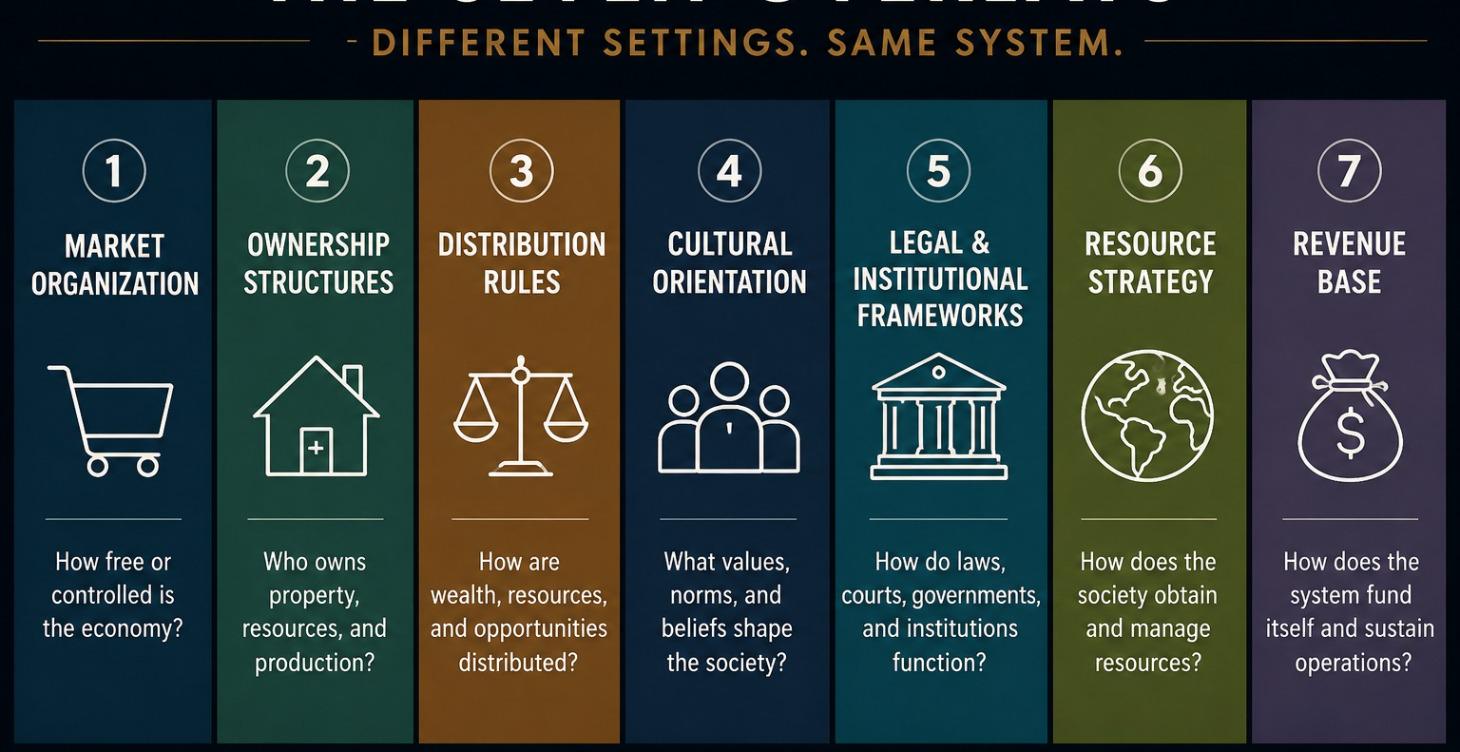
The Seven Overlays
These are the adjustable “knobs and settings” layered over the four-part engine. Market rules, ownership patterns, distribution systems, culture, law, resource strategy, and revenue base interact with the engine to shape a society’s actual regime output, whether it becomes liberal democracy, neoliberalism, socialism, democratic socialism, or something else.
0%
The Six Categories
These six metrics offer a clear, cross-temporal way to evaluate any society: Starvation, Disease, Violence, Liberty, Happiness, and Sustainability. Each captures a core dimension of human well-being. Together, they allow us to compare societies across history and today using consistent, evidence-based indicators rather than ideology or opinion.
0%
The Five Classes
These classes describe how well people can meet their basic needs. They’re defined by three factors: access to currency, reliable family/community support, and a functioning Cultural Information Network (CIN). Together, they shape five groups (Elites, Middle Class, Collective Class, Cortisol Class, and the Underclass) allowing us to compare social structure across eras and societies.
0%
The Blip and Snap (Explanatory)
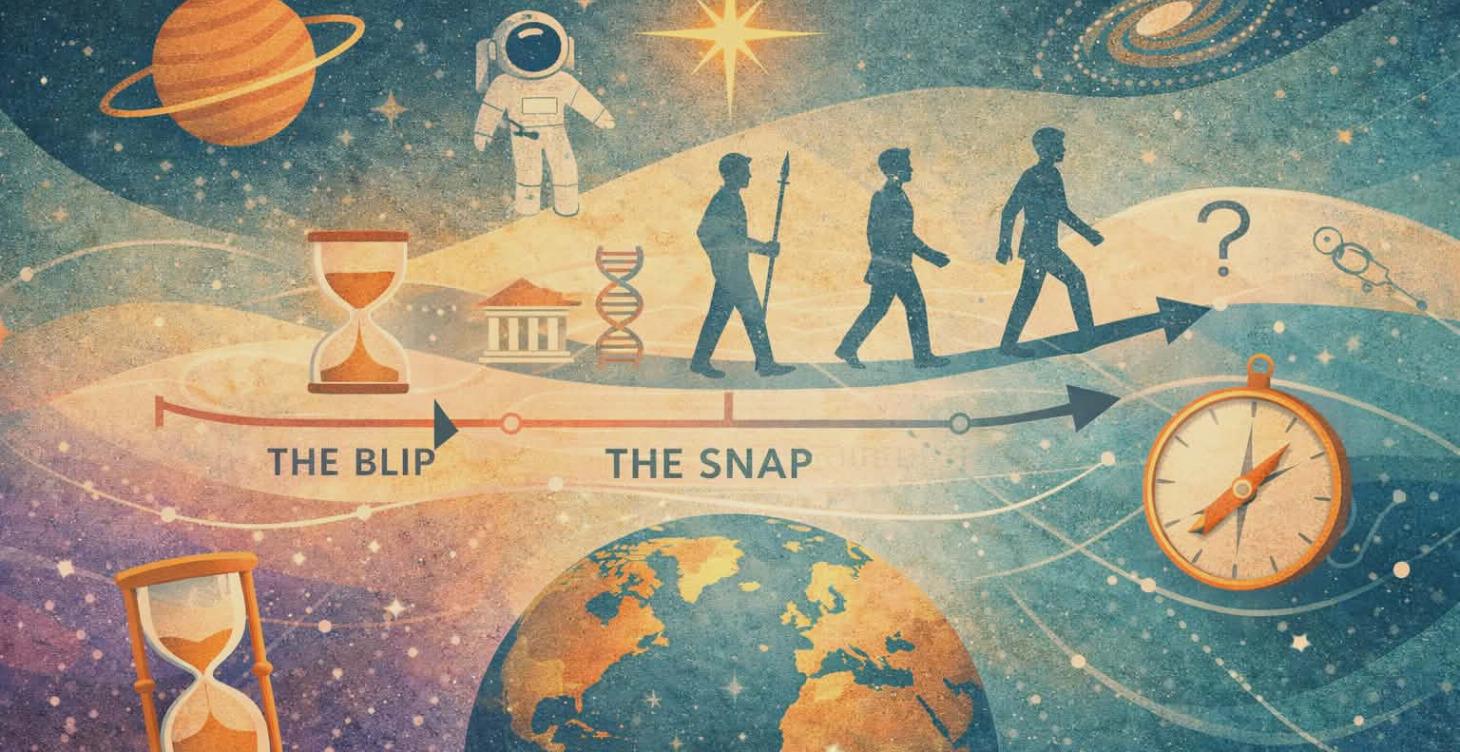
Lesson 8 introduces the Blip and the Snap, a species-level framework for understanding human economic history. For most of our existence, humans lived under a single core economic structure. Over the last 12,000 years, humanity diverged into multiple coexisting systems before rapidly reconverging into one global engine in the modern era. This lesson provides a structural, non-moralized explanation of how we arrived at the modern world.
0%

The Problem with Moralized History (Evaluation)
Lesson 9 evaluates human history without moral storytelling. Using six consistent outcome metrics (starvation, disease, violence, liberty, happiness, and sustainability) it compares pre-Blip societies, the Blip era, and the post-Snap world. The lesson argues that while the Blip was net-negative for most humans, it produced long-run species-level gains, and that evaluation today must shift from historical blame to present performance within a shared global structure.
0%

Shared Reality But No Shared Creed (Orientation)
This lesson provides an orientative framework for life after global economic convergence. Rather than prescribing values or policies, it offers a shared map of where humanity now stands structurally and historically. By clarifying system boundaries, class position, and common measurements, the lesson helps people move beyond ideological bubbles toward coexistence, pluralism, and non-violent disagreement within a shared global structure.
0%
Governing After Convergence (Programmatic)
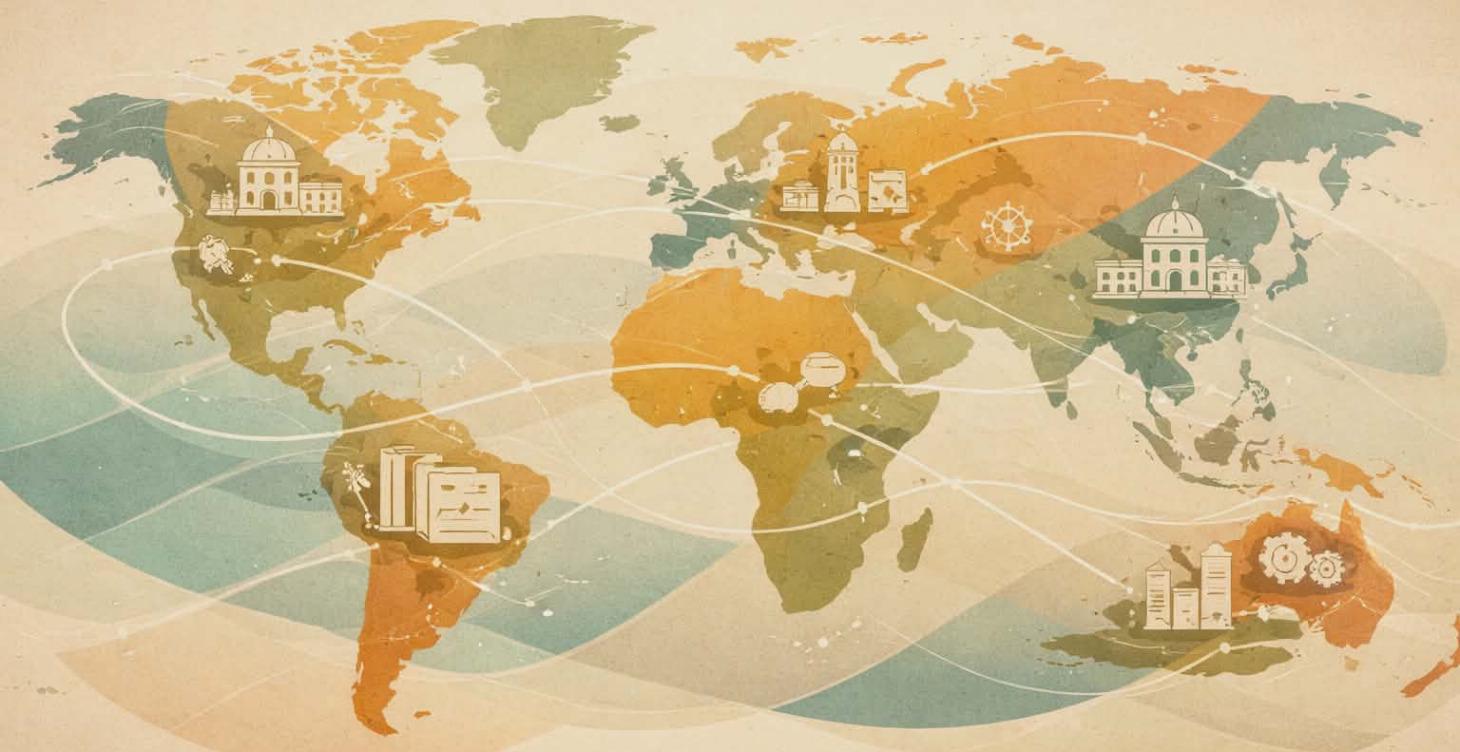
Lesson 11 examines how societies should govern after humanity’s convergence into a single global economic structure. Rather than debating systems, the lesson focuses on programmatic action within a shared engine: how nation-states experiment with institutions, compare outcomes, and coordinate through decentralized governance. It re-frames politics as overlay configuration and outcome-based competition in a post-convergence world.
0%
1-11 of 11