
Write something

Apr 28 •
Yerba Buena
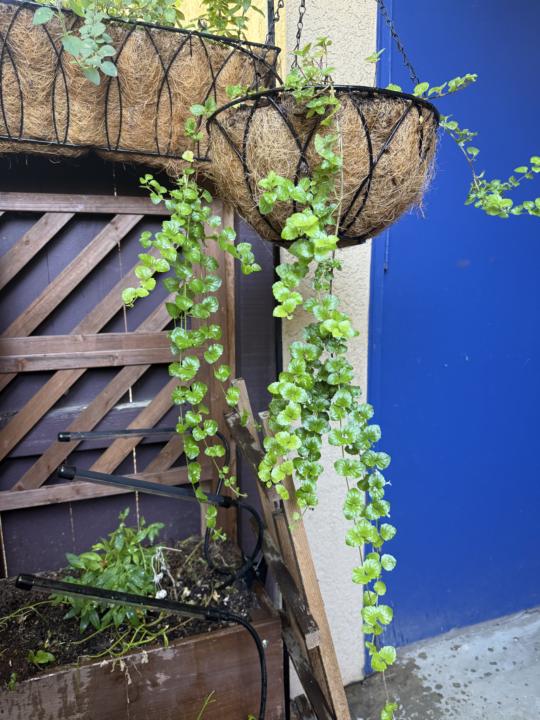
This is Yerba Buena, a creeping ground covering plant in the mint family that is native to Western North America. It is usually not a cascading plant, but when placed in a hanging planter the stretching branches, searching for the ground, transform into a waterfall of vibrant green leaves with tiny blossoms that native pollinators absolutely love. Traditionally, it was used for pain relief, digestive support, cold and flu symptoms, toothaches, headaches, arthritis, and respiratory issues. Topically, it has been used for joint pain, insect bites, irritated skin, and its antimicrobial properties support wound care and help address fungal infections. The main chemical constituents that give this plant these properties are menthol, menthone, isomenthone, neomenthol, pulegone, piperitone, limonene, methyl acetate, carvone, menthyl acetate, geraniol, geranyl acetate, α-pinene, β-pinene, menthofuran, menthalactone, β-caryophyllene, caryophyllene oxide, farnesol, eudesmol, borneol, luteolin, apigenin, quercetin, rosmarinic acid, tannins, oleanane-type triterpenes, ursane-type triterpenes, and saponins, all contributing to its healing, cleansing, and protective qualities. #yerbabuena #herbalmedicine #nativeplants #medicinalplants #herbal
0
0
Apr 15 •
New here
Hey, everyone! New here on Skool. Looking to branch out, make connections, learn, and grow in this community all while sharing my knowledge with everyone!
0
0
1-2 of 2
powered by
skool.com/the-foragers-hearth-7977
Let’s learn about cooking, gardening, foraging, fermenting, and nutrition.
Suggested communities
Powered by