
7d • General discussion
This is how zoom felt about the webinar.
Webinar summary for Cranial Motion & Motility (01/14/2026)
Quick recap
Matthew led a comprehensive webinar on cranial anatomy and primary respiration, covering the brain's movement patterns, the concept of potency, and the relationship between various body systems including the heart, sacrum, and nervous system. The presentation included detailed anatomical demonstrations of cranial bone movements during fetal development and explained how the brain's C-shaped curvature develops through complex axis rotations. Matthew concluded by discussing the vagus nerve's connection to the heart and nervous system, and outlined plans for future webinars to help participants better understand key concepts.
Summary
Craniosacral Brain Motility Concepts
Matthew led a webinar on brain motility, discussing William Sutherland's concept of primary respiration and the five-part craniosacral system. He explained that understanding the brain's movement can simplify memorization of cranial bone rotations and emphasized the importance of feeling the fullness and directionality of breath in the body. Matthew introduced the concepts of position, wave, and field, and described how to assess the breath of different body parts, including cranial bones and the femur. He concluded by explaining how challenges to the automatic suspended shifting fulcrum can lead to symptoms and energy expenditure.
Primary Respiration and Body Energy
Matthew discussed the concept of primary respiration and its connection to the breath of life, which is linked to God, the mind, or nature. He explained that the cerebral spinal fluid is the first recipient of this breath of life, known as potency, which organizes intelligence and affects fluid coherence, motion, structure, and healing. Matthew also described the role of the kidneys in Chinese medicine, emphasizing their connection to the body's energy and the concept of the Dantian, or celestial fire, which holds potency and gene energy. He concluded by discussing the cranial wave's cycles per minute and the concept of fluid tide, where most of the work happens, and mentioned a recent C1 class in Chattanooga where participants counted out 50-second outward and return cycles.
Embryological Brain Development and Function
Matthew explained the C-shaped curvature of the brain during embryological development, emphasizing the role of the thalamus as the automatic suspending shifting fulcrum. He described the three layers of meningeal membranes surrounding the brain and the movement of the dura mater during flexion. Matthew also discussed the relationship between the thalamus and the kidneys, and how listening to the brain's center can provide insights into its overall function.
Cranial Bone Development Demonstrated
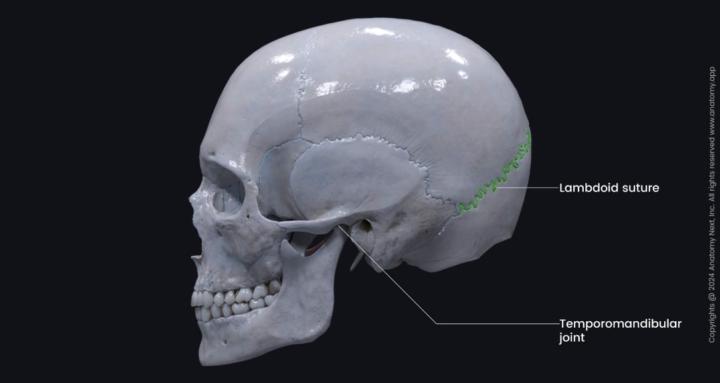
Matthew led a detailed anatomical demonstration on cranial bone movements during fetal development, explaining how the frontal bone stretches posteriorly and inferiorly while the coronal suture widens to accommodate the brain's expansion. He described the complex axis rotations of various cranial bones, including the parietal bone's flaring motion and the temporal bone's external rotation, while emphasizing how these movements create space for the developing brain's C-curve formation. The meeting experienced some technical difficulties with video framing, which Isheeni and Istvan helped resolve by adjusting the screen layout.
Cranial Anatomy and Movement Fundamentals
Matthew presented an in-depth explanation of cranial anatomy and movement, focusing on how the brain's shortening from front to back and widening from side to side affects the meningeal tissue, fox, tentorium, and cranial bones. He described how the sphenobasilar joint serves as a keystone for cranial movement and explained the connections between the heart, sacrum, and sphenoid through vascular and dural pathways. Matthew also discussed the relationship between acupuncture points, chakras, and the primary respiration of the body, emphasizing how multiple points of orientation allow for more fluidity and grace in bodily movement.
Body Potency and Energy Systems
Matthew explained the concept of potency in the body, describing it as the energetic reserve that allows for health and longevity. He discussed how trauma can create displacement and new fulcrums that use up energy, but when energy returns to the body, it can be used for healing. Matthew also clarified the anatomical connections between the heart, brain, and sacrum, explaining how these structures are interconnected through vascular and dural connections.
Vagus Nerve and Heart Connection
Matthew delivered a detailed webinar about the vagus nerve and its connection to the heart, explaining how the nerve listens to external and internal environments. He described the nerve's branches and how it affects consciousness and physical movement. Matthew also discussed the relationship between the sphenoid bone, dura, and the body's nervous system. He concluded by outlining plans for future webinars, including creating more videos and posting poll questions to help participants understand key concepts.
AI-generated content may be inaccurate or misleading. Always check for accuracy.
Please rate the accuracy of this summary.
1
0 comments
This is how zoom felt about the webinar.
powered by
skool.com/the-craniosacral-classroom-2206
Explore Chinese Medicine Concepts in Craniosacral and Zangfu (Visceral) contacts through live classes, webinars, course material, & mentorship.
Suggested communities
Powered by