
Write something

25d •
IMPORTANT TAX DEADLINES
As tax season winds up, there are three dates that are of importance to taxpayers, whether you are inside or outside of the U. S. APRIL 15 – PAYMENT DEADLINE For taxpayers here in the U. S., the IRS expects payment of taxes by April 15 this year. This is whether you are filing yet or not. Interest starts kicking in from April 15 for unpaid taxes. Common misconception: Filing an extension means you can pay later. But that’s not what it means. An extension only allows more time to file, not to pay. You may file an extension to submit your tax return, but you must pay estimated or expect taxes with IRS Form 4868, Application for Automatic Extension of Time To File U.S. Individual Income Tax Return. JUNE 15 – FILING DEADLINE FOR AMERICANS ABROAD If you live outside the U. S., you receive an automatic 2-month extension to file, without even requesting the extension. This is part of the tax code that automatically applies to Americans living overseas. What you may not realize: This automatic extension only extends the date to file the tax return, not the deadline to pay. You will also accrue interest from April 15 if you wait until June 15 to pay. OCTOBER 15 – EXTENDED DEADLINE If you need more time to file your return, file IRS Form 4868, Application for Automatic Extension of Time To File U.S. Individual Income Tax Return. This deadline is most often used by Americans abroad who utilize the FEIE (Foreign Earned Income Exclusion), have more complicated situations, or need more time to compile foreign documentation. FBAR – FOREIGN BANK AND FINANCIAL ACCOUNT REPORT If you have money in foreign bank accounts, you have a requirement to report any and all bank accounts with an aggregate value of greater than $10,000 at any time during the year. The FBAR is an information return that is separate from your tax return. Example. You have three foreign bank accounts with the following balances: Bank Account #1: Balance, $200 Bank Account #2: Balance, $1,587 Bank Account #3: Balance, $8,214
0
0
Nov '25 •
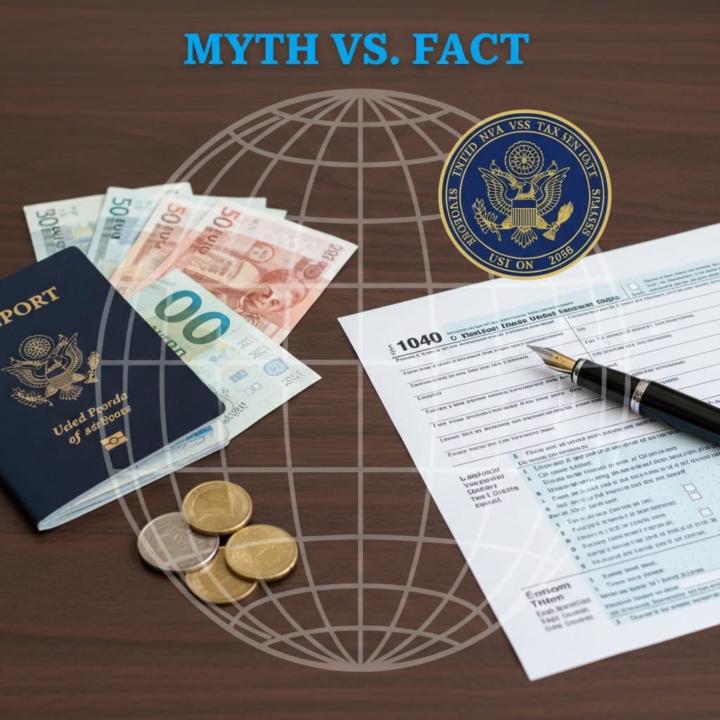
TAX MYTH MONDAY
Myth: If I earn money abroad, the IRS doesn’t care. Fact: US tax law often requires disclosure of worldwide income and foreign accounts—even for non-citizens and residents. Failure to report can result in severe penalties, even if accidental. Have foreign income? Schedule a consult to clarify your obligations. #TaxMythMonday #ForeignIncome #TaxCompliance #IRS #SiriusTaxGroup
0
0
Oct '25 •
ETHICS & DUE DILIGENCE IN TAX PRACTICE: CIRCULAR 230 REMINDERS
As tax professionals, we are bound by Circular 230 to uphold the highest standards of ethics and due diligence. This means: - Verifying client information, never making assumptions - Documenting every step and keeping clear records - Refusing shortcuts, even under pressure - Prioritizing client interests while maintaining compliance Ethical practice isn’t just a regulatory requirement—it’s the foundation of trust with every client. At Sirius Tax Group, we lead by example, ensuring every return is accurate and every client is treated with respect. #SiriuslySpeaking #TheITINLady #SiriusTaxAdvisor #DueDiligence #Circular230 #TaxEthics #TaxProfessionals #Compliance #IRS #TaxSeason #Integrity #Trust #SilverSpring #InternationalTax #WomenInBusiness #Leadership #Professionalism #TaxTips #TaxCompliance #Ethics #TaxLaw #SmallBusiness #Entrepreneurship #Accountability #TaxAdvisor #TaxPreparer #ExpertAdvice
0
0

Oct '25 •
TRUST. EXPERTISE. UNDERSTANDING THE UNIQUE NEEDS OF INTERNATIONAL CLIENTS.
What sets a Certifying Acceptance Agent apart? It’s more than paperwork—it’s about trust, expertise, and understanding the unique needs of international clients. My Tax Advisor Training dives deep into the real-world scenarios you’ll face, from complex IRS documentation to cultural nuances that matter in every client interaction. If you’re ready to enhance your skills and reputation as a go-to advisor, discover how our training can transform your practice. Contact us today for more information. Sydney R. Smith MBA CAA Sirius Tax Group Serving a Global Clientele with Excellence #SiriuslySpeaking #TheITINLady #SiriusTaxAdvisor #TaxAdvisorTraining #CertifyingAcceptanceAgent #TaxEducation #ITIN #IRS #Compliance #InternationalTax #ProfessionalDevelopment #WomenInBusiness #SmallBusiness #TaxPro #Leadership #TaxTips
0
0

Oct '25 •
CLIENT SUCCESS STORY | INTERNATIONAL ITIN APPROVAL
Recently, I had the privilege of assisting a family from Pakistan navigating the U.S. tax system. The primary taxpayer was in the U.S.; the spouse remained overseas. Their goal: obtain an ITIN for the spouse and file jointly under IRC §6013(g). Key steps included: - Conducting a secure Skype interview with the overseas spouse - Collecting and verifying foreign wage documentation - Converting pay cycles and currency to align with IRS requirements - Supporting the IRC §6013(g) election for joint filing The result? IRS approval of the spouse's ITIN with zero delays. The couple filed jointly, maximizing their tax benefits and ensuring full compliance. This case demonstrates the power of culturally informed, detail-driven tax support—no matter where in the world our clients reside. Sydney R. Smith MBA CAA Sirius Tax Group Serving a Global Clientele with Excellence #SiriuslySpeaking #TheITINLady #InternationalTax #ITIN #IRS #TaxCompliance #GlobalClients #TaxAdvisor #CertifiedAcceptanceAgent #Expats #USATax #Pakistan #CrossBorder #TaxSuccess #SiriusTaxGroup
0
0

1-15 of 15
powered by

skool.com/the-caa-academy-4672
I teach Tax Professionals, Advisors and others in the tax space how to gain a year-round, global clientele by becoming a Certifying Acceptance Agent.
Suggested communities
Powered by