
Write something
1d •
Medicinal properties or survival tools?
Every medicinal property we find in a plant traces back to the plant’s own survival. These compounds evolved to keep the plant alive in its environment, and we just happen to benefit from them! Thankfully. We call them secondary metabolites, and every one is super interesting in terms of WHY the plant has them, for example: bitter alkaloids taste terrible to a rabbit looking for a snack, some plants secrete terpenes into the soil to keep neighboring roots from crowding their territory and certain flavonoids absorb harmful UV-B radiation, working almost like a built-in sunblock (kind of)! Nature wants to survive. Life finds a way to live. And it all comes down to phytochemistry, which I could nerd out over for hours!
1
0
May 31 •
Why does cleavers show up in BOTH the lymphatic AND immune categories?
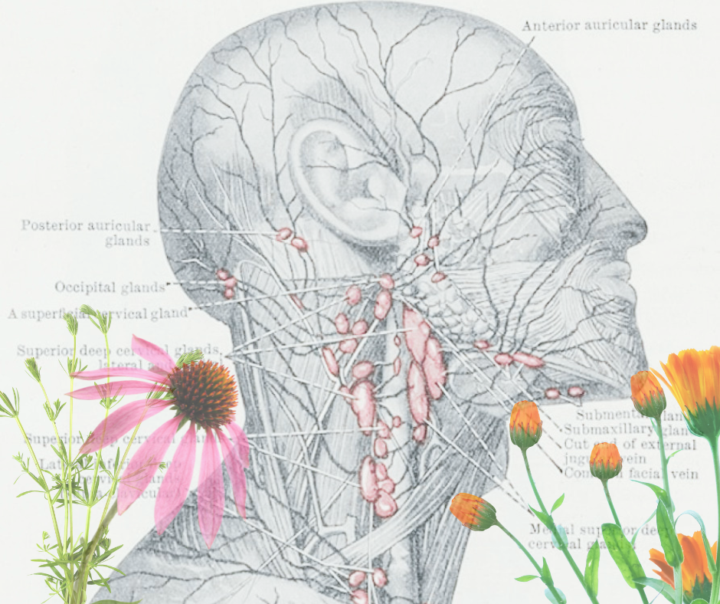
Quick one for you all, and I want to hear your thinking before I drop the full picture. If you’ve spent any time with lymphatic herbs, you’ve noticed cleavers, calendula, and echinacea keep appearing. Then you find them again in the immune category. Most explanations just say “it gets things moving,” which is a description with zero context. So, here’s my question: do you think these are two separate mechanisms that happen to live in the same plants, or do you think lymphatic actions and immune actions aren’t actually that separate to begin with?
Jun 2 •
What’s an immune-modulating herb anyway?
“What’s an immune-modulating herb anyway?” This question comes up a lot! So what is it? It’s an herbal action we lean on constantly in our materia medica, so let me tell you how I actually think about it. Your immune system is making decisions all day long, figuring out how hard to respond, how long to stay on the case, and when to stand down and start cleaning up. A modulating herb gets a say in those decisions instead of just cranking everything up, because it’s talking to the part of you that makes the call. That’s why the same plant can settle a response that’s running too hot in one person while supporting one that’s dragging in another. It works by speaking your immune system’s own language right there at the receptor! So next time you hear “immune-modulating,” think “this works with your immune system’s own judgment.” What’s your go-to immunomodulating herb?

Jun 5 •
Hello
Hello, thank you for accepting me into the group. I am an osteopath, acupuncturist and herbalist. I have several special interests within herbalism: musculoskeletal injury and rheumatology, neurology, mood disturbances, medicinal plants of the Mediterranean and Near East regions, Chinese herbalism. I am here to gain new insights and perhaps offer a few of my own.
1
0
May 30 •
I'm back!
Hey all! I totally dropped the ball here, and I owe you an apology. The truth is, I burned myself out. I needed to step away from content creation for a bit and just let my brain be for a while. I'm working on coming back to this space and bringing you more educational content. My original plan was to build a course and keep the whole thing accessible and free. What I didn't realize, since this is my first time creating this kind of structured content, is how time consuming it actually is to do it well. So moving forward, I will still have loads of free and accessible content here, and I am also adding a paid tier for the more complex, structured material. The Buffalo Herbalist is my full-time income, and putting up a paid tier is part of respecting that work and respecting myself in doing it. Thanks for sticking around!! :)
1-14 of 14
powered by
skool.com/the-buffalo-herbalist-3300
Body First. Plants Second. Clinical herbalism and herbal medicine taught through physiology, so you choose herbs with confidence, depth, and context.
Suggested communities
Powered by