
Pinned

Feb 20 •
Welcome to The Art of Becoming
Welcome. You’re here because a part of you knows you’re meant for more. This community is about: ✔ Growth ✔ Discipline ✔ Identity transformation ✔ Becoming the person you were meant to be Introduce yourself below: 1️⃣ Where you’re from 2️⃣ Who you’re becoming 3️⃣ One habit you’re building
0
0
Mar 3 •
Masculinity
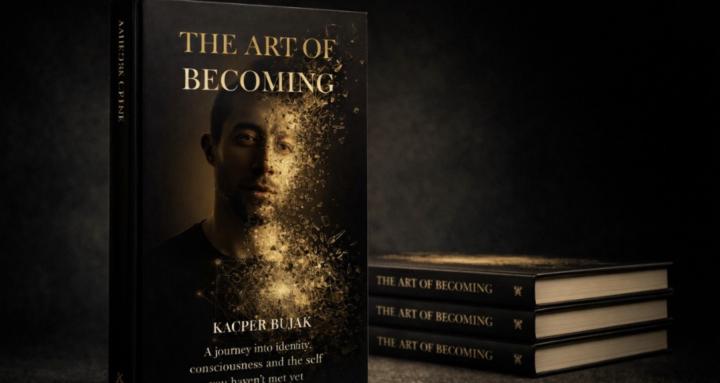
"We live in a world that has tried to dull the masculine edge, often for understandable reasons, because unregulated masculine energy can be destructive. But the answer to destructive masculinity was never the absence of masculinity—it was its maturation. A boy sees himself in terms of what he wants, what he feels, and what he is missing. A man begins to see himself in terms of who depends on him, what must be upheld, and what must be protected. Masculinity that does not mature becomes performative, violent, or hollow; masculinity that matures becomes protective, grounded, and quietly powerful. And nowhere is this tested more honestly than in fatherhood, whether literal or symbolic." Fragment of my book "The Art of Becoming", what are your thoughts on fatherhood and masculinity?
0
0
Feb 26 •
What will the "mirror" reveal?
The Cost of Avoiding Stillness It’s easy to get stuck in grinding mode. We stay busy. Productive. Distracted. Just occupied enough to avoid facing ourselves and our situation. Because the moment everything stops… we’re exposed. We avoid stillness because that’s where things reveal themselves:unresolved issues, childhood wounds, lack of discipline, lack of accountability. Silence doesn’t create problems — it exposes them. The Power (and Discomfort) of Self-Awareness Self-awareness is a powerful yet challenging tool. It forces us to notice our patterns of behaviour, our blind spots, and the cracks in our identity. And the truth is — most of us avoid it at all costs. Why? Because the ego doesn’t like being challenged. It doesn’t like being dissolved. It definitely doesn’t like being put in a naughty corner. But here’s the paradox: The more self-aware we become, the more power we reclaim. Nothing goes unnoticed. Stones get turned. What was buried comes to the surface — and finally, we can do something about it. Radical Responsibility One of the hardest realisations to accept is this: You — and only you — are responsible for your reality. That includes the good. And the bad. It’s not an easy pill to swallow. But everything changes when you choose to frame it differently. Instead of seeing it as blame, see it as power. Frame it like this: - I have the power. - I am in charge. - I am improving. - I am evolving. No past. No circumstance. No weather condition. Nothing holds power over me or my state of being. Maybe I made mistakes before. Maybe I failed without learning. Maybe I didn’t hold myself accountable. But not anymore. It’s my time now. Have an amazing Thursday. I’m with you on your journey, Kacper Bujak 💌
0
0
Feb 23 •
Can Pain Be the Key to a Better Life?
We spend much of our lives trying to avoid pain. We distract ourselves from it, numb it, suppress it, outrun it, or disguise it as “being strong.” Modern culture sells comfort as the ultimate goal, yet the most transformative moments of our lives rarely emerge from comfort. They emerge from pain. Not because pain is desirable, but because pain is revealing. It disrupts autopilot living. It forces awareness. It exposes what is no longer aligned. And when we stop resisting it, pain becomes one of the most powerful catalysts for personal evolution. Pain as the Gateway to Personal Evolution Pain, though avoided by most of us, is often the clearest feedback that something in our lives is misaligned. A headache may be the body signalling dehydration or exhaustion. Feeling hurt by someone may reveal that a relationship no longer honours who we are. Struggling to pay the rent may point to a financial philosophy that needs rethinking. Disappointment in ourselves may arise when we once again break promises we made in moments of clarity. We can try to outrun pain, distract ourselves from it, or minimise its importance. Yet unresolved problems rarely disappear — they return. And each time they return, they often arrive stronger, clearer, and more difficult to ignore. Pain persists not to punish us, but to draw our attention to what requires change. When we begin to listen instead of resist, pain shifts from an enemy into guidance — pointing us toward growth, alignment, and evolution. The Many Faces of Pain Pain is not one-dimensional. It exists across multiple layers of the human experience, each serving a purpose. Physical pain protects the body and signals the need for healing. It acts as an early warning system, alerting us when something is injured, inflamed, or out of balance. Without it, we might continue harmful behaviours, ignore illness, or push beyond safe limits. Pain forces pause, encourages rest, and invites us to care for the body rather than override its needs. In this way, physical discomfort is not an obstacle to wellbeing, but one of its essential guardians.

1-4 of 4
powered by
skool.com/the-art-of-becoming-9949
Community for those ready to take the responsibility for their life and transform it in the way that they haven't done before.
Suggested communities
Powered by