
Write something
Pinned

6h •
New ChatGPT Model & Memory Features Explained (AI News You Can Use)
In this video, I break down the big updates from OpenAI including a new default model for all users in ChatGPT called GPT-5.5 Instant plus some important updates to how Memories function. I'll show off some live testing, benchmark results from the AI Advantage research team, and ends the video by covering some smaller stories that I feel should still be on your radar. Enjoy!
Pinned
6h •
🏢 AI Adoption Is Becoming a Career Signal: Why Teams Are Being Rewarded for Time Leverage, Not Just Tool Usage
For a long time, learning AI felt optional. Interesting, useful, maybe even impressive, but still somewhat separate from the core signals of professional value. That is beginning to change. More organizations are treating AI fluency not as a side skill, but as part of modern workplace performance. The conversation is shifting from “Are you trying these tools?” to “Are you using them in a way that changes how effectively you work?” That matters because the real career value of AI is not about appearing tech-forward. It is about creating time leverage. The people and teams who stand out will not simply be the ones who know which tools exist. They will be the ones who use AI to reduce repetitive work, compress delivery timelines, lower rework, and create more space for judgment-heavy contribution. In other words, the career signal is not tool usage by itself. The signal is whether someone is learning how to reclaim time and redirect it toward higher-value work. ------------- Context ------------- Every meaningful shift in work eventually becomes visible in expectations. At first, early adopters experiment. Later, the rest of the organization begins to notice the gap between those who are adapting and those who are not. Eventually, the new behavior stops looking extra and starts looking normal. That is the stage AI is moving into now. Organizations are increasingly asking not only whether employees are aware of AI, but whether they can use it to improve the actual pace and quality of work. That is a subtle but important transition. It means AI is no longer merely a curiosity. It is becoming part of what professional effectiveness looks like. This creates anxiety for some people because they hear that shift as a demand to become highly technical. But that is often the wrong interpretation. Most workplaces are not rewarding people for knowing the most jargon or chasing every new tool. They are rewarding people who can use AI to remove friction in useful, responsible ways.

Pinned

2d •
The Reason I Refused To Quit
Everybody wants success until success starts testing them. Because eventually this journey asks a question most people aren’t prepared for: “How bad do you really want it?” Not when things are easy. Not when the money starts coming in. Not when everyone is cheering you on. I mean when you’re doubting yourself. When nothing seems to be working. When you’re exhausted. When you feel embarrassed. When you fail publicly. When it would honestly be easier to quit. That’s the moment your WHY matters. For me, it was my mom. Mother’s Day always reminds me of this… I watched my mom work herself to exhaustion trying to provide for us. Multiple jobs. Constant stress. Doing the best she could with what she had. And as a kid, I remember the moments that stuck with me most weren’t the things we didn’t have…It was watching how hard she worked and realizing she still couldn’t buy back time. She missed games. Missed moments. Missed parts of life because survival demanded everything from her. I remember thinking very early on: “One day I’m going to change this.” Not because I wanted fancy things. Not because I cared about looking successful. I just wanted freedom. Freedom for her. Choices for her. Relief for her. That became the thing I held onto anytime life punched me in the face. And trust me, there were a LOT of moments where quitting would’ve been easier. But when your reason is emotional enough, you find another gear. That’s the part people don’t talk about enough. Success is rarely about intelligence alone. It’s usually about emotional conviction. The people who make it have something that pulls them forward when motivation disappears. So, I’d love to ask you: What’s the reason behind your drive? Who are you fighting for when life gets hard? P.S. Happy Mother’s Day to all the moms out there doing their best, carrying more than anyone sees, and loving through it all. You’re appreciated more than you know. ❤️



11h •
Agreement
I am trying to create an agreement template but claude iis bugging and I don't have much experience in creating agreement and contracts.
1-30 of 18,927
skool.com/the-ai-advantage
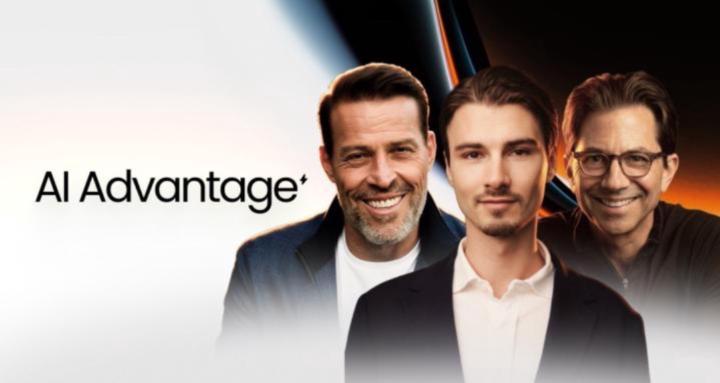
Founded by Tony Robbins, Dean Graziosi & Igor Pogany - AI Advantage is your go-to hub to simplify AI and confidently unlock real & repeatable results
Leaderboard (30-day)
1

🔥
+1857
2

+783
3

+782
4

+689
5

+552
Powered by