
Write something
Pinned

1d •
✍️ AI Killed the Hard Part of Writing. Now the Harder Part Is All That's Left.
For most of the people we talk to, writing used to be the bottleneck. The blank page, the slow start, the draft that took two hours to get to a point where it felt workable. That bottleneck is largely gone now. A capable AI model can produce a usable first draft in under two minutes. The hard part of writing: getting words on the page, has become nearly effortless. What nobody warned us about is what happens next. When first drafts are cheap, editing becomes the job. And most people's editing process was designed for a world where drafts were expensive and rare, not fast and abundant. The result is a growing backlog of AI-generated content that's good enough to feel like it almost works, but not quite good enough to use without significant revision. A growing awareness is setting in that the revision is taking longer than the writing used to. ------------- Context ------------- The economics of writing have flipped. Before AI, time was heavily front-loaded. Research, outlining, drafting: these consumed the majority of hours, with editing as a finishing step. A piece of content that took three hours might have involved two and a half hours of creation and thirty minutes of editing. Now the ratio has inverted. A draft that takes two minutes to generate might need forty-five minutes of editing to reach a standard worth publishing. The total time is still less than before, but the distribution has changed, and the nature of the work has changed with it. Editing is harder than drafting in one important respect: it requires holding the standard for quality in your head while simultaneously evaluating whether what's in front of you meets it. Drafting lets you externalize thinking. Editing requires you to internalize a clear picture of what good looks like and apply it consistently to every sentence, paragraph, and argument in the piece. Most people haven't developed that capacity deliberately, because most people haven't needed to. The drafting process used to do a lot of the thinking work. The act of writing was also the act of figuring out what you were trying to say. AI drafting removes that process, which means the thinking has to happen somewhere else, usually in the editing phase, which is why AI-assisted editing often takes longer than it seems like it should.

Pinned
2d •
Here's What Claude Fable 5 Can REALLY Do!
In this video, I break down the new releases from Anthropic: Claude Fable 5 and Mythos 5. While Mythos 5 is still not available to the public, Fable is (note: it's been removed and hopefully be back up soon), and I show you exactly what it's capable of right now. Enjoy!
Pinned

2d •
The Most Important List You'll Make This Week
As you prepare for the week ahead, don't start with your to-do list. Start with your not-to-do list. Because most people aren't overwhelmed by a lack of opportunity. They're overwhelmed by a lack of clarity. Every week, we carry things that no longer serve us: Old worries. Unnecessary obligations. Endless scrolling. Conversations we've replayed a hundred times.T asks that make us feel productive but never move our lives forward. The challenge isn't that we have too little time. It's that too much of our time gets spent on things that don't deserve it. Your future isn't shaped only by what you choose to pursue. It's shaped by what you're willing to release. So before Monday arrives, ask yourself: What do I need to stop carrying? What do I need to stop saying yes to? What do I need to stop giving my energy to? The life you want may not require more effort. It may require more intention. And that starts with deciding what no longer gets a seat at your table this week.

Mar 10 •
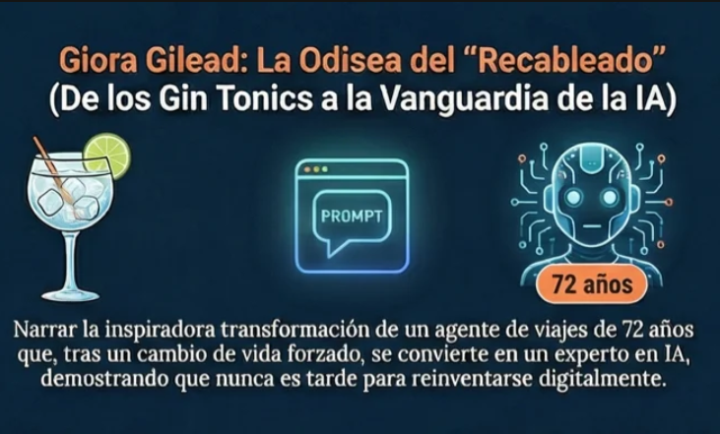
72 year old solopreneur "rewired" his life with AI
Met a 72 year old guy who is absolutely in love with Claude. He joined a local AI meetup I organised. He said Claude made him 40 years younger and changed his life! He calls himself "recableado" (rewired). Within a couple of months, he learned everything from scratch and now runs his solo travel agency from his "Mission Control" on his phone. 15 specialised "AI brains", Vercel, MCPs, n8n, agents, connectors, ..... just wow. And on top of that, many facebook groups! ZERO tech background. 72 years old. Solo business since 1954. I saw him last year - quiet, drink in hand, talking about retiring. Now - vibrant, buzzing, bursting with energy. He couldn't contain his excitement sharing what he's built!! (And I couldn't stop listening and stayed 2h longer!!) "AI causes brain rot? Look at me!! I've never thought more, or been more busy and happy in my entire life!" He has just started writing a blog where he describes his story and what he is building. "A 72 year old traveller discovering the last continent". "Current state: 72 years old, 42 years of experience, 30+ Skills in Claude, 0 gin & tonics." Goosebumps!! I shared his story on Linkedin - such examples are so inspirational! I'm collecting your questions for a video with him - ask yours in comments! Do you know any other stories like that?

2h •
Hi there, i'm claire, nice to meet you
Hi there! I'm Claire, social media manager. I've been playing around with free ai tool for content creation and image generation but there's so much more i want to accomplish so i'm here to learn to use AI better :)
1
0
1-30 of 19,616

skool.com/the-ai-advantage
Founded by Tony Robbins, Dean Graziosi & Igor Pogany - AI Advantage is your go-to hub to simplify AI and confidently unlock real & repeatable results
Leaderboard (30-day)
1

+451
2

+305
3

+210
4

+181
5

+164
Powered by