
Write something
Pinned

⭐
3d •
🔥 Welcome to the Private AI Advantage Community!
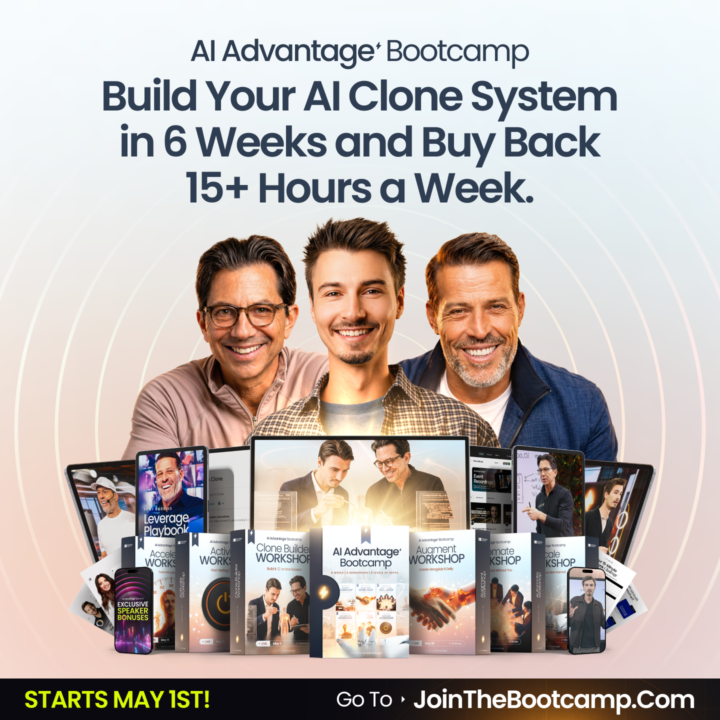
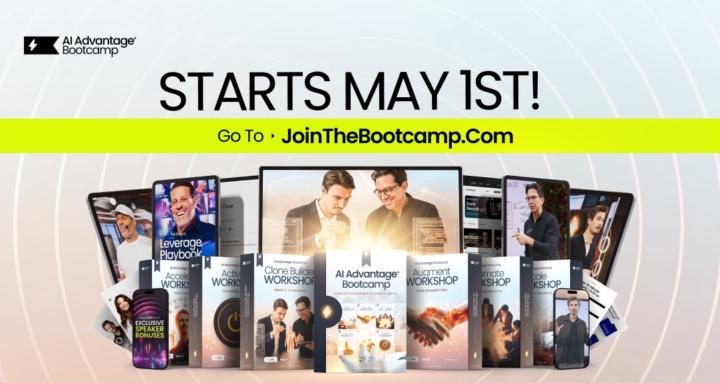
First and foremost, so glad you’re here. The 2026 AI Advantage Summit just wrapped, and the energy was incredible. If you joined us live, you already know what this community is about. And if you’re just finding your way here now, perfect timing. The doors to the AI Advantage Bootcamp are officially open. This is where the real work begins. Over the course of the Bootcamp, you’ll build your own AI clone, create AI agents that work for you around the clock, and put together a setup designed to save you 15 hours every week. Not 15 hours of busywork. Fifteen hours of the stuff that drains you, distracts you, and keeps you from the work that actually moves the needle. Whether you’re brand new to AI or you’ve been experimenting for a while, this is the right next step. The Bootcamp is practical and step-by-step. You don’t need a tech background. You just need to show up and do the work. JOIN THE BOOTCAMP HERE And while you’re getting settled, introduce yourself in the General Discussion section. Let us know where you’re from, what you do, and what you’re most hoping to change. We’re glad you made it. Let’s get to work.
Pinned
⭐
1d •
🔥 Quick Clarification: The Difference Between Our 3 AI Advantage Communities
Hey everyone, we’ve received a few questions in the customer service inbox, so we wanted to take a moment to clearly explain the difference between the groups and experiences inside the AI Advantage ecosystem. --------------------------------------------------------------------------------------------------- 1. This Skool Community (Free) This group right here is our free community. It’s where Igor Pogany, our team, and the community continue to share value, insights, resources, conversations, and support. Inside here you can expect: - Free trainings and resources inside the Classroom - Ongoing conversations - Community support - Updates of the latest AI News - Updates and announcements for AIA - Valuable insights to help you grow with AI This group is completely free and we fully encourage you to stay engaged, ask questions, connect, and use everything available here. And just because the Summit is over, doesn’t meant mean this group is going anywhere! --------------------------------------------------------------------------------------------------- 2. AI Advantage Club (Paid Membership) The AI Advantage Club is our premium membership for those who want to go deeper and continue building their AI skillset consistently. Depending on how you joined: - VIP members received a 30-day trial - Bootcamp members receive 3 months included And if you took the VIP upgrade AND joined the Bootcamp, you would have 4 months free inside the Club. Inside the Club, the experience goes deeper with things like: - Advanced trainings - Step-by-step guides and our “Hacks of the Week” - AI workflows - Prompt libraries you can copy - Business use cases - Time-saving systems - Ongoing implementation support - New resources added regularly - A Technical Support Team who can answer questions if you hit roadblocks trying to implement an AI tool Think of this as your AI gym membership. It’s the place where you will train those AI muscles and really focus on implementing AI into your life and business.
Pinned
⭐
4h •
📣 Your Top 5 Questions = Answered
Ever since we shared about our all new 2026 AI Advantage Bootcamp we’ve been getting the same 5 questions… So before the doors shut for good at midnight tomorrow night, we want to give you the answers! Let’s get into it: 1. What will I build or learn during Bootcamp? Over 6 weeks, you'll build your own AI Clone-Agent. Not a chatbot or a gimmick, but a personalized AI partner has been fed your goals, your voice, and your everyday tasks. By the end, it won't just assist you when you ask. It'll work for you on its own - handling research, drafting and sending emails, creating content, and running tasks on autopilot.Our bold promise: If you show up to the trainings and do the work, you WILL reclaim at least 15 hours a week (and if you don’t, we’ll refund 100% of your money) 2. How is the Bootcamp different from the AI Advantage Summit or AI Advantage Club? The Bootcamp is a 6-week, hands-on experience to build and train your own AI Clone-Agent. You did not learn that at the Summit and you will not learn it inside the Club. It’s unique to the Bootcamp. Think of it like this: The Club is your gym membership where you stay plugged in and build momentum. The Bootcamp is your personal trainer with 6 weeks of immersion and training to set you up with a system you can use for life. 3. Do I need specific tools, software, or devices? We recommend using a laptop or desktop computer for the Bootcamp sessions… and the only other cost beyond the program fee is a $20/month subscription with Claude. 4. How much time should I expect to commit? We will have one, 45(ish) minute Kickoff Call on Friday, May 1st to walk through your Bootcamp setup (but we will try and keep it shorter)... Then we have 6 weekly workshops every Tuesday, for about 90 minutes. So it should be less than 2 hours a week you have to commit for trainings (although we do recommend using and working with your Clone in your off time to build its skills)

16m •
Still no transcripts?
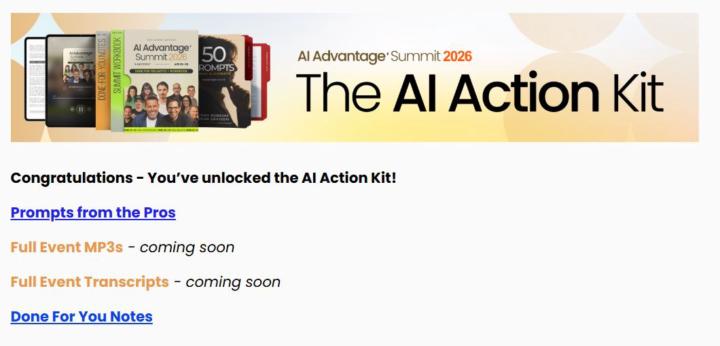
Those of us who bought the "AI Action Kit" were promised: Prompts from the Pros Full Event MP3s Full Event Transcripts Done For You Notes Only two of these were delivered. I see this was a problem the last time AI Advantage was offered (lots of people posting). Is there any solution?
32m •
AI HACK FOR MOST (No-Ask-Reply Hack)
No-Ask-Reply Hack What it is: A prompting trick that forces the AI to stop asking follow-up questions and just give you direct, complete answers. What it does: It trains the AI to answer your question fully in one response without ending with “Want me to explain more?”, “Would you like me to…”, or any other questions. How to Activate It: Copy and paste this prompt: "From now on, answer every question I ask in a single, complete response. Do not ask me any follow-up questions. Do not say 'want me to', 'would you like', 'should I', or anything similar. Just give me the full answer and stop. Stay in this mode until I say 'No-Ask-Reply off'." Test Example: Question: How do I make my podcast successful? Answer: Focus on three things: consistent uploading, getting really good at storytelling, and promoting every episode on short-form video. Record 3 episodes per week minimum, spend as much time editing your delivery as you do recording, and repurpose every episode into 15–20 short clips. Growth comes from being entertaining first, then consistent second. Which AIs it works on: - ChatGPT: Excellent - Claude: Excellent - Grok: Very Good - Gemini: Good Why People Use It: They’re tired of every answer ending with three different questions. This hack keeps responses clean and to the point.
1-30 of 18,332
skool.com/the-ai-advantage
Founded by Tony Robbins, Dean Graziosi & Igor Pogany - AI Advantage is your go-to hub to simplify AI and confidently unlock real & repeatable results
Leaderboard (30-day)
1

+1723
2
+1251
3

+705
4

+601
5

+545
Powered by