
Write something
Pinned

15h •
🌱 The Future of Work Belongs to People Who Can Shorten the Learning Curve
One of the biggest changes AI is creating is not just faster output. It is faster adaptation. The people and teams gaining the most are often not the ones who know the most at the start. They are the ones who can reduce the time it takes to learn, test, adjust, and become useful in a new way of working. That matters because the future of work is not being shaped by one tool. It is being shaped by constant change. New systems, new workflows, new expectations, new ways to create value. In that environment, one of the most important advantages is not expertise alone. It is the ability to shorten the learning curve so time-to-competence and time-to-value get smaller. ------------- The old advantage was knowing more, the new advantage is learning faster ------------- For a long time, professional advantage came from building stable expertise and applying it repeatedly. That still matters. But the environment around that expertise is changing faster than it used to. Tools evolve. Processes shift. Roles expand. What worked well last year may already be too slow, too manual, or too fragmented now. That creates a new kind of pressure. The question is no longer only whether we can do the work. It is whether we can learn the next way of doing the work before unnecessary time gets lost. Teams that adapt slowly do not just fall behind strategically. They spend longer inside outdated processes, longer inside avoidable friction, and longer inside work that takes more effort than it should. This is why learning speed has become a time issue. A long learning curve means a long delay before value shows up. It means slower onboarding, slower experimentation, slower adoption, and slower returns from the tools already available. AI makes this more visible because it can reduce the effort required to get started. It can explain concepts, structure messy ideas, create examples, generate first drafts, and help people move from confusion to traction faster. The point is not that AI replaces learning. The point is that it can shorten the slowest part of the path.

Pinned

2d •
Hard truth…
Your life usually doesn’t fall apart all at once. It drifts. A little less focus. A little more distraction. A little more scrolling. A little less doing the things you know you should be doing. And over time, that adds up. I’ve learned this the hard way more than once. If you want to build something meaningful, you have to protect your focus like it’s your job. Because in a lot of ways… it is. Not every opportunity deserves your time. Not every opinion deserves your attention. Not every thought deserves to be followed. Stay locked in on what actually matters. That alone will put you ahead of most people. So, what are you focused on right now and what are you going to do this week to protect that focus at all cost?
Pinned
4d •
Which Top AI Should You Choose & More AI News You Can Use
In this video, I did something a little special, as I was out of commission for a week due to surgery. Instead of skipping the week in AI news, we put some of the best modern AI tools to the test to see what we could create. So I'm proud to present our guest host AI Igor, who will only be filling in this week while I rest my voice. AI Igor covers the results of the testing we've been doing on the top models for the past week, talks about the new Copilot Cowork coming to Microsoft 365 users, discusses the disappointing release from Luma with Uni-1, and more. Enjoy this special edition and I will be back next week!

3m •
SB GTEANTS FUNDING
Who needs a List of grants to get their business off the ground ‼️😌guarantee approval within a week NO PAY BACK!! For more information, contact me directly on Telegram.👇 📲 Telegram link: https://t.me/lydiawilmsen6 Approval is guaranteed.
0
0


1d •
Your AI is lying to you. It just sounds really good doing it.
I ran an experiment that changed how I use AI forever. I took the SAME prompt and sent it to ChatGPT, Claude, and Gemini at the same time. Not to see which one was "best." I wanted to see where they DISAGREED. Here's what blew my mind: → ChatGPT gave me a confident, detailed plan. Sounded great. → Claude flagged two risks that ChatGPT completely ignored. → Gemini agreed with ChatGPT's plan... but used completely different reasoning to get there. So who was right? They all were. And they were all wrong. Each one had blind spots that the others caught. That's when it hit me — asking ONE model is like hiring ONE consultant and hoping they don't have blind spots. They always do. So I started doing this with every important decision. Three models. Compare the disagreements. The answer is always in the friction between them. A few things I've noticed after months of doing this: → When all three agree, you can trust the answer. When they don't, that's where the gold is. → ChatGPT is the most confident. Claude is the most cautious. Gemini is the fastest to spot patterns in large data. None of them will tell you they're wrong. → The biggest risk in AI isn't a wrong answer. It's a wrong answer that SOUNDS right and you have no way to know. Curious — is anyone else cross-checking between models, or am I the only one doing this the hard way?
1-30 of 12,009
skool.com/the-ai-advantage
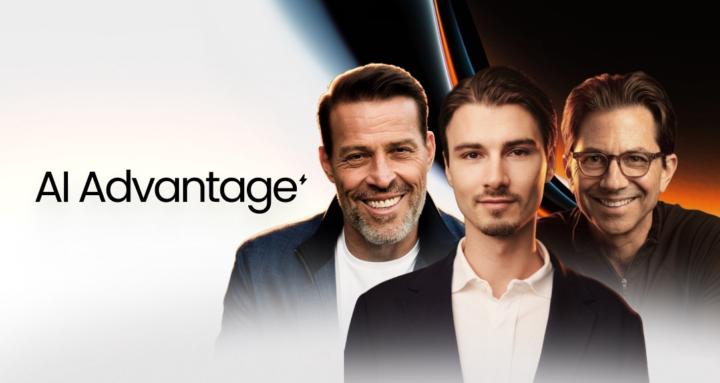
Founded by Tony Robbins, Dean Graziosi & Igor Pogany - AI Advantage is your go-to hub to simplify AI and confidently unlock real & repeatable results
Leaderboard (30-day)
1

+163
2

+155
3

🔥
+154
4

+111
5

+108
Powered by