
Write something
Pinned

13h •
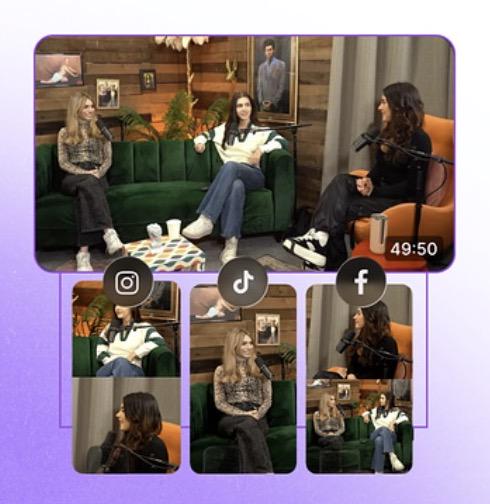
🎥 You Don't Need to Film More Videos. You Need to Cut Up the Ones You Have.
Most business owners aren't avoiding short-form video because they've run out of things to say. They're avoiding it because turning a long video into short clips feels like hours of editing work they don't have the time or the skills for. You know short-form video works. You've watched other people in your space grow with it. So you think about doing it yourself, and then you picture what it actually takes: sitting down with a long recording, scrubbing through to find the good bits, cutting each one out, reframing it to fit a phone screen, adding captions, exporting, and then doing all of that again for the next clip. It feels like a second job. So you either don't start, or you pay an editor, or you make a couple and quietly give up when the effort doesn't feel worth the return. Meanwhile, the raw material is already sitting there. The webinar you ran. The podcast episodes. The lives, the interviews, the trainings. Every one of them is full of moments that would make strong standalone clips. They're just buried inside longer videos you haven't touched since you published them. ---------- THE REAL PROBLEM ---------- The problem is not "I don't have time to make video content." The problem is "I've been treating short clips as something I create from scratch, when they already exist inside videos I've already recorded." The footage isn't missing. The ideas aren't missing. What's stopped you is the manual work between the long video and the finished clip: finding the moments, cutting, reframing, captioning. That's the wall, and it's a wall made almost entirely of tedious, repetitive tasks. So this isn't a talent problem or a time problem in the way it feels. It's an editing problem. And editing is exactly the kind of work that can now be handed off. ---------- WHY THIS MATTERS ---------- Short-form video is one of the best ways to reach new people right now. It travels further than almost any other format, and it puts a face and a voice to your business in a way a written post can't.
12
0
Pinned
2d •
Fable 5 is Back! Here's the Best Way to Use It...
Anthropic finally brought Fable 5 back and in the same week, they also launched the new Sonnet 5 model. In this video, I break down everything you need to know about these models and explains which one you should be using. Enjoy!
Pinned

6d •
What Success Actually Buys You
Most people think success is about money. It's not. Money is just what buys you options. I've worked hard for decades. Not because I fell in love with the grind, but because I fell in love with what the work could create. Every uncomfortable conversation. Every risk. Every time I wanted to quit but didn't. None of it was just to make more. It was to own my time. To be there for the people I love. To create memories instead of regrets. To have the freedom to say yes to what matters and no to what doesn't. Don't chase success because you want to look successful. Chase it because one day you'll realize time is the only thing you can't earn back. Work hard. Do the uncomfortable things. Become the person capable of creating the life you want. Because real success isn't measured by what you own. It's measured by how fully you get to live. Question for you: If you had complete freedom over your time one year from now, what would you spend more of it doing... and who would you spend it with?

3d •
Building confidence
Today reminded me that I don’t need to know everything before I start building. Every time I create something—even if it’s simple—I learn something new. I’m finding that learning a little, building a little, and improving a little each day is giving me more confidence than waiting until I feel “ready.”

1-30 of 19,937

skool.com/the-ai-advantage
Founded by Tony Robbins, Dean Graziosi & Igor Pogany - AI Advantage is your go-to hub to simplify AI and confidently unlock real & repeatable results
Leaderboard (30-day)
1

+507
2

+360
3
+251
4

+171
5

+131
Powered by