
Write something

Apr 29 •
A Shredder's End-of-Season Checklist
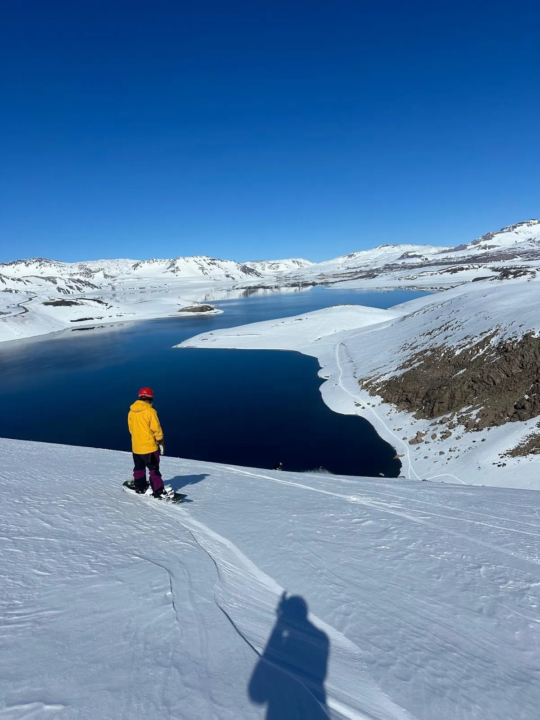
It’s over. Or close enough. A handful of resorts are still spinning lifts on a prayer and a north-facing pitch, but for most of us the season ended a few weeks ago, whether we were ready or not. That post-season feeling is its own thing. Part relief, part grief, part already-thinking-about-next-year. If you’re in that headspace right now, here’s how to close out the season like someone who’s done this a few times. 1. Tune and store your board the right way. Don’t lean it against the garage wall and walk away. A proper end-of-season hot wax seals the base and keeps it from oxidizing over a Utah summer. A lot of shops run storage tune specials right now when they’re not slammed. Get it done while it’s still on your mind. 2. Assess your gear honestly. That binding that was “probably fine” all season. The boot liner that’s been packed out since January. Now is the time to be real with yourself. Buying in the offseason means actual selection, not whatever’s left on the rack in November when everyone else woke up at the same time. 3. Lock in next year’s pass before prices go up. Ikon and Epic early renewal windows are either open or opening soon. This is the lowest price you will pay, full stop. The people complaining about pass prices in October are the people who didn’t buy in April. 4. Book early-season trips now. If you’re the type to chase turns in November, accommodations near Mammoth, Keystone, or Loveland are bookable now at prices that won’t exist come fall. And if you want to go full lifer about it, both Chile and New Zealand open in June. Valle Nevado and Cardrona are calling. 5. Write down what actually mattered this season. Best days. Worst gear decisions. Runs you want to hit again. It sounds unnecessary now but it’s genuinely useful when you’re staring at gear pages in August trying to remember why you were so done with your setup. Future you will appreciate the two minutes it takes. The offseason is already underway. Might as well make it count.
1
0
Apr 13 •
The Gold Standard
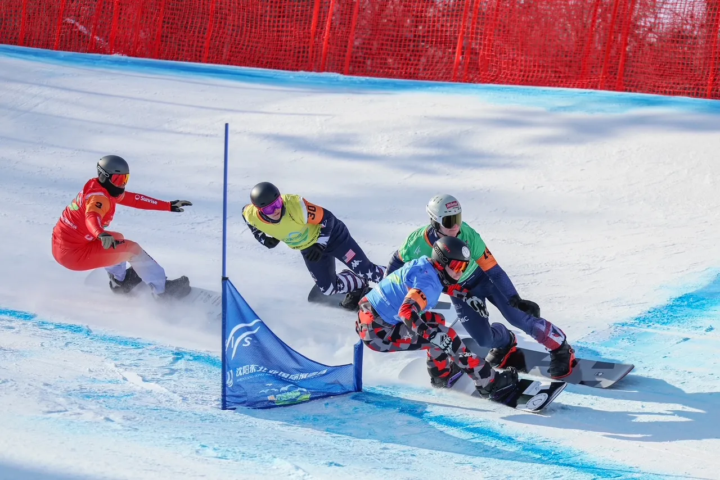
As the world turns its attention to the Winter Olympics, feeds will flood with glossy montages of gold medals and perfectly groomed halfpipes. But for those who know where to look, the real story isn’t happening on the podium. It’s unfolding on the wind-whipped trails of Sugarloaf. For champions, snowboarding is less about being noticed and more about being forged. It’s built through environments that demand obsession, focus, and relentless time on snow. And when the world watches the best drop in this month, the conversation inevitably circles back to Carrabassett Valley Academy (CVA). CVA has become synonymous with a certain kind of mastery. Riders who emerge from its ranks carry an edge not measured in social media likes or sponsor contracts, but in precision, intelligence, and an instinctive understanding of their equipment. This is where talent meets infrastructure, and ambition meets opportunity. Alumni Spotlight: The Maine-Forged Edge While Olympic broadcasts highlight flash and spectacle, insiders know where true technical riders are bred: The Loaf. CVA alumni don’t simply appear on podiums. They’re built from years navigating some of the most variable, unforgiving terrain on the East Coast. From legendary pioneers to era-defining icons like Seth Wescott, the CVA lineage is defined by precision, resilience, and a relentless attention to detail. “CVA isn’t just about learning how to win; it’s about learning how to ride. When you spend your formative years negotiating Maine’s fickle snow, you develop a level of edge control and spatial awareness that becomes a permanent advantage,” says one alumnus. It’s a distinctive philosophy. Riders learn to read conditions, anticipate changes, and respond in real time. They don’t chase trends—they chase excellence. Shaping the Sport: The Jeremy Jones Proof Point CVA’s influence on snowboarding isn’t limited to start gates and finish lines. It extends into the very way the sport understands terrain, consequence, and responsibility.
0
0
Apr 13 •
Scree-Slide Granite-Glaze™ Wax
If you’ve looked at the SNOTEL maps for Colorado and Utah this week … you know the vibe. Statewide snowpack is abysmal and temps are hovering around the mid-50s; with the front side of Vail currently looking more like a gravel quarry than a world-class resort. For those of us unwilling to spend another day in the base-lodge desperately attempting to lower the cost basis of a season pass and listening to tourists complain about the lack of the white stuff, it’s time to lean into the only logical solution: skitching dirt. Enter Scree-Slide Granite-Glaze—The official polymer for the 2025 early season offering in the West. We’ve been testing this stuff for the last 72 hours on a 2012 Liberace Technologies Slippery Banana Peel that has more core-shots than a firing range gong, and the results are surprisingly dusty. The Tech Unlike traditional fluoros meant for “frozen water,” Scree-Slide is a high-density, lithophobic (rock-repelling) polymer. It’s infused with sagebrush extract and a proprietary blend of “hop-and-pray” resins designed specifically for the sharp shale of the Wasatch and the abrasive granite of the Rockies. - Friction Coefficient: Tested on 100% dry dirt at Brighton. We found it reduces “shale-drag” by nearly 30%, allowing for a sustained glide across moderate mud patches and small-to-medium decorative landscaping. - Spark Suppression: One of the biggest dangers of rock-boarding is the literal sparks. Scree-Slide features a fire-retardant additive that keeps your base from igniting when you gap a gravel cat track. Slope Testing: The Colorado Skidmark Audit Our lead tester took a fresh coat of Scree-Slide to a south-facing aspect in Summit County. “Normally, when you hit a patch of exposed pine needles and frozen mud, the board just sticks. With Scree-Slide, I actually accelerated through the dirt section. I didn’t make a single turn, mostly because there was no edge-hold, but the speed was exhilarating.” The Pros - Aroma: Smells like burnt pine and desperation. - Durability: Lasts for approximately 150 yards of pure scree before you need to re-apply (or buy a new board). - Price: Retails for the cost of a single “Epic-Day” parking spot, but provides infinitely more soul over rented asphalt.
0
0
Apr 12 •
Waxing & Milking Nostalgia
Ducking ropes and shredding slopes. Cutting lines and dropping rhymes. Quilted flannels and ball caps. Nasty road jumps, tow rope laps. Clipping tickets, secret stash. Tips and tails hacked to match. [Shaun] Palmer, [Shawn] Farmer, [John] Cardiel. Tell all skiers “go to hell.” Summit County neighborhoods, them gangsta’ boarders strapped real good. Dirty girls with winter weight, a six-pack of tall boys makes a date. Snowboard videos until dawn. Big pants, big stance, go get it on! Jamie Lynn’s smooth method airs, Jeff Brushie’s nappy dreadlock hair. Photographers and filmers with dumb nicknames: Whitey, Mouse ... a shaky frame. The ’90s were somethin’ f@king else— the best of the celebrated “worst”, everybody knew it in the moment and reveled in it! Snowboarders were a proud public nuisance. Influenced and inspired by (and involved in) snowboarding’s salad days, I’ve journalistically witnessed and written about the then emergent collective culture riding amok, tweaked-out style and pop world / punk rock / streetwise aesthetics; its misfits, miscreants, deviants, and delinquents, and their fantastic heroics. The brands were an extension, powered by smaller, rider-driven entities that spoke directly to the scene. Recognize that the sport’s imprint, ’80s, ’90s, and early ’00s, is forever indelible on the present and future (you’ve got to know where you came from to know where you’re going). To that direct effect, it’s to no surprise that there’s a retrospective wave compelling a revival of what once prevalent, since lost, long lamented … and now back by popular demand? Today, thanks to a potent mix of Gen Z vintage appreciation and older riders craving connection to their youth, iconic names—like Shorty’s, Joyride, Forum, and most recently, whispers of Atlantis—are being resurrected from the dead, rising from a sea of slush. This isn’t just about some throwback appeal … it’s about the emergence of a relevant cultural play and perhaps profitable retail category.
0
0
Apr 12 •
Hacking Your Winter Pass
The price of freedom has never been higher—and by freedom, we mean a day pass at one of the large corporate resorts. As the price of a single lift ticket eclipses the cost of a decent snowboard, the core question becomes: How do we get cheap turns without sacrificing the powder and the vibe? The answer is simple: Stop playing their game. This guide is your roadmap to side-slipping the corporate behemoths, ditching the line, and finding legitimate, affordable ways to get on the mountain this winter. Resort Riding: The Least Expensive Lift Tickets You don’t need the mega-pass to ride lift-served terrain. You just need to look past the marquee names and find the local gems and community hills. These resorts are the soul of local riding, often run by families, towns, or independent operators, and they offer ticket prices that feel like a time machine to 2005. Here are 5-7 categories of where you can consistently find the cheapest day tickets: 1. Town Hills & Night Riding: Think places like Howelsen Hill (CO), Bogus Basin (ID), or Sundance (UT). They often offer dedicated night passes for a fraction of the cost, usually utilizing limited lifts but serving up reliable features and low crowds. 2. The Midwest Gems: Resorts in the Upper Midwest (Lutsen Mountains, WI; Boyne Mountain, MI) often have competitive pricing and package deals, capitalizing on local rider loyalty rather than destination tourism. 3. The Pacific Northwest Independents: Outside of the I-90 corridor, mountains in Washington and Oregon (like Mission Ridge or Hoodoo) often have tickets that hover around the $60-$80 mark on non-holiday weekdays. 4. Community-Owned Co-ops: Look for mountains that are literally owned by the local community or a non-profit. These are rare but offer the best deals and strongest local culture. 5. Small East Coast/New England Spots: Ski areas in Vermont, New Hampshire, and New York like Plattekill (NY) or Magic Mountain (VT) lean into their old-school vibe with ticket prices that reflect their smaller size and no-frills experience.
0
0
1-29 of 29
powered by
skool.com/that-snowboarding-skool-7084
Rated #1 Snowboarding Community in Skool! Snowboarding's past, present, and future.
Explore the history, culture, and brands shaping the sport.
Suggested communities
Powered by