Write something

12h •
🚨 THE LAST TIME THIS SETUP APPEARED, MARKETS LOST TRILLIONS IN DAYS.
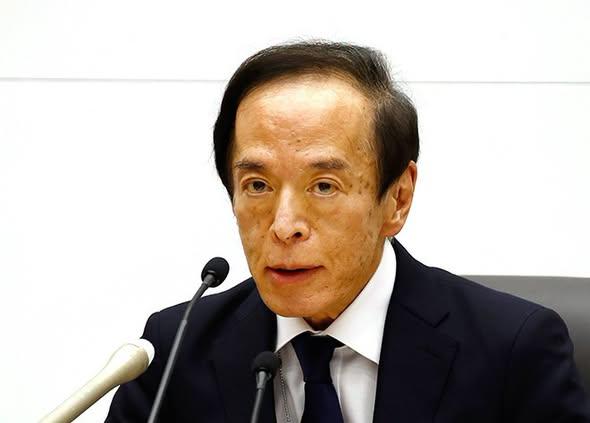
This is not just another central bank headline. This is one of those moments where currency markets, stock markets, crypto, commodities, and global liquidity all start connecting at the same time. Most people will only see one headline: Bank of Japan raises rates by 25 basis points. But the real story is much bigger than that. Here is the setup, step by step. . 𝐒𝐓𝐄𝐏 𝟏. Today, the Bank of Japan raised interest rates by 25 basis points to 1%. That may sound small. But for Japan, this is massive. This is the highest level in 31 years. Japan spent decades with ultra-low rates, negative rates, and cheap money. That cheap money helped fuel one of the biggest trades in global markets: Borrow cheap yen. Move that money into higher-yielding assets. Buy stocks. Buy crypto. Buy commodities. Buy risk. That is called the yen carry trade. And when it works, nobody talks about it. But when it starts unwinding, everyone feels it. . 𝐒𝐓𝐄𝐏 𝟐. Since 2024, this is now the fifth Bank of Japan rate hike. The previous hikes mattered. But this one feels different. Because this hike is not happening in a calm market. It is happening while USD/JPY is sitting around one of the most dangerous levels on the entire FX board. . 𝐒𝐓𝐄𝐏 𝟑. USD/JPY broke above 160. That number matters. 160 is not just a random chart level. It is the zone Japan has defended before. It is the level where traders stop asking, “Will Japan intervene?” And start asking, “When will Japan intervene?” Japan does not like disorderly currency moves. A weak yen makes imports more expensive. It makes energy more expensive. It adds pressure to inflation. It hurts households. It puts political pressure on officials. So when USD/JPY pushes through 160, the market knows the risk changes. . 𝐒𝐓𝐄𝐏 𝟒. A 25 basis point hike alone may not be enough. That is the key point. If Japan wanted to truly shift the currency market, the bigger move would not just be the rate hike. The bigger move would be intervention.
1
0
2d •
🚨 A Paid-Off Home Should Not Become a Monthly Rent Bill
She paid off her house in 2003. No mortgage. No monthly payment. No debt on the home. She did exactly what millions of Americans were told to do: work hard, pay off your house, and enjoy retirement with peace of mind. But now her property taxes have exploded from **$1,800 a year** to **$24,000 a year**. That means she is being charged **$2,000 every month** just to keep living in a home she already owns. She is 71 years old, retired, and living on a fixed income. For someone in that position, a $2,000 monthly tax bill is not just stressful. It is almost impossible to manage. This story is going viral because so many families are seeing the same thing happen to their parents and grandparents. A home that was supposed to be a reward after decades of work is slowly becoming another financial trap. The problem is simple. Property taxes are usually based on the assessed value of the home, not what the owner originally paid and not what the owner can afford today. So when home prices rise, the tax bill rises too. On paper, the homeowner may look wealthier because the house is worth more. But that equity does not pay for food, medicine, electricity, or groceries. The tax bill still has to be paid in real money. For many retirees, this creates painful choices. They either drain their savings, take out a reverse mortgage, ask family for help, or sell the home they spent decades paying off. That is the part people do not talk about enough. A paid-off home does not always mean financial freedom anymore. For too many seniors, it has become a new monthly bill they never expected. Families need to pay attention. Many states have senior property tax relief programs, homestead exemptions, tax freezes, deferral programs, and other protections. But most of these programs are not automatic. Seniors often have to apply, and many do not even know the help exists. If your parents or grandparents are over 65 and own their home, check your state’s senior property tax relief options this week. It could help them stay in the home they worked their whole life to own.
1
0

3d •
🚨🚨 IRAN DEAL IS DONE AND NOW LOOK WHAT THE BANK OF JAPAN IS DOING TO MARKETS
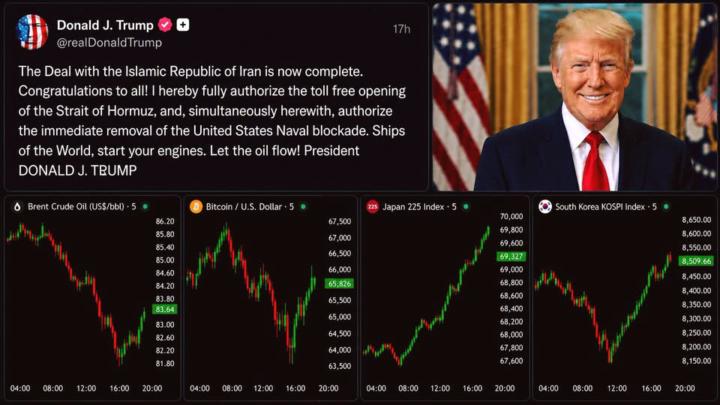
Trump ended 107 days of war. The Strait of Hormuz is open. Oil crashed from $115 to $83. Japan's Nikkei went up 5 percent in a single night. Everyone is celebrating right now. But wait. Stop for one second. Nobody is talking about what I am going to tell you today. The Bank of Japan is one of the biggest market manipulators on this planet. And today's rally is giving them perfect cover to do it again. Let me break it down step by step . 𝐖𝐇𝐀𝐓 𝐄𝐕𝐄𝐍 𝐈𝐒 𝐓𝐇𝐄 𝐁𝐀𝐍𝐊 𝐎𝐅 𝐉𝐀𝐏𝐀𝐍 It is Japan's central bank. Same idea as the Federal Reserve in America. But here is the thing. These people do something that no other major central bank in the world has the nerve to do. They do not just control interest rates. They literally go into the market and BUY STOCKS with printed money. Just to stop prices from falling. For years they bought Japanese ETFs every single time the market started to drop. And today they are the single largest shareholder of the Tokyo Stock Exchange. They own more than 7 percent of the entire market. A central bank. That owns stocks. To keep prices from going down. If a normal person did this they would be in prison. When a central bank does it everyone just calls it policy. . 𝐘𝐈𝐄𝐋𝐃 𝐂𝐔𝐑𝐕𝐄 𝐂𝐎𝐍𝐓𝐑𝐎𝐋 𝐀𝐍𝐃 𝐖𝐇𝐘 𝐈𝐓 𝐌𝐀𝐓𝐓𝐄𝐑𝐒 They also invented something called Yield Curve Control. In a normal world bond markets are free. Investors buy and sell and the interest rate moves naturally based on what the market decides. The Bank of Japan said no. We will set the rate ourselves. We will buy unlimited Japanese government bonds to keep rates exactly where we want them. For years they kept Japan's 10 year bond yield pinned at basically zero. Every time the rate tried to move up naturally they just printed more yen and bought more bonds. This is not a free market guys. This is a government fixing prices with a money printer. Full stop. . 𝐓𝐇𝐄 𝐘𝐄𝐍 𝐂𝐀𝐑𝐑𝐘 𝐓𝐑𝐀𝐃𝐄 𝐀𝐍𝐃 𝐖𝐇𝐘 𝐈𝐓 𝐀𝐅𝐅𝐄𝐂𝐓𝐒 𝐘𝐎𝐔𝐑 𝐌𝐎𝐍𝐄𝐘 Now this is where it gets really important. Because this affects you even if you have never been to Japan in your life.
1
0
3d •
🎓 Is Your Degree Setting You Up for Success — or Struggle?
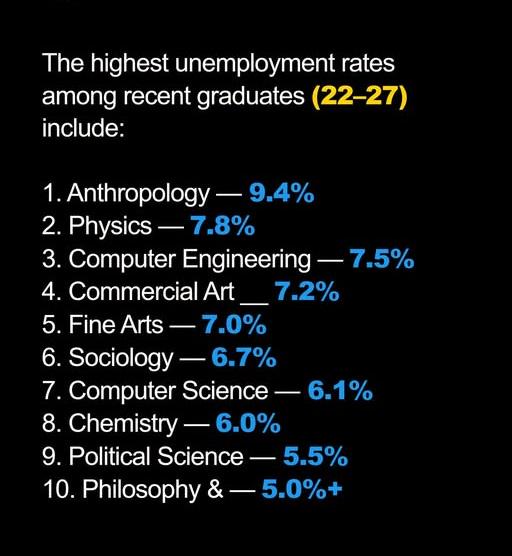
Every year, millions of students spend years of their lives and thousands of dollars on a college degree, believing it will open doors to a stable career. But the latest data from the Federal Reserve Bank of New York tells a sobering story — not all degrees are created equal when it comes to finding a job. The overall unemployment rate for recent college graduates hit 5.7% in early 2026, one of the highest levels in years. And for certain majors, the numbers are even more alarming. Here are the 10 degrees with the highest unemployment rates right now, and why. 𝟏. 𝐀𝐧𝐭𝐡𝐫𝐨𝐩𝐨𝐥𝐨𝐠𝐲 — 𝟗.𝟒% Fascinating field, but most career paths here require a Master's or PhD. A bachelor's degree alone leaves graduates with very few direct job options, and funding cuts in universities have made things even harder. 𝟐. 𝐏𝐡𝐲𝐬𝐢𝐜𝐬 — 𝟕.𝟖% One of the most demanding degrees out there, yet roles in research and academia are extremely limited and competitive. Without further education, it's hard to turn a physics degree into a stable private sector job. 𝟑. 𝐂𝐨𝐦𝐩𝐮𝐭𝐞𝐫 𝐄𝐧𝐠𝐢𝐧𝐞𝐞𝐫𝐢𝐧𝐠 — 𝟕.𝟓% Yes, even tech. A.I. tools are now doing what junior engineers used to do, and waves of tech layoffs since 2022 have flooded the market with experienced workers. Fresh graduates are left competing for very few entry-level spots. 𝟒. 𝐂𝐨𝐦𝐦𝐞𝐫𝐜𝐢𝐚𝐥 𝐀𝐫𝐭 & 𝐆𝐫𝐚𝐩𝐡𝐢𝐜 𝐃𝐞𝐬𝐢𝐠𝐧 — 𝟕.𝟐% A.I. image tools have disrupted this field faster than almost any other. Logo design, marketing visuals, social media content — things that once required a skilled designer can now be generated in seconds. Companies are cutting design teams as a result. 𝟓. 𝐅𝐢𝐧𝐞 𝐀𝐫𝐭𝐬 — 𝟕.𝟎% Most fine arts graduates rely on freelance work, commissions, and self-promotion to make a living. Stable full-time jobs are rare, and financial stability after graduation can take years to achieve. 𝟔. 𝐒𝐨𝐜𝐢𝐨𝐥𝐨𝐠𝐲 — 𝟔.𝟕% Sociology gives you a broad understanding of society, but that breadth works against graduates in the job market. Employers want specific, practical skills, and sociology alone often doesn't provide them.
1
0
4d •
Retirement numbers are starting to look absolutely ridiculous, and this is exactly why so many people feel like they are falling behind before they even get started.
A million dollars used to sound like the finish line, but for younger generations, that may barely cover a lean retirement once inflation, healthcare, housing, taxes, and longer life expectancy are factored in. That does not mean everyone needs to panic and assume they are doomed. It means people need to stop treating retirement like something they can figure out later. The math gets ugly when you wait too long. If you are in your 20s, 30s, or 40s, your biggest advantage is not picking the perfect stock, timing the market, or chasing the next investment trend. Your biggest advantage is time: • Time to invest consistently. • Time for compound growth to work. • Time to increase your income. • Time to avoid stupid debt. • Time to build assets before life gets even more expensive. The scary part is not that these numbers are big. The scary part is how many people are still saving like retirement will somehow magically work itself out. Retiring well is not about hoping Social Security, your employer, or the government figures it out for you. It is about taking ownership now, while you still have time to make the math work in your favour.
1
0

1-30 of 157