
Write something

🔥
2h •
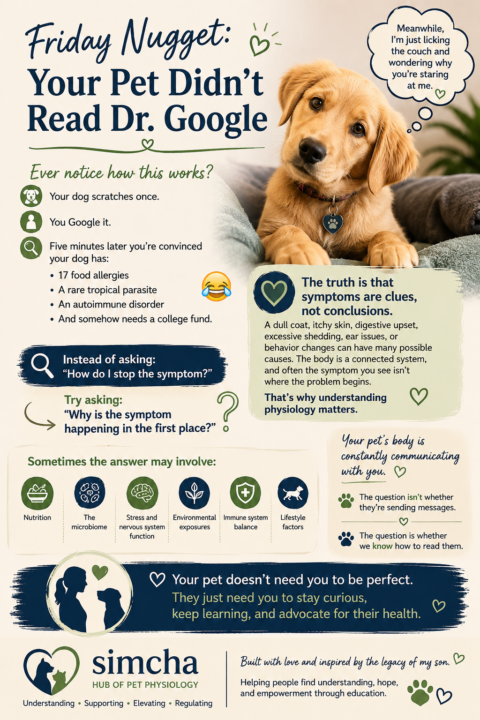
Friday Nugget: Your Pet Didn't Read Dr. Google
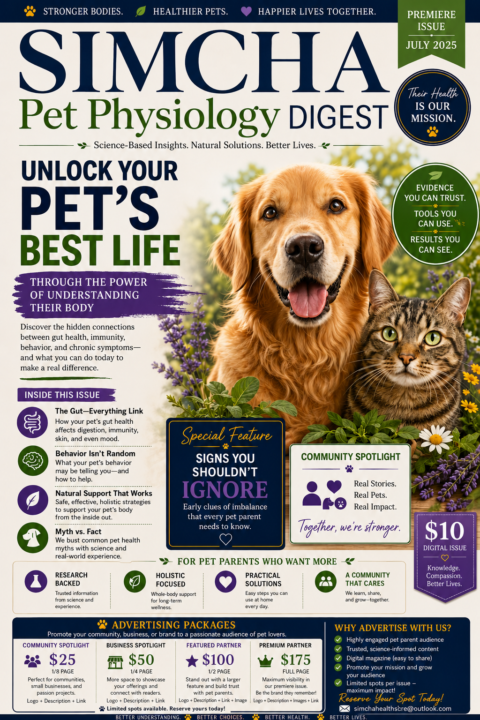
Ever notice how this works? Your dog scratches once. You Google it. Five minutes later you're convinced your dog has: - 17 food allergies - A rare tropical parasite - An autoimmune disorder - And somehow needs a college fund. Meanwhile, your dog is busy licking the couch cushions and wondering why you're staring at him. The truth is that symptoms are clues, not conclusions. A dull coat, itchy skin, digestive upset, excessive shedding, ear issues, or behavior changes can have many possible causes. The body is a connected system, and often the symptom you see isn't where the problem begins. That's why understanding physiology matters. Instead of asking:"How do I stop the symptom?" Try asking:"Why is the symptom happening in the first place?" Sometimes the answer may involve: Nutrition. The microbiome. Stress and nervous system function. Environmental exposures. Immune system balance. Lifestyle factors. Your pet's body is constantly communicating with you. The question isn't whether they're sending messages. The question is whether we know how to read them. Your pet doesn't need you to be perfect. They just need you to stay curious, keep learning, and advocate for their health. Click that link to continue receiving educational pet health information and updates on the progress of the new magazine, Simcha Pet Physiology Digest. AND let me know if you, your pet, or your community, wants to be featured in the magazine. It will be distributed globally, both on and off Skool, and it will be a tangible product by the end of the year! Exciting times! https://www.skool.com/simcha-hub-of-pet-physiology-5304/about
1
0
🔥
2h •
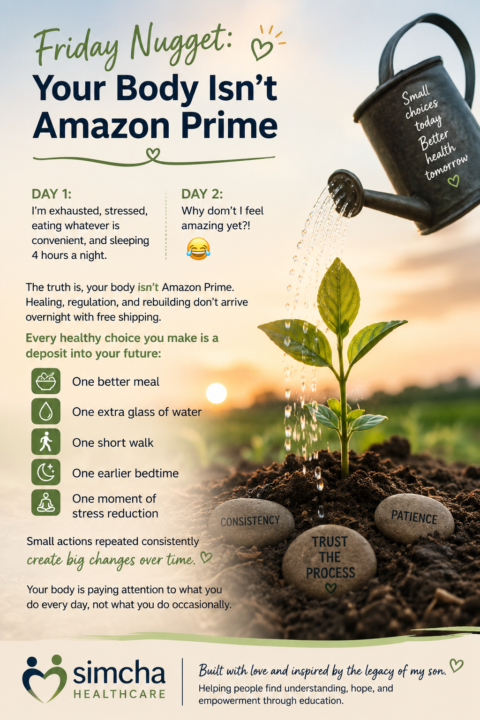
Friday Nugget: Your Body Isn't Amazon Prime
Ever notice how we expect our bodies to work? Day 1: "I'm exhausted, stressed, eating whatever is convenient, and sleeping 4 hours a night." Day 2: "Why don't I feel amazing yet?!" The truth is, your body isn't Amazon Prime. Healing, regulation, and rebuilding doesn't arrive overnight with free shipping. You don't need to run 3 miles or join a gym to look like Hulk Hogan. Every healthy choice you make is a deposit into your future: One better meal. One extra glass of water. One short walk. One earlier bedtime. One moment of stress reduction Small actions repeated consistently create big changes over time. And here's the encouraging part: many chronic health challenges can be improved, and in some cases even reversed, when people are willing to make meaningful lifestyle changes. The challenge isn't usually a lack of information. I'm giving tons of that. It's applying the information consistently. Click that link to continue receiving educational health information and updates on the progress of the new magazine, Simcha Health Insider. AND let me know if you, or your community, wants to be featured in the magazine. It will be distributed globally, both on and off Skool, and it will be a tangible product by the end of the year! Exciting times! https://www.skool.com/simcha-healthcare-3222/about
0
0
🔥
1d •
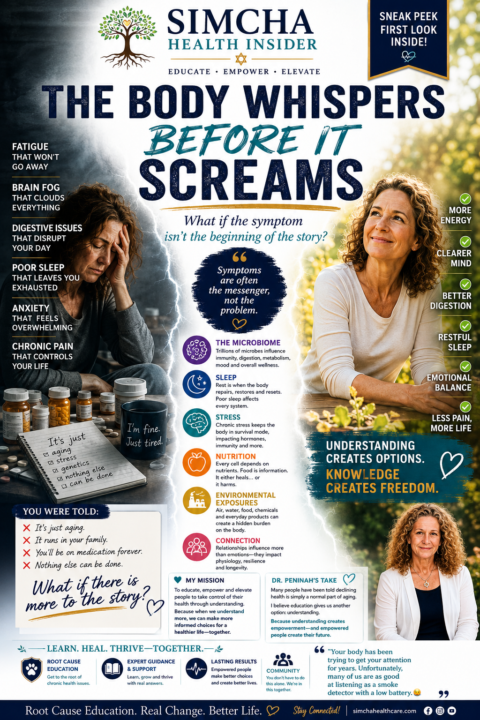
SNEAK PEEK ALERT - MAGAZINE #2
After the incredible response to Simcha Pet Physiology Digest, many of you asked: "What about the other magazine?" Well... Here is your first sneak peek of SIMCHA Health Insider. "THE BODY WHISPERS BEFORE IT SCREAMS" What if fatigue isn't just fatigue? What if brain fog isn't simply getting older? What if poor sleep, digestive issues, anxiety, chronic pain, and inflammation are not random events, but messages? Most people are taught to focus on diagnoses. I'm interested in helping people understand the physiology behind the symptoms. Because symptoms are often the messenger, not the problem. Stress Sleep The Microbiome Nutrition Environmental Exposures Connection These are just some of the factors that may influence how we feel, function, and heal. The mission of SIMCHA Health Insider is simple: Educate Empower Elevate Heal Because understanding creates options. And knowledge creates freedom. I'd love your feedback: And if this message resonates with you, please share it with someone who has ever been told: "Everything is normal." Because sometimes there is more to the story. This magazine will be distributed globally on and off Skool, and before the end of the year, will actually become a tangible product. Would you be interested in advertising, becoming a Featured Partner, or sharing your business, community, or mission? Who wants to be part of this? https://www.skool.com/simcha-healthcare-3222/about
1
0
🔥
2d •
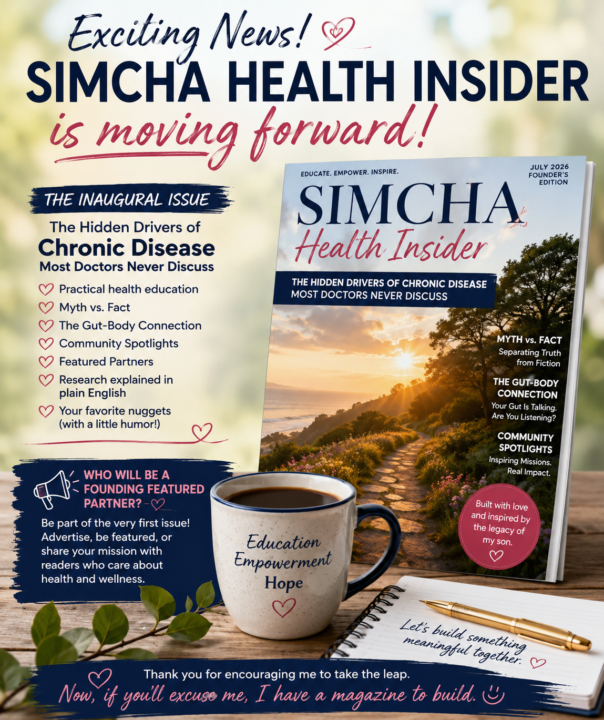
DAILY NUGGET - IT TAKES TWO
Well, it looks like I have another magazine to build. 😄 Yesterday, I floated the idea of creating SIMCHA Health Insider, a digital magazine focused on health education, myth-busting, practical insights, community spotlights, and helping people better understand their bodies. I wasn't sure what would happen. The response wasn't overwhelming, but it was encouraging. People said they liked the idea. People asked questions. One person already asked about advertising. Another suggested physical copies someday. And that was enough for me. So, SIMCHA Health Insider is officially moving forward! The inaugural issue will be: The Hidden Drivers of Chronic Disease Most Doctors Never Discuss Inside you'll find: Practical health education Myth vs. Fact The Gut-Body Connection Community Spotlights Featured Partners Research explained in plain English A collection of your favorite nuggets Tell Your Story Skool Community Of The Month And maybe a little humor, because learning about health shouldn't feel like reading the assembly instructions for a refrigerator. 😆 Who wants to be one of the Founding Featured Partners in the very first issue with global distribution both on and off Skool? If you're a: Community Owner Author Practitioner Coach Creator Wellness Business AI / Tech and would like to advertise, be featured, submit an article, or share your mission with our readers, send me a message. There's something special about being able to say: "I was featured in the inaugural issue of SIMCHA Health Insider." This magazine is being built with the same mission that drives everything I do: Helping people find understanding, hope, and empowerment through education. Who knows? This little idea may become something special. And if nothing else, it proves that sometimes all it takes is planting a seed and seeing what grows. Thank you for encouraging me to take the leap. Now if you'll excuse me, I have two magazines to build. COFFEE 🤣🤣🤣 Click that link: Discover the way to treat disease is by creating health!
1
0
🔥
3d •
COMING SOON - Simcha Pet Physiology Digest - Take the poll
For years, I've been passionate about helping pets and understanding what is really happening inside their bodies. Now I'm considering launching something new... "Simcha Pet Physiology Digest" A beautifully designed digital magazine dedicated to helping pet parents make better, more informed decisions about their pets' health. Each issue would include: Gut Health Education Behavior & Physiology Insights Myth vs. Fact Military and K9 Dogs Nutrition & Wellness Topics Research Made Simple Community Spotlights Pet Parent Success Stories Pet Of The Month Contest Practical Tools You Can Use Immediately Premiere Issue: "Unlock Your Pet's Best Life Through the Power of Understanding Their Body" In addition to educational content, I'm considering featuring: Pet Communities Pet Influencers Military and K9 Dogs YouTube Creators Authors Trainers Holistic Practitioners Rescue Organizations Pet Businesses through Featured Partner Spotlights, Sponsored Articles, Interviews, and Community Features. Before I move forward, I'd love your honest feedback. Please vote in the poll and leave your thoughts below. I'd especially like to know: Would you buy a digital issue? Would you like your community, business, organization, rescue, or channel featured? What topics would you most like covered? Together we can create something educational, collaborative, and impactful for pet parents everywhere.
Poll
1 member has voted
1-30 of 223
powered by

skool.com/skool-network-8514
Free advertising, networking, growth strategies & collaboration: growing your business and Skool community
Suggested communities
Powered by