
🔥
Jan 21 (edited) • Tips
Free Members Are Great. Paying Members Are Better.
You've probably seen posts about getting 100+ members per month organically without ads, funnels, or a massive audience.
That's real. Those tactics work.
But here's what most people won't tell you: Free members don't pay your bills.
I've watched dozens of community owners celebrate hitting 200, 500, even 1,000 members... while making less than $500/month. They're working 15-20 hours per week, managing a free community that generates zero revenue.
Whether you teach guitar, run a fitness community, help people master sourdough, or coach real estate agents, the challenge is the same.
Let's flip the script.
The Revenue-First Approach to Organic Growth
The tactics for getting free members organically are solid: clear profile photo, relevant group name, strong about page, and daily engagement.
But here's the monetization upgrade:
1. Profile Photo → Authority Signal
Don't just use a clear photo. Use one that signals you've done the thing your community teaches.
If you're a fitness coach, show yourself training clients or competing. Cooking community? Show yourself in a kitchen or at a food event. Guitar teacher? Performing or teaching. Business coach? Speaking or working with clients.
Your photo should answer: "Why should I trust this person with my money?"
2. Group Name → Outcome Promise
Generic names get browsers. Outcome-focused names get buyers.
"Guitar Tips" gets members. "Play Songs in 30 Days" gets paying members. Same with "Fitness Community" versus "Home Workouts for Busy Parents" or "Cooking Group" versus "Weeknight Dinners Under 30 Minutes."
Your group name should attract people ready to invest in solving a specific problem, not casual learners browsing for free tips.
3. About Page → Paid Tier Qualifier
Most about pages sell the free tier: "Join us for tips, community, and support!"
Revenue-focused about pages do three things: state the outcome clearly, mention what's free versus paid upfront (transparency builds trust), and position the free tier as a preview, not the destination.
For example, a guitar community might offer basic chord progressions for free, but save song-specific tutorials and feedback for paying members.
A fitness community gives away workout ideas but charges for personalized programming and form checks. A cooking community shares recipes freely but monetizes the meal planning system and technique videos.
4. Daily Engagement → Relationship Capital
Showing up daily is table stakes. But where you show up determines whether you attract freebie seekers or paying members.
Most community owners comment everywhere with no strategy, post generic value bombs (teaching everything for free), and engage with anyone and everyone.
Revenue-focused community owners engage in complementary communities, not direct competitors. A guitar teacher hangs out in songwriting communities, not competing guitar groups. A fitness coach engages in nutrition communities. A cooking instructor shows up in meal prep groups.
They share specific examples with soft CTAs ("I cover this in my paid tier") and target conversations where people mention struggling with what they solve.
The Real Question: What Happens After They Join?
You can get 100 members per month using those four tactics. But then what?
If you don't have a clear conversion path from free to paid, a product worth paying for, or a reason to upgrade beyond "support the creator," you just built a free advice dispenser, not a business.
My Monetization Framework (Tested on Real Communities)
Here's what actually converts free members to paying ones:
Week 1: Prove You Understand Their Problem
Send a personalized welcome—video message beats automated text every time. Ask about their specific goal or blocker. Point them to ONE piece of content that helps immediately.
If you run a guitar community, ask "What song are you trying to learn?" and send a chord chart resource. Fitness coach? "What's your biggest workout challenge?" followed by a relevant quick-start guide.
Cooking instructor? "What meal stresses you out most?" with a simple recipe template.
Week 2-3: Show What's Behind the Paywall
Share a paid resource in a post: "This template is from our paid tier." Mention a paid member's win: "James can now play 5 songs after 6 weeks." Make the upgrade path obvious but not pushy.
Show them the song breakdown template your paid members use. The exact meal planning system they get access to. What a form check video looks like. Let them see the value without overwhelming them.
Week 4: The Natural Offer
If they engage consistently, offer a free call or detailed feedback. Diagnose their specific challenge. Explain how your paid tier solves it. Let them decide.
Conversion rate: 5-10% of engaged free members convert within 90 days. Not everyone. Not fast. But sustainable.
The Uncomfortable Truth
Getting 100 free members per month is easier than converting 10 to paid.
Most community owners avoid monetization because they don't know what to charge, they're afraid people will leave, they feel guilty asking for money, or they don't have systems worth paying for. So they celebrate member counts instead of revenue.
Here's what I know after helping dozens of community owners across different niches:
A community with 50 engaged, paying members at $29-79/month ($1,450-$3,950 MRR) beats a community with 500 free members making $0/month. Every single time.
A guitar teacher with 45 paying students at $49/month makes $2,205/month. A fitness coach with 60 paying members at $39/month makes $2,340/month. A cooking instructor with 35 paying members at $59/month makes $2,065/month.
All working 10-15 hours per week. All sustainable. All profitable.
Your Next Step
If you're already getting members organically, congrats. You've validated demand.
Now ask yourself: What percentage of your free members would pay $29-79/month for implementation systems? Do you have a clear paid tier with specific deliverables? Can you articulate why someone should pay versus stay free?
If you can't answer these clearly, you don't have a growth problem. You have a monetization problem.
Here's what people actually pay for across any niche: Guitar students don't pay for chord charts (free on YouTube)—they pay for song-specific breakdowns and feedback.
Fitness members don't pay for workout ideas (free everywhere) - they pay for personalized programming and accountability.
Cooking students don't pay for recipes (free online) - they pay for meal planning systems and technique coaching. Business owners don't pay for tips (free on social) - they pay for implementation frameworks and support.
The pattern? Implementation beats information every time.
Want help turning your free members into paying ones?
I run free 20-minute "Roadblock Calls" where we diagnose your specific monetization blocker.
Comment "ROADBLOCK", and I'll send you the details.
No pitch. No pressure. Just a practical revenue strategy.
Because free members are great.
But paying members are better.
Want more monetization strategies?
🆓 Free Community: Join 400+ community owners in Content Revenue Lab
💰 Paid Community: Turn 25-50 members into $1K-$5K/month → Skool Monetization Lab
Connect with Des: LinkedIn • Facebook • Instagram • Instagram 2 • Substack • Pinterest • Des Dreckett YouTube • Skool Monetization YouTube
1
5 comments
Free Members Are Great. Paying Members Are Better.
powered by
skool.com/skool-monetization-strategies-2218
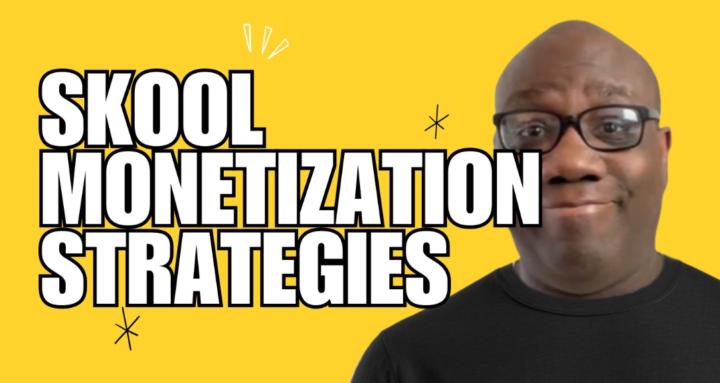
Skool community monetization strategies for creators who want real revenue, not hype. Free-to-paid systems that actually work.
Suggested communities
Powered by