
Write something

🔥
26d •
THE LONGEVITY CLASS HAS DROPPED IN THE CLASSROOM
A TASTE OF WHAT'S INSIDE! Sorry for the delay! If you’ve been feeling tired, foggy, inflamed, overwhelmed, or like your body is “working around something” this class explains why. Not with fear. Not with hacks. With physiology. Here’s a taste of what’s inside: The Real Aging Timeline (20s - 60s) Most people think aging starts at 40. It actually starts in your 20s, quietly, invisibly, and completely fixable once you know the pattern. This section is a full-body “oh THAT explains everything.” The Adaptation To Compensation Shift This is the moment your body stops thriving and starts surviving. Most people miss it. Most doctors don’t talk about it. But it’s the real beginning of accelerated aging. Once you see it, you can’t unsee it. The Silent Agers The things aging you faster than genetics ever will: - micro‑stress - sleep fragmentation - nutrient gaps - toxins - inflammation - metabolic rigidity This section is a wake‑up call in the best way. The Nutrient Blueprint Modern diets are calorie‑rich and nutrient‑poor. This section shows the exact nutrients your body needs to run the longevity pattern, and why so many people feel exhausted, foggy, inflamed, and “off.” It’s not your fault. It’s physiology. The Labs That Reveal the Pattern This section explains the labs that show mitochondrial stress, inflammation, detox load, metabolic flexibility, and more, so you can understand what your body is trying to tell you. How to Fix the Pattern (Without Overwhelm) This is where everything clicks. You’ll learn the foundational shifts that support energy, clarity, resilience, and repair, and how to start without burning your life down. The Brain Fog Breakdown This is the section everyone is talking about. You’ll learn the actual physiology behind: - why your brain feels “thick” - why you lose words - why you can’t focus - why you feel mentally slow - why your clarity disappears after meals - why stress makes your brain shut down It’s not aging. It’s not personality. It’s not “just stress.”
4
0

🔥
Jun 8 •
NEW CLASS HAS DROPPED IN THE CLASSROOM!
Men, women, couples... Have you ever wondered why intimacy can feel difficult even when the desire is there? What if the issue isn't your relationship? What if it's your nervous system? Tonight's new class: "Nervous System Dysregulation & Intimacy: Why Your Body Says 'No' Even When You Want To Say 'Yes,." Take a deep dive into the hidden physiology behind connection, desire, arousal, stress, emotional safety, and intimacy. You'll discover why chronic stress, trauma, overwhelm, and nervous system dysregulation can impact both men and women, and what you can do to begin restoring safety, connection, and trust within your body. Understand what's really happening beneath the surface. Learn practical tools you can begin using immediately. Gain insights that could transform your relationships and your health. This is one of our most powerful and eye-opening classes yet. When the nervous system feels safe, connection becomes possible. Available tonight for Premium and VIP members. Don't miss it! Live discussion of this class tomorrow (Tuesday) at 7:30pm EST Join or upgrade in June and receive my book, "Discover The Truth: The Microbiome Connection", FREE, straight to your email. Plus, choose the membership level that fits your journey: Standard - FREE Premium - $19/month VIP - $29/month And VIP members receive even more: Monthly newsletters. Giveaways. Priority support. Promote your business, rescue, community, talent, or passion project every Friday. AND Join and take part in the 7-day Leaderboard contest. Top two leaders receive VIP access for life! Join us. What do you have to lose? https://www.skool.com/simcha-healthcare-3222/about
3
0

🔥
Jun 1 •
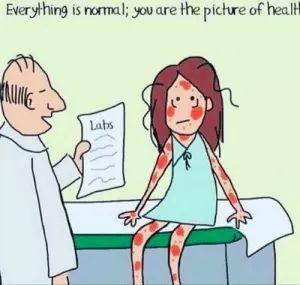
MONDAY MYTH: If Your Labs Are Normal, You’re Fine.
Most people don’t realize this, but “normal labs” are not a reflection of your health. They’re a reflection of your survival capacity. Labs don’t measure how well you’re functioning. They measure how close you are to failure. That’s why so many people walk around exhausted, anxious, inflamed, bloated, wired, depressed, or “not themselves” with labs that look “perfect.” Let’s go deeper. THE MYTH “If your labs are normal, you’re healthy.” This myth exists because we’ve been trained to believe labs are the truth. But labs are only the truth about one thing: Whether your body has crossed a disease threshold. That’s it. They do not measure the early stages of dysfunction, the stage where 99% of symptoms begin. THE TRUTH Your labs can be normal while your physiology is: - under‑mineralized - over‑stressed - inflamed - dysregulated - under‑fed - hormonally imbalanced - metabolically unstable - nervous‑system compromised Normal labs simply mean your body is still compensating. Compensation is not health. Compensation is survival. THE PART NO ONE TELLS YOU: HOW LABS ARE BUILT This is where the whole system cracks open. Lab reference ranges are not based on healthy people. They’re based on the average of everyone who got tested in that region. Who gets labs drawn? People who feel unwell. So your “normal range” is literally built from: - inflamed people - stressed people - under‑nourished people - chronically ill people - metabolically unstable people You’re being compared to a population that is already dysregulated. Normal doesn’t mean optimal. Normal means “you match the average dysfunction in your area.” WHAT NORMAL LABS DON’T MEASURE (the real physiology) 1. Mitochondrial Output Labs don’t tell you if your cells can make energy. They only tell you if you’re in organ failure. 2. Mineral Status Sodium, potassium, magnesium, calcium, the backbone of hormones, enzymes, and nervous system stability. Basic labs don’t show functional depletion. 3. CO₂ Tolerance
🔥
May 31 •
Sunday Forensics: The Physiology Behind People‑Pleasing
A slow, honest autopsy of a survival pattern your body never meant to keep forever. Let's investigate. Today’s case file is one of the most misunderstood behaviors in the human nervous system: People‑pleasing. Not the “I just like helping” version. The "my body won’t let me disappoint anyone" version. Let’s open the file. Exhibit A: The Body That Grew Up Reading Rooms, Not Books People think people‑pleasing is a personality. It’s not. It’s a pattern your physiology built when your safety depended on predicting someone else’s emotional weather. Your amygdala learned to: - track tone shifts - monitor silence - scan for tension - anticipate reactions Not because you were dramatic. Because your nervous system was doing threat‑prevention drills before you even had language. This is neuroception, your body detecting danger faster than your mind can interpret it. People‑pleasing doesn’t start with behavior. It starts with threat‑mapping. When you grow up in an environment where emotional unpredictability = danger, your nervous system becomes a pattern‑recognition machine: Exhibit B: The Fawn Response Isn’t Cute Fight. Flight. Freeze. And then there’s the one that hides in plain sight: fawn. Fawning is what your physiology chooses when: - fighting would escalate - fleeing would punish - freezing would provoke So your body picks the fourth door: appease to survive. This isn’t niceness. It’s biochemical strategy. People think fawning is psychological. It’s not. It’s metabolic triage. When your nervous system detects threat, it runs a cost‑benefit analysis in milliseconds: - Fight = too risky - Flight = not possible - Freeze = might escalate So your physiology selects the option with the highest survival probability: appease, soothe, comply, dissolve tension. Cortisol rises. Adrenaline sharpens your attunement. Your vagus nerve shifts into “keep the peace at all costs.” And suddenly you’re: - smiling through discomfort - softening your voice - shrinking your needs - apologizing for existing - over‑explaining to prevent misinterpretation

🔥
May 31 •
Saturday: The Pixel‑Proof Brain
Today, I decode something that affects everyone of us. And I've created a glossary for you. Why your screen‑heavy life is draining nutrients faster than your apps drain battery, and what your physiology actually needs to stay sharp, lit, and sleep‑capable. Your brain wasn’t built for 14 hours of LED exposure, 9 tabs, 3 devices, and a circadian rhythm that’s basically begging for a union rep. For the people who swear they’re “just tired” but their mitochondria are quietly filing complaints. Some of you think your exhaustion is personality‑based. Some of you think it’s age. Some of you think it’s “just stress.” But your physiology is over here whispering, “It’s the screens. It’s the light. It’s the dopamine whiplash. It’s the retinal mitochondria begging for backup.” If your brain feels grainy, your eyes feel hot, or your sleep feels like a glitchy software update, that’s not a vibe. That’s photonic oxidative stress + circadian desync + ATP instability. And yes, your body leaves clues. It always does. Today I’m breaking down the nutrients that make a brain pixel‑proof, the ones that keep your retina sharp, your mitochondria stable, and your sleep actually restorative in a screen‑heavy world. Screens don’t just strain your eyes, they alter the metabolic choreography of your entire nervous system. And the nutrients you think of as “eye support” are actually rescuing collapsed biochemical pathways upstream. Let’s go deeper into what’s really happening. 1. Retina: The Most Mitochondria‑Dense Tissue in Your Body Your retina has more mitochondria per square millimeter than your heart. Why? Because phototransduction, turning photons into electrical signals, is one of the most energy‑hungry processes in the body. Screens increase: - photon load - oxidative stress - metabolic turnover - glutamate signaling - microglial activation This is why screen fatigue feels like “brain tired,” not “eye tired.” Lutein + zeaxanthin aren’t “eye vitamins.” They’re photonic shock absorbers. They sit in the macula and literally filter wavelengths your mitochondria can’t keep up with.

1-30 of 114

skool.com/simcha-healthcare-3222
Helping people optimize health, energy, mindset, and wellness by addressing root causes through Functional, Nutritional and Holistic Medicine.
Leaderboard (30-day)
1

🔥
+60
2

+29
3

🔥
+18
4

+10
5

+7
Powered by