
Write something
Nov '25 •
Submit Your Research Proposal Workbook by Nov 30!
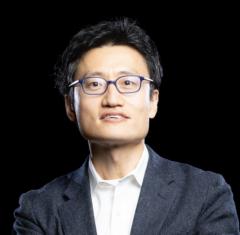
Hi everyone, Quick reminder that if you submit your 7-Step Research Proposal Workbook by November 30, I will personally provide feedback and a 10-minute one-on-one review session to help you strengthen your project. Please work hard to meet the deadline — your proposal can become the foundation for incredible opportunities, including: - Independent research projects - Highly selective summer research programs - ISEF (International Science and Engineering Fair) - The U.S. Presidential AI Challenge (deadline: January 20): https://www.ai.gov/initiatives/presidential-challenge - and many more... There are so many ways to build on your proposal and continue your research journey — this is your chance to turn your idea into something real. Let’s keep up the momentum. I can’t wait to read your proposal on November 30! Jinhua Zhao
1
0
Nov '25 •
Challenges of Stakeholder Outreach- What if No One Replies to My Emails?
Question: In Step 4 stakeholder outreach? I reached out to 3 researchers and 6 practitioners last week, but haven’t heard back from anyone. Should I keep sending more?” Lack of replies usually means people are busy, not that your idea is bad. Treat outreach like a numbers + quality game: cast a wide net and make each contact highly relevant. If you email 20 busy professionals, getting 1 reply is common. That’s fine — you’ll get momentum from those 1–2 real conversations. Step-by-step plan (what to do next) 1. Build a short target list. Aim for 10 researchers and 10 practitioners (or at least expand to 10 each over time). Include PhD students and postdocs — they reply more often and can be excellent mentors. 2. Do quick homework on each person. Read 1 recent paper/one project summary. Note a specific line, figure, or method you found interesting. Jot down where your project could connect to their work (1–2 sentences). 3. 3-attempt rule. Attempt 1 (initial): short, clear, include 1-line value + one concrete ask (e.g., 15-minute call or feedback on a 1-page proposal). Attempt 2 (one week later): add one new, deeper detail (mention a specific paper and one question). Attempt 3 (one week later): final friendly push + offer an easy no-pressure alternative (quick review, intro to a student, or say “if not you, who do you recommend?”).If still no reply after three sincere attempts, move on. 4. Use multiple channels. If you have a phone number, call them or meet them in person in your local community. 5. If you still don’t get a reply: Keep moving down your list. Follow the same process for new people. Parallel track: contact postdocs, graduate students, local university faculty (state schools), and industry practitioners at smaller firms — they respond more often. Post your request in targeted forums (research Slack groups, specialized subreddits, university lab pages) or ask a teacher for a warm intro.
1
0
Oct '25 •
Can’t Find a Research Mentor? How and Where to Really Find Your High School Research Mentor
One question many students asked me is: 🌐I learned a lot from your talks every meeting, and I thank you for helping us develop critical thinking skills and curiosity. My school offers a 3-year program where we have to choose a topic to research in and find a mentor, and I was originally going to try using Artificial Intelligence in behavioral economics, but it seems hard to find mentors in that field, so I wonder if I should stay or switch to a broader field? 🙍♂️My answer: If you are genuinely interested in Artificial Intelligence in behavioral economics, I encourage you to stick with it. Finding a mentor can be challenging, but it shouldn’t deter you from pursuing your true interests. Many researchers are actively working at the intersection of behavioral economics and AI. I recommend looking for them in your local region. Don’t target professors at highly-ranked universities (i.e. top 100), as most faculty at those institutions are not likely to respond. The ranking of the institution does not matter for your learning as this stage and for your college application. I met several MIT undergraduate students who did research in high school find a mentor in local state universities. Here are a few suggestions to help you in your search: 1. Identify PhD students or postdocs: They are more accessible and willing to engage with students. Even if a professor responds to you, they may still assign a PhD student or postdoc to work with you. 2. Research their work: Read their published or working papers and familiarize yourself with their current projects. This will help you understand their specific needs. 3. Explain your contribution: When reaching out, clearly articulate how you could potentially contribute to their ongoing projects. Once you complete the 7-step workbook, your will complete a research proposal which will serve as an excellent resource to share with potential mentors. This will help you to identify the field potential mentors. Secondly, when send out cold email, this proposal will demonstrate that you've already put significant thought therefore increase the chances that you will get a response.
1
0
Oct '25 •
Welcome to Scientific Inquiry Mastery
Great research starts with a good research question. But how does a good research question start? It doesn't start with an idea or a passion. It doesn't start by picking a discipline. Scientific Inquiry Mastery transforms ambitious high school students into confident researchers through an engaging 4-week bootcamp guided by MIT Professor Jinhua Zhao. For ambitious high school students applying to competitive summer programs and colleges who need to craft an original, meaningful research question but have zero research experience. Our 7 Step Research Question Generation System adapts to each student's interests - whether they're curious about social behavior or a natural phenomena. In 4 weeks (with 25 hours of focused effort), students will finish a research proposal to apply for a summer program, to build research projects, college application essays and more. Scientific Inquiry Mastery guides the most creative phase of research through a seven step system that builds confidence, critical thinking, and inquiry skills that today’s youth need to thrive in the age of AI.
3
0
1-4 of 4

skool.com/sim
Build excellent research questions that stand out, guided by MIT Prof. Jinhua Zhao
Powered by